

| TL;DR: We examined AI recommendations for patent drafting software across ChatGPT, Gemini, and Perplexity. We found that DeepIP, Solve Intelligence, and Patlytics get recommended repeatedly. But they are not showing up by accident. Their content makes it easier for AI tools to understand what they do and who they serve. This article examines the patterns behind those recommendations and explores practical strategies to improve the AI visibility for your drafting tool. |
Ask AI platforms to recommend patent drafting software, and you might expect a broad mix of vendors to appear. However, that’s not what we found.
Across ChatGPT, Gemini, and Perplexity, the same handful of companies appeared repeatedly. Making it to these recommendations matters because they can influence the shortlist for patent attorneys, law firms, and in-house IP teams. A strong product may still be overlooked if it does not appear when buyers ask AI tools which patent drafting software to consider.
So what do the companies that appear in these shortlists do well?
That’s what we tried to find out. In this article, we break down the patterns behind their visibility and what challenger patent drafting software brands can learn from them.
Which Patent Drafting Software Shows Up in AI Answers Most Often
To understand which patent drafting software brands AI tools recommend most often, we ran a series of queries across the three AI platforms: ChatGPT, Perplexity, and Gemini.
The queries included:
- Best patent drafting software for patent attorneys
- Best patent application drafting software for law firms
- Top AI tools for drafting patent specifications and claims
- Best patent drafting software for in-house IP teams
- AI patent drafting tools for patent agents
These are not just keyword variations. Each query reflects a slightly different buyer context. The idea was to check how results changed with each buyer type. This matters because AI recommendations can vary based on features, workflow, or who the tool is best suited for.
After going through the results, we found that a small group of companies kept appearing across multiple queries. They were DeepIP, Solve Intelligence, and Patlytics.
So we started looking for the patterns that may be helping these vendors show up more often.
4 Reasons Why DeepIP, Solve Intelligence, and Patlytics Keep Showing Up in AI Recommendations
When we looked closer, their visibility did not seem accidental. These companies appear to have built the right public signals for AI platforms to understand what they do, who they serve, and where they fit in the patent drafting software category.
Each company has taken a slightly different path. But across all three, we found a few common patterns. Let’s take a closer look at what’s working for these companies.
1. They Use List-Based Content To Get Discovered
These companies aren’t relying only on product pages to build visibility. They are actively publishing content on the exact questions buyers ask when searching for a patent drafting solution.
For example, when we searched “which patent drafting software is best for patent professionals” on Perplexity, both DeepIP and Solve Intelligence appeared among the sources used to generate the answer.
They weren’t being cited from generic product pages. Instead, AI tools were pulling from list-based content they had written to help users searching for options.
For instance, DeepIP wrote a listicle on Best AI Patent Drafting Tools in 2026, and Solve Intelligence has done a similar piece.
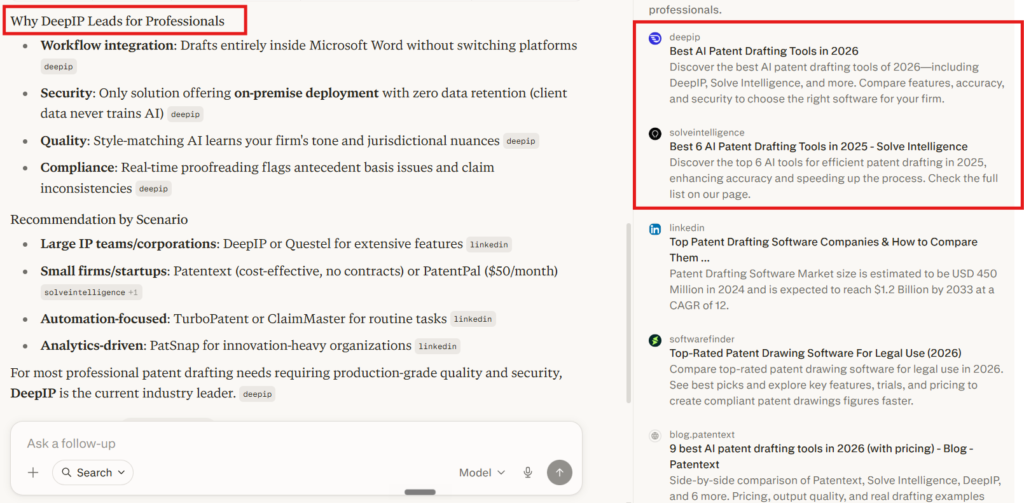
Source – Perplexity
We noticed a similar pattern in ChatGPT. Patlytics appeared in the recommendations because they too did a similar listicle on the subject.
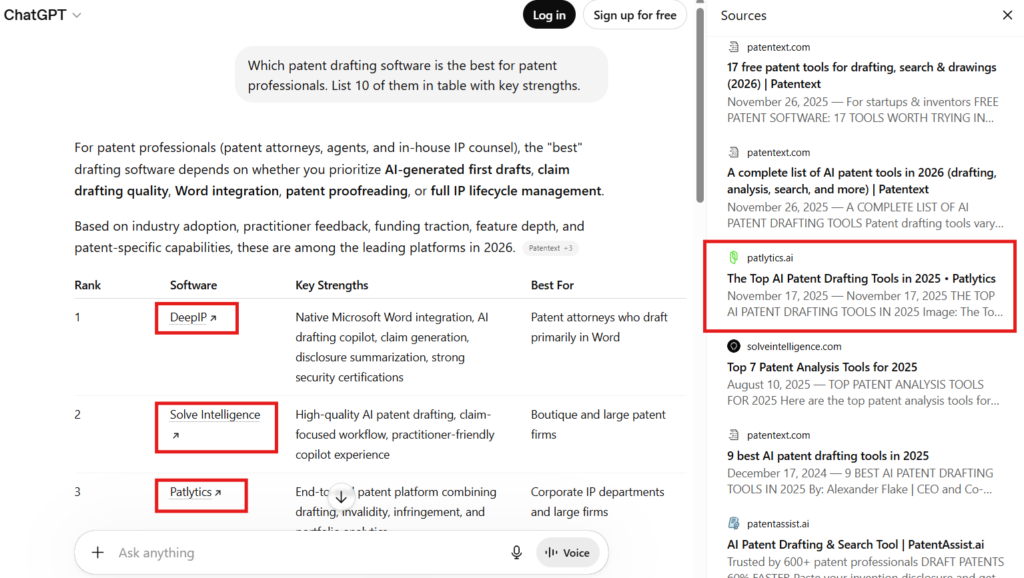
Source – ChatGPT
Patent drafting buyers do not begin by searching for one specific vendor. They often start with a shortlist question, such as which patent drafting software is best for their use case. AI platforms prefer listicles when answering such kind of questions as they clearly help them formulate a curated answer.
If your company does not have content that answers those searches, AI tools may rely on competitor pages, review sites, or third-party articles to define the category for you.
2. They Show Up Through Comparison and Alternative Content
Another pattern we observed is that these companies don’t wait for buyers to discover them on their own.
They create content around competitor comparisons and alternative searches, which are often the queries people use when they are already aware of other patent drafting tools. They may have considered it, used it, or decided it is not the right fit. Now they are looking for other options.
Take DeepIP, for example. When we searched for “Solve Intelligence alternatives” in Gemini, DeepIP showed up in the results. One reason may be that DeepIP has published a dedicated comparison article discussing DeepIP vs Solve Intelligence. This gives DeepIP a chance to appear when someone is already evaluating alternatives for Solve Intelligence and wants to understand what else is available.
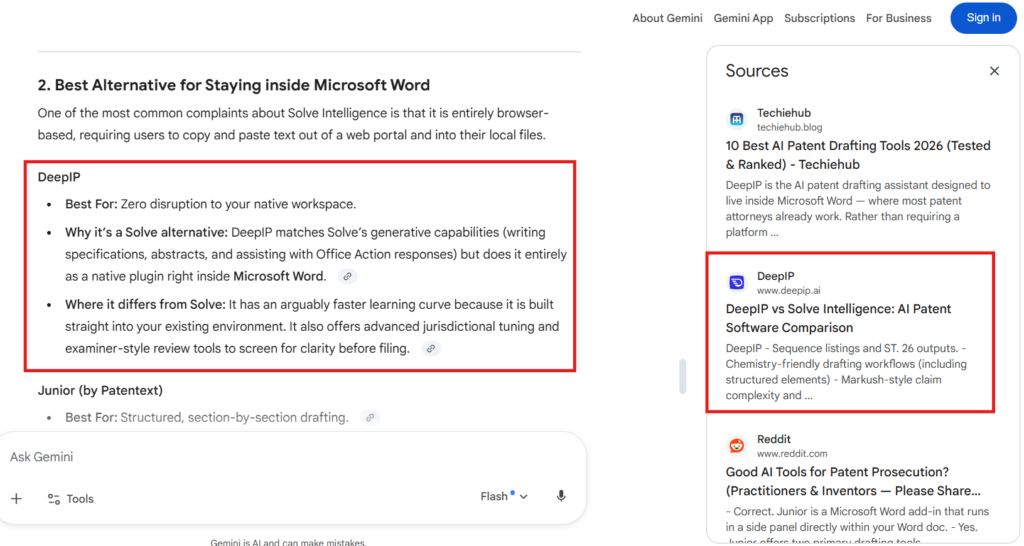
Source – Gemini
That is the real value of comparison and alternative content. It gives AI systems more context about how a product fits against known options in the market.
3. They Create Content Beyond Generic Patent Drafting Software Searches
One of the most consistent patterns we found across these companies was their focus on creating content for patent professionals. Rather than publishing anything under the sun, they build content around the workflows that attorneys, agents, and IP teams deal with every day.
This helps build topical authority. By repeatedly covering related patent topics, companies give AI systems more context about their expertise and where they fit within the patent drafting software ecosystem.
They start with a problem practitioners are already trying to solve, explain the workflow around it, and then connect the product to that workflow.
Patlytics is a good example. The Patent Docketing Software article starts by explaining the patent docketing process. It then shows how Patlytics helps with the work involved. This makes it easier for readers to understand where the product fits.
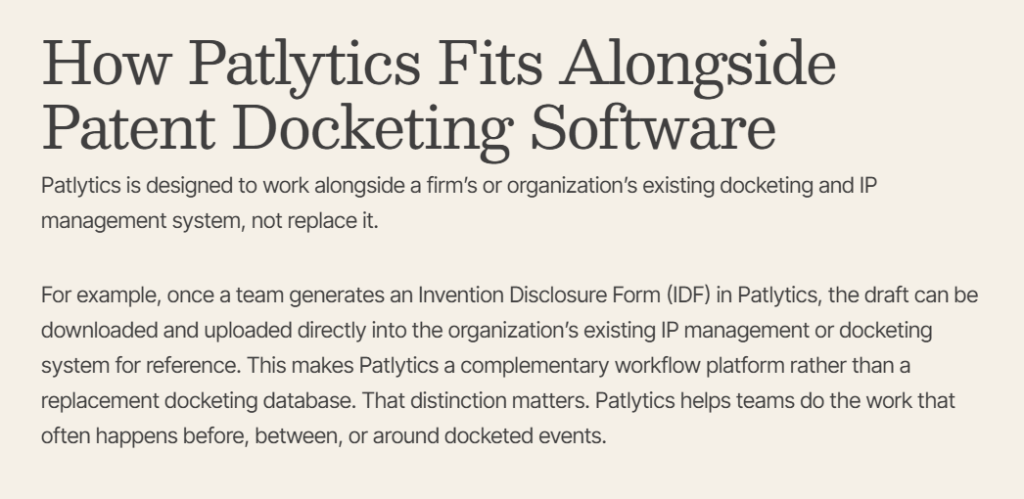
Source – Patlytics
Solve Intelligence follows a similar approach. Its blog covers topics patent attorneys actively care about while also showing where Solve Intelligence fits within those workflows and challenges.
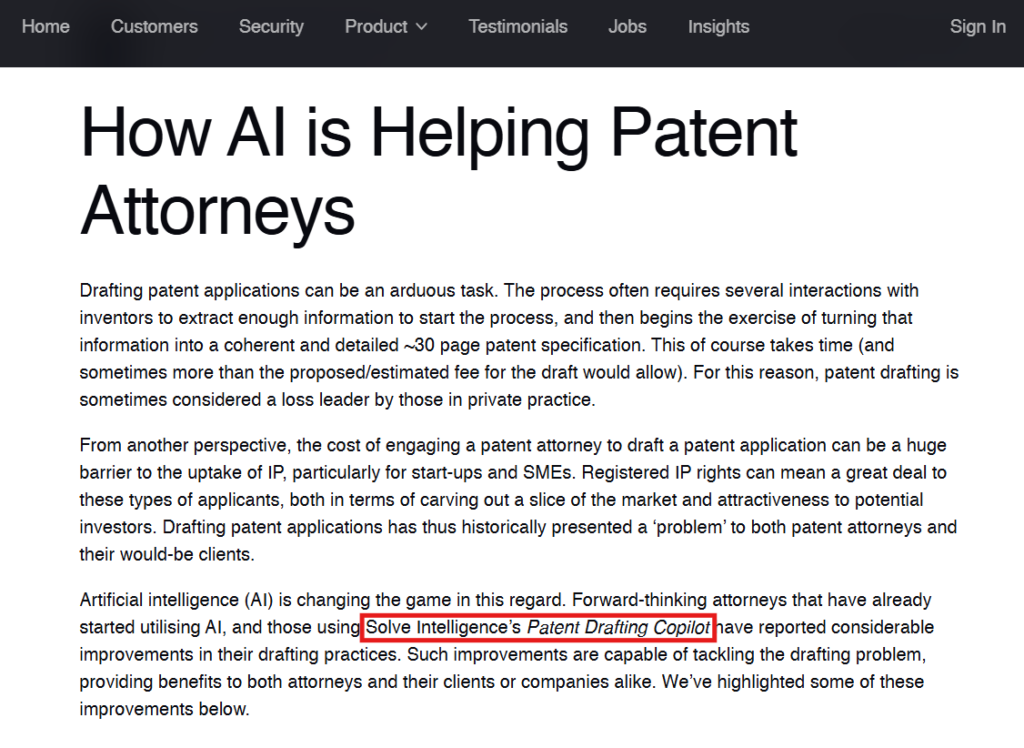
Source – Solve Intelligence
When we searched “what kind of AI patent software do patent attorneys need,” Gemini also cited Solve Intelligence’s “How AI is Helping Patent Attorneys” article. That makes sense because the article gives AI a relevant source to reference when answering patent-related questions.
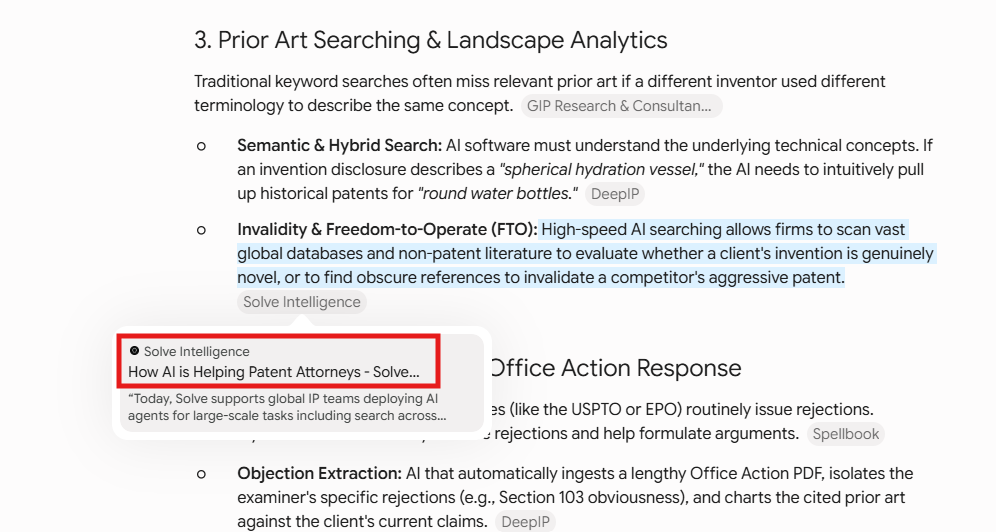
Source – Gemini
This is the real advantage of workflow-led content. It helps a brand show up even when the buyer is not asking for a vendor list. The buyer may be asking about the work itself, and the content helps AI connect the company to that work.
Over time, these resources help AI platforms associate the company with patent drafting workflows and practitioner needs. This creates more opportunities for those brands to appear when practitioners research solutions.
We found a similar pattern in subscription billing. Our Chargebee content strategy analysis shows how content around billing problems, pricing, churn, and AI monetization helps the brand appear before buyers begin searching for a platform.
4. They Use Case Studies and Third-Party Proof to Strengthen Authority
Customer proof was another clear pattern among the companies that appeared frequently in AI search results.
For example, Patlytics highlights a customer testimonial that includes a specific result: a 20% reduction in drafting workload. Measurable outcomes like these give AI tools and potential buyers something specific to reference when evaluating the software.
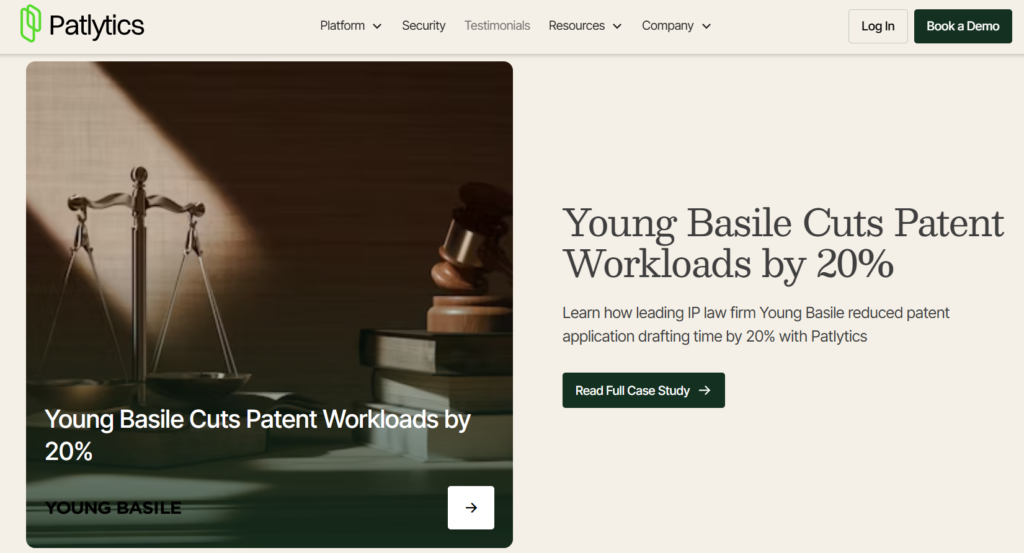
Source – Patlytics
Solve Intelligence also backs its claims with customer case studies. For example, the Marbury law firm case study cites a strong result. They reported a 3x-4x improvement in drafting efficiency after using the platform.
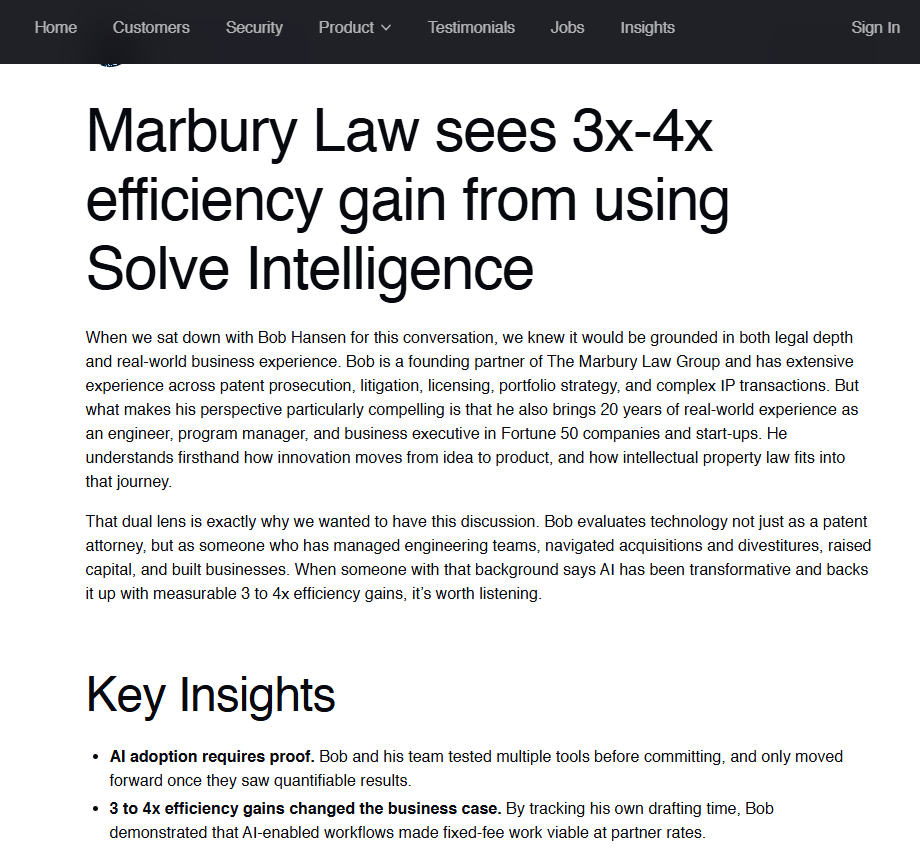
Source – Solve Intelligence
This kind of proof is especially useful as most tools make similar claims around speed, accuracy, and efficiency. Measurable outcomes like those shared above help buyers understand what changed after implementation. They also give AI platforms clearer evidence to reference when explaining why a tool may be worth considering.
Many of these vendors also extend their visibility beyond their own websites. DeepIP, for example, has been featured across legal technology publications, industry news sites, and business media through product announcements, partnerships, and product launches.
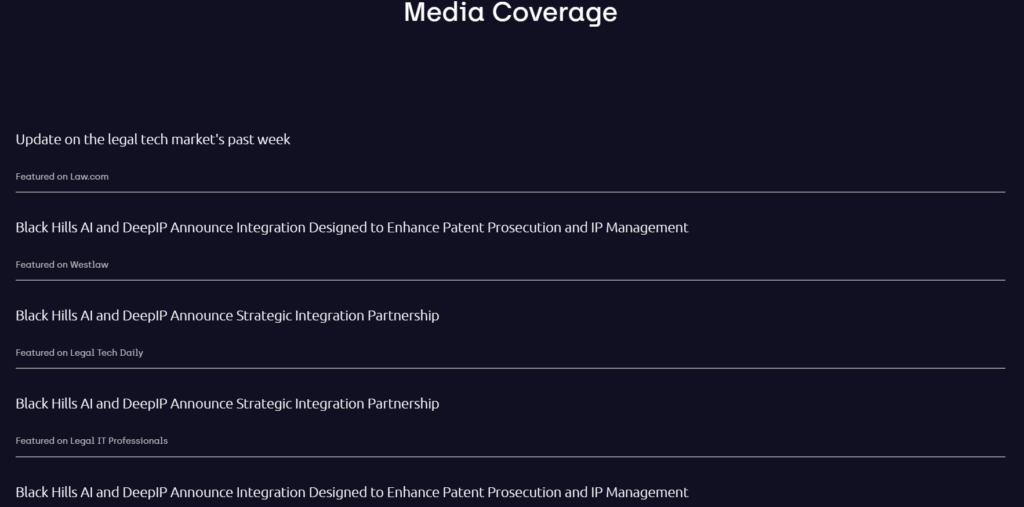
Source – DeepIP
Together, customer stories and media coverage create a larger body of evidence around a company’s market presence. When AI platforms look for credible sources, these references give them more to work with than the company’s own product claims.
Now, if you’re looking to increase the likelihood of AI recommendations for your patent drafting software, here are three strategies you can prioritize.
3 Strategies Challenger Patent Drafting Software Brands Can Implement to Get Recommended in AI Answers
The companies that show up consistently have built content, credibility, and visibility across multiple channels. But the goal is not to publish content randomly. The goal is to create public signals around the exact moments when patent software buyers research, compare, and validate tools.
Here are three strategies challenger patent drafting software brands can implement to increase their chances of being recommended in AI answers.
1. Create Content For Buyer Shortlists
When buyers ask AI tools to recommend patent drafting software, they are usually not looking for one vendor. They are trying to build a shortlist. That is where list-based content helps. In fact, given how AI tools reward hyperspecificity, it is a better strategy to create list-based content focusing on features your tool offers and/or your ideal target audience, such as:
- Best AI drafting software for in-house IP teams
- Top patent drafting tools for enterprises
- Best AI patent drafting software for solo patent attorneys
Creating content around these topics can give AI platforms more sources to refer to when they are curating a shortlist.
However, these content pieces need to be more than generic listicles. They should clearly explain who each tool is best suited for, which drafting workflow it supports, what criteria buyers should use, and what proof supports the recommendation.
2. Create Comparison and Alternative Content Around Real Buyer Questions
Many patent software companies create educational content, but fewer create content for buyers who are actively comparing options. That’s a missed opportunity because AI platforms often rely on comparison and alternative articles to answer alternative recommendation queries.
For example, when we searched for “PatentPal alternatives,” both Patlytics and Solve Intelligence appeared in the results. The reason is simple: they have content that helps AI understand how they compare with other tools in the category.
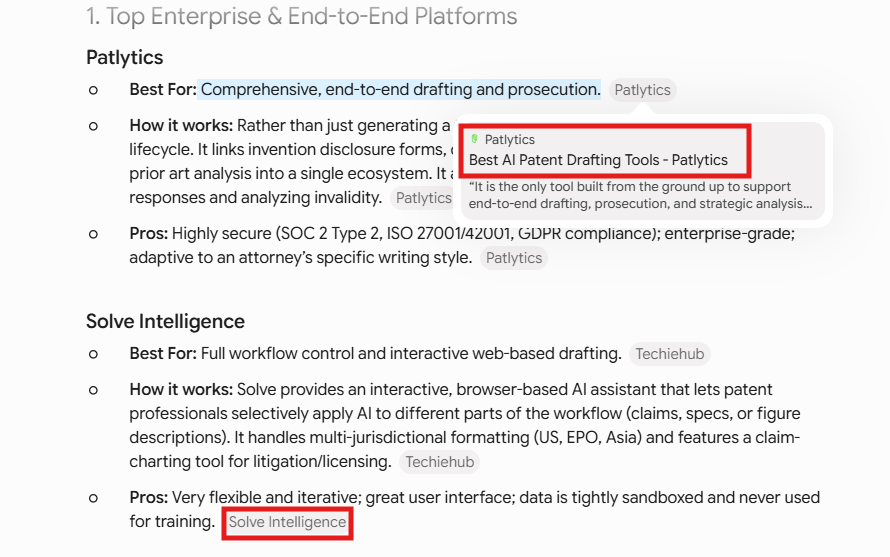
Source – Gemini
You can consider creating articles like:
- [Your Brand] vs [Popular Patent Drafting Tool]
- Best alternatives to [Popular Patent Drafting Tool]
- [Your Brand] vs [Competitor Platform]
- [Popular Patent Drafting Tool] alternatives
- Best AI patent drafting tools like [Competitor]
This content helps AI platforms understand where your product helps, who your product competes with, and when it should be recommended, along with evidence of fit.
3. Build Third-Party Mentions Beyond Your Website
If you want to improve AI visibility, it is important not to rely only on your own website. One of the most effective ways to strengthen your presence is to create signals across third-party sources that AI platforms can discover and reference.
For instance, Patlytics has built a presence on Reddit, where people discuss the brand in the context of patent tools and patent workflows. These mentions may not always be controlled by the company, but they still add to the public footprint AI platforms can discover.
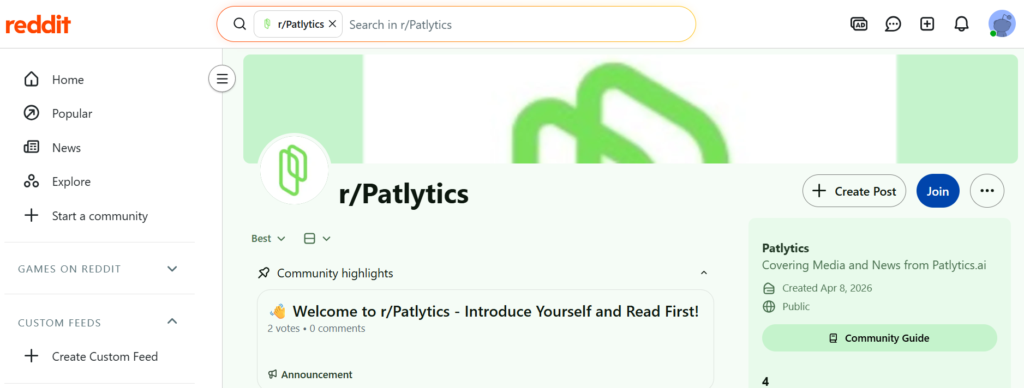
Source – Reddit
That is the larger point. AI visibility does not depend only on what you publish on your own website. It also depends on whether your company appears in places where buyers, users, and industry communities discuss software options.
Encourage customer reviews on platforms like G2 and Capterra, participate in industry communities, and contribute to publications. Your executives and sales teams can also build a strong presence on LinkedIn by sharing the challenges they see and the problems they help customers solve every day. If your team lacks the time or resources, our LinkedIn ghostwriting services can help you build a consistent and credible presence.
Building this kind of AI visibility takes more than publishing a few articles or collecting customer reviews. It requires a clear strategy and consistent execution. You also need to understand how patent professionals research software across AI platforms and other channels.
That is why many patent drafting software companies choose to work with agencies that understand both AI visibility and the patent software market.
And that’s where Concurate can help.
How Concurate Helps Patent Technology Companies Improve AI Visibility
Many patent technology companies have strong products. But strong products alone do not guarantee AI visibility. At Concurate, we help B2B software companies improve how they show up across AI platforms, search, and other buyer research channels. We have also worked with companies in the patent and IP technology space, so we understand how technical buyers evaluate software.
They are not just looking for a tool with tons of features. They are looking for workflow fit, credible proof, and signs that the product can support the way their team already works.
Using our proprietary Perfect Match Framework, we analyze where your brand appears across AI platforms, where competitors are being mentioned instead, and which buyer searches you are missing.
From there, we build a roadmap around the topics and signals that matter most. This could include software shortlist content, comparison pages, workflow-led articles, customer proof, and third-party visibility.
If your patent technology company is not appearing when patent professionals ask AI which drafting software to consider, that’s a gap worth closing. Book a call with us, and we’ll show you where you stand and what it will take to improve your AI visibility.
Other AI Visibility Guides You Can Check
We’ve also studied how AI platforms respond when buyers ask for software across other software categories. You can explore them by clicking the links below:
- AI Visibility For Fraud Management Software: What Feedzai, SEON, And Sift Get Right
- 3 Reasons Why AppFolio, Yardi, And Buildium Consistently Show Up In AI Answers
- 5 Reasons Why ThoughtSpot, Sigma Computing, and Sisense Appear in AI Recommendations for Business Intelligence Platforms, and What Competitors Can Do
- 5 Reasons Why Workato, Boomi, And MuleSoft Keep Appearing In iPaaS AI Recommendations
Frequently Asked Questions
1. Our patent drafting software is newer than established legal tech vendors. Can we still appear in AI recommendations?
Yes, a newer patent drafting platform may not appear immediately for broad recommendation queries, but it can still surface for searches tied to specific use cases, drafting workflows, or patent attorney needs. The more clearly a company builds content around those topics, the easier it becomes for AI platforms to understand where it fits.
2. What type of content helps patent drafting software get recommended by AI tools?
Content that helps buyers shortlist and evaluate their options tends to appear more often in AI recommendations. That includes listicles, comparison content, and customer stories with real results.
3. We already publish content consistently. Why aren’t we showing up in AI recommendations?
Consistency helps, but it isn’t always enough. We’ve seen companies publish regularly without addressing the questions buyers ask when they’re actively comparing software. If most of your content focuses on broad industry topics, AI tools may have fewer reasons to connect your brand to recommendation searches. In many cases, the issue isn’t the volume of content, but how closely that content aligns with buyer research and evaluation queries.
Disclaimer: The information presented in this article is compiled from publicly available sources, including company websites, industry reports, and social media. All trademarks, brand names, and logos mentioned are the property of their respective owners. We do not claim any ownership of third-party marks, nor do we imply endorsement or affiliation. This article is intended for informational purposes only.