

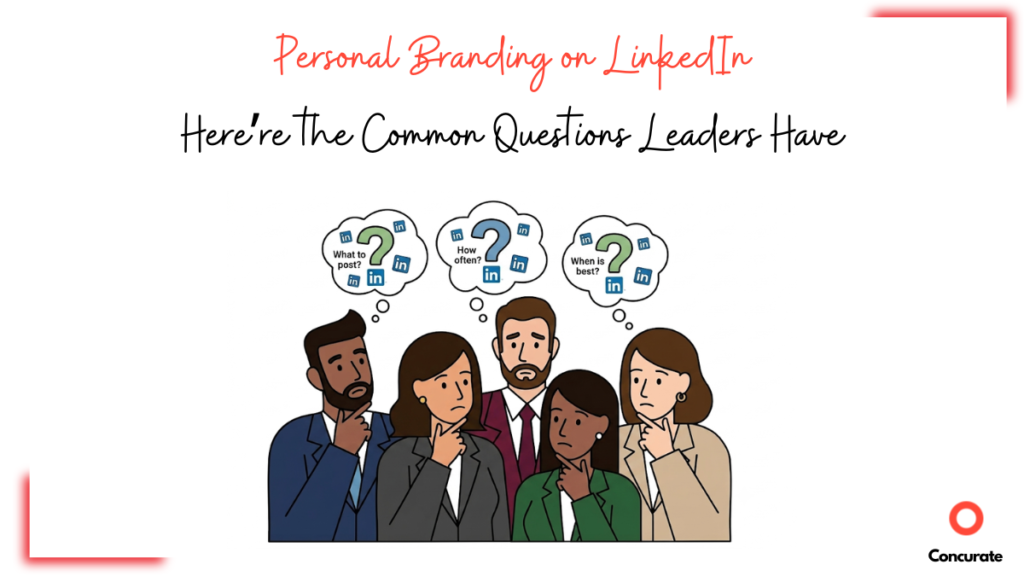
| TL;DR – Over time, we’ve noticed founders and business leaders tend to ask the same questions about personal branding on LinkedIn. They’re good questions, and chances are you have a few of them too, so we’ve answered the most common ones here to help you strategize your account. |
We follow a handful of US based SaaS founders closely, and they are impossible to miss on LinkedIn. Adam Robinson (Retention.com, RB2B) has 150,000+ followers. Tanay Kothari (Wispr Flow), 100,000+. Eric Glyman (Ramp), 40,000+. These are the numbers as of 20 July 2026. They post constantly, their profiles are sharp, and their audiences keep growing.
As Adam Robinson put it, speaking at SaaStock USA, “building a personal brand on LinkedIn is the fastest, most efficient, and highest leverage way to grow a startup that has ever existed.“
It is becoming a trend, so most founders do start. They make the account. Then it goes quiet. Sometimes there are time constraints. More often it is not knowing what to post, when to post, or what will actually work.
That is what we hear on almost every sales call. So we lined up the most common questions here, and answered them.
So without further ado, let’s get straight to it.
Question 1: Can LinkedIn Actually Generate Leads for My Business, or Is It Just a Vanity Exercise?
Yes. LinkedIn drives about 80% of all B2B leads from social media. No other channel is close.
But mere engagement isn’t the same as a lead. When Cclarity looked at 7,793 engagements across 50+ B2B founders, only about 3% were a real ICP fit. And we’d bet the rest were a teammate, an ex-colleague, or some random peer. So the number to watch isn’t likes, clearly. It’s whether those 3% who can actually buy are the ones raising their hand.
And when one of them does, you don’t let it pass. Let us tell you from experience. While ghostwriting for a leader, we spotted one of his ideal buyers leave a comment on a post, showing real interest in the problem. Instead of a quick reply in the thread, we wrote a whole new post built around that one comment. He messaged the founder, reposted it, and agreed to a call.
That’s the pattern. The post finds the right person. The follow-up turns them into a lead. Because you don’t sell by posting. You sell by reaching out to whoever engages.
So post to surface the right 3%. Then go talk to them.
Question 2: How to Make Sure My LinkedIn Activity Reaches the Right ICP(Ideal Customer Profile)?
Posting is only one side of personal branding. The other side, the one most founders skip, is actively engaging with the people you actually want to reach.
That does not mean commenting on random viral posts to borrow their visibility. It means identifying your actual ICP, finding the voices and posts they already show up to comment on, and engaging there deliberately. Skip this and LinkedIn quietly turns into an echo chamber, you keep publishing, your peers keep liking it, and you never actually get in front of a buyer.
The rule here is comment first, connect second. Cold connection requests are easy to ignore, but engaging with someone before you ask to connect works far better. The comment itself has to earn that, though: a line that repeats a sentence from the post, or a generic “great post!”, feels fake and sometimes automated, and does more harm than good to your personal brand.
What works is adding something real, a data point, a counterexample, a lesson, anything that shows you actually read what they said. Do that consistently and by the time you send a connection request 10 to 15 days later, your name already rings a bell. It stops feeling like a stranger showing up and starts feeling like, “I know this person.”
If you are a founder starting with little to no existing network, this is the single most important thing to get right. Writing is only about 40% of what makes personal branding work. The other 60% is this engagement layer. Nitesh breaks this down in more detail here.
Question 3: How to Increase Engagement on My Posts on LinkedIn?
It partly depends on format. Studies show carousels and native video(the ones uploaded directly to LinkedIn rather than shared through an external link) tend to do exceptionally well on LinkedIn, because they hold attention longer.
However, the way you hold attention and increase engagement differs by format:
- For text posts, make the first two lines specific enough to encourage readers to click “see more.” Use short paragraphs, examples, and a clear narrative to keep them reading.
Additional suggestion: On my feed, I’m seeing almost all posts paired with an image or video, so consider adding a relevant visual that supports the idea and helps the post stand out in the feed.
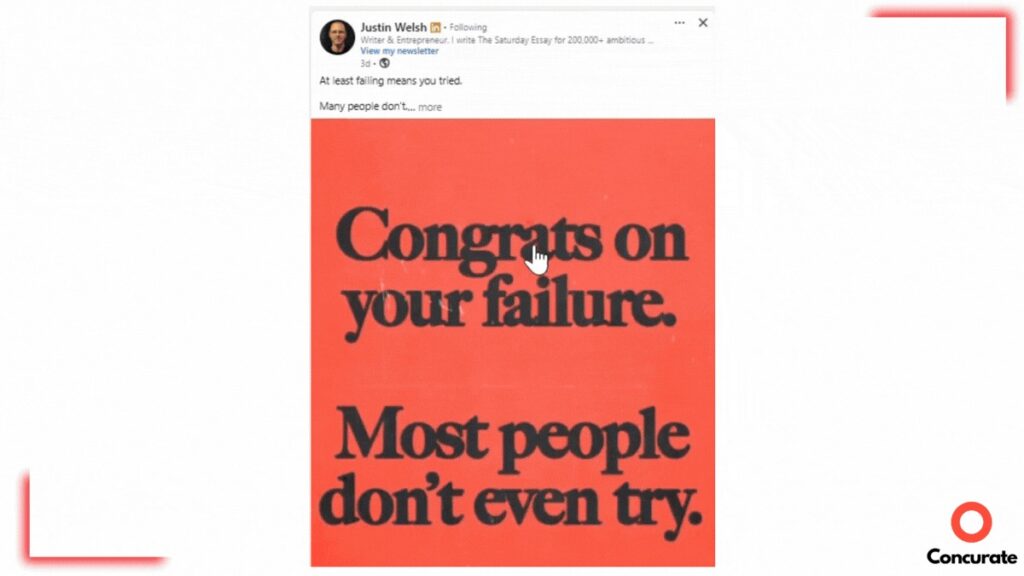
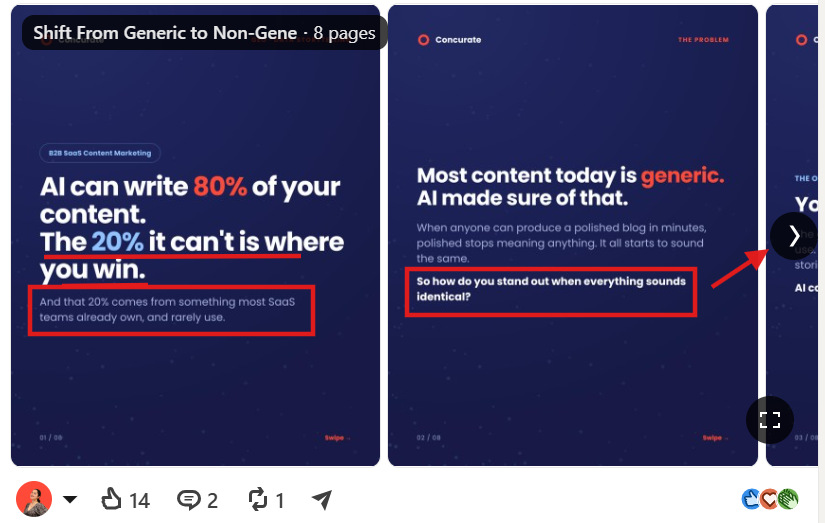
- For carousels, use the first slide to establish a strong promise or idea, then make each slide give the reader a reason to continue to the next one. Here’s one I created recently:
Source: linkedin/posts/priti-sohal
- For native videos, communicate your main point within the first few seconds and add captions. Your accent or pronunciation may not be clear to every viewer, and many people also watch videos without sound, so captions can help.
- Third, give people a reason to comment, end with a real question and reply to everyone, since comments can lift reach up to 300% and replying adds ~30%.
| One Hack: Tag people genuinely relevant to the post so they engage early. That way you borrow reach from their network too. |
Question 4: What to Post on LinkedIn?
This is the question that stops most founders before they start. One of the founders we had a discussion with on personal brand building put it like “I know I should post, but I have no idea what to actually say.”
And to which we said “sometimes, you do not need to invent content, you need to document what you already know.”
Trust us, it is not as hard as it sounds. You can start with something as simple as this:
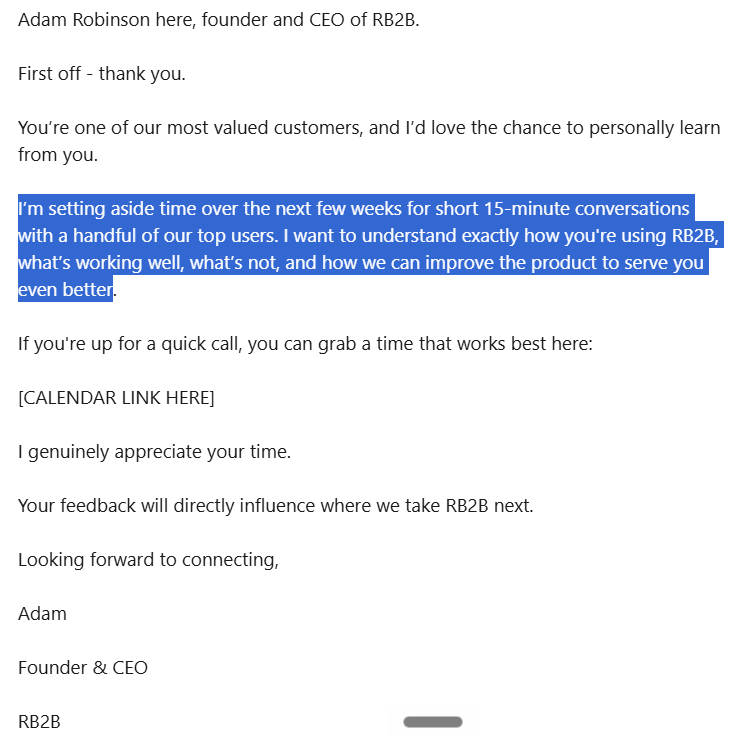
- Share a real thing you do inside the business. Adam Robinson of RB2B once posted the exact email he sends new users after 30 days to book a call, word for word. He did not give advice, he showed the real thing, so anyone could copy it. And the people who found it useful were founders and GTM teams, the exact people RB2B sells to.
Source: linkedin.com/posts/retentionadam
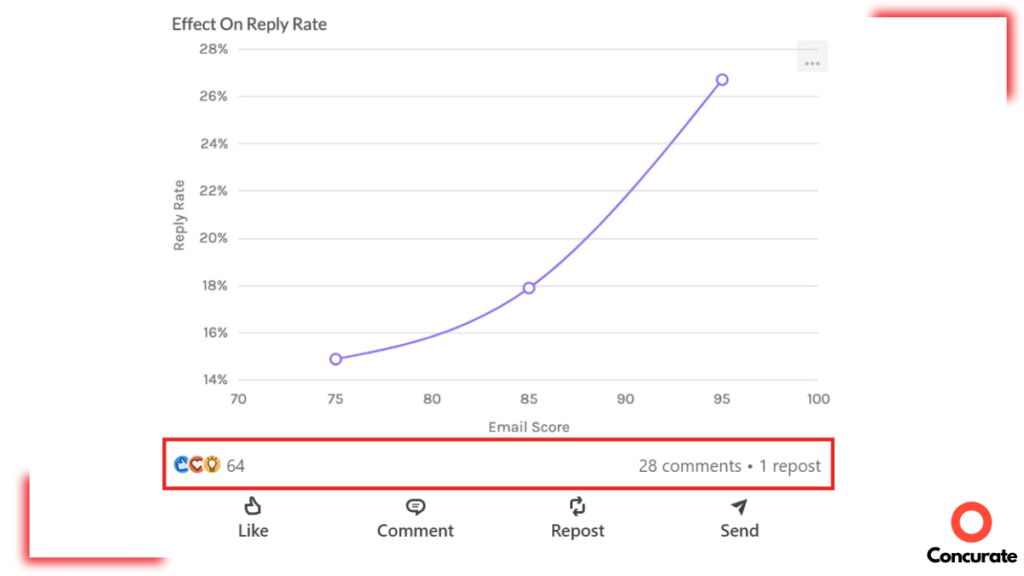
- Or share one insight from your own tool data. Will Allred of Lavender posted cold-email reply-rate data from their own tool and used it to argue that good email still works. Lavender helps teams write better emails, so the post spoke straight to their buyers, without pitching anything.
Source: linkedin.com/posts/williamallred
And there are many more options:
- a point of view on your industry,
- a customer problem you keep hearing,
- a lesson from a launch,
- a behind-the-scenes decision.
The format matters less than one thing: give the reader something useful before you ask for anything back.
Question 5: Won’t Posting Personal Stories on LinkedIn Come Across as Cringe?
This worry is common enough that Forbes featured a whole piece on it, literally built around whether posting on LinkedIn feels cringe. So if you have felt it, you are in good company.
But here is the line that actually settles it. As one LinkedIn creator put it, posting personal stories on LinkedIn feels cringe, if you do it wrong.
The difference is simple. A post feels cringe when the emotion is the entire point, when it exists just to look vulnerable or fish for reactions. It works when the story is in service of something the reader actually gets to keep, a lesson, an insight, a reason it mattered. You do not need to bare your soul. You need to share a real moment behind a real point.
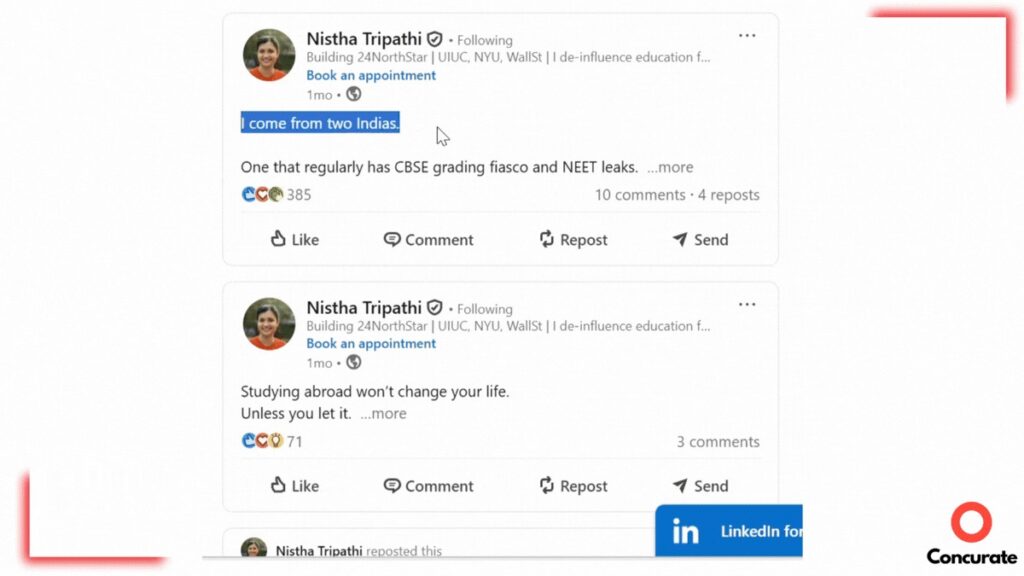
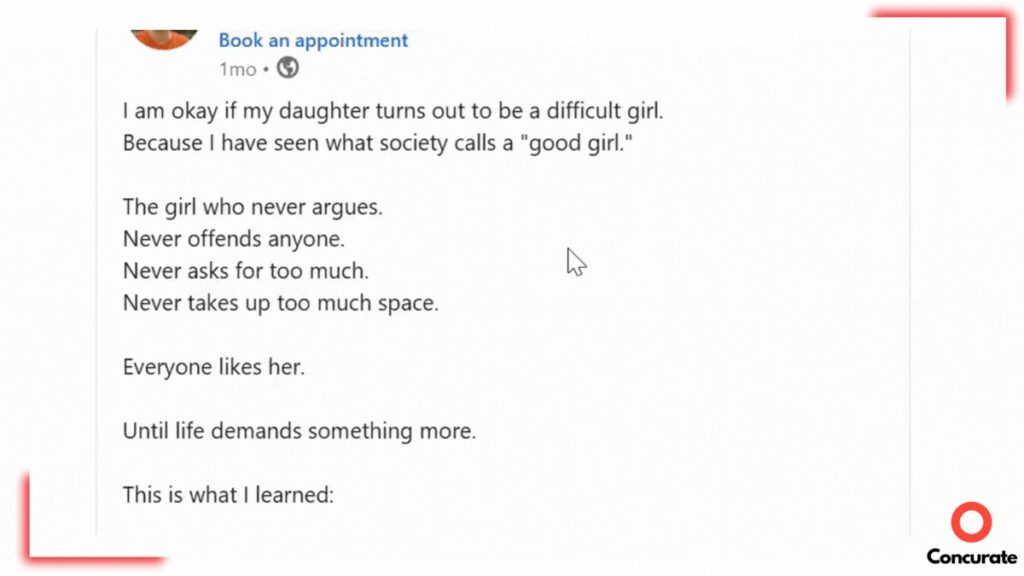
When it comes to sharing personal stories and opinions, this India based founder, Nistha Tripathi does it exceptionally well, and I am personally a fan of her writing. Her posts draw from what she has lived or observed, whether it is her parents’ arranged marriage, her hopes for her daughter, or her thoughts on a recent protest at Jantar Mantar(Delhi, India). These posts also perform well, showing that LinkedIn content does not always have to revolve around business.
Source: linkedin/nisthatripathi/
So the test before you post is not “is this too personal?” It is “does this personal moment teach or reveal something worth the reader’s time?” If yes, it will not read as cringe. It will read as human, which is the whole reason people follow founders instead of logos.
Question 6: How Often Should I Post on LinkedIn?
This is where most founders overthink it, or quietly panic. The loudest advice online is “post every single day,” which for a founder running a company sounds less like advice and more like a second job.
Here is the reality. Buffer studied more than 2 million LinkedIn posts and found the sweet spot is 2 to 5 posts a week, size-controlled, so it is not just big accounts posting more. Daily is not the requirement everyone makes it out to be.
And chasing daily usually backfires. People burn through their best ideas in the first week, start posting filler to keep the streak alive, and their engagement quietly flattens.
Here is the better way, and it connects straight back to the last two questions. You are not short on material. You are running a company, so things are happening around you constantly, the lessons, the decisions, the customer conversations we already talked about. The trick is just to catch them. Keep a running note on your phone, a voice memo, a scrap of paper, whatever fits how you work, and drop things in as they happen. By the end of most days you will already have something worth saying. Not manufactured. Just captured.
So you do not need a daily system. You need a steady one. Three posts a week, pulled from what you are already living, is plenty, and it is a pace you can actually keep.
Question 7: At What Time Should I Post on LinkedIn?
Tbh, there is no universal best time to post on LinkedIn, and even recent large-scale studies disagree. Buffer’s July 2026 analysis of 4.8 million posts found that engagement was generally strongest between 3 PM and 8 PM, particularly from Wednesday through Friday. These timings are based on the target audience’s local time. So, if your audience is primarily in India, 4 PM means 4 PM IST. If you are targeting US buyers, it means 4 PM in the US time zone where most of them are located.
However, Sprout Social’s 2026 research found a different pattern, with engagement peaking mainly from Tuesday through Thursday between 11 AM and 5 PM local time.
This difference is exactly why broad studies should be treated as a starting point rather than a fixed posting schedule.
Some studies also suggest that weekends receive lower engagement on average. But that does not mean LinkedIn becomes inactive. Nistha Tripathi, for example, regularly posts on weekends and still receives strong engagement.
Source: linkedin/nisthatripathi/
This shows that performance ultimately depends on your audience and their LinkedIn habits.
The best way to identify what works for you is to test different days and time slots for a few weeks. Then, use your own post performance data to see when your audience engages most and build your posting schedule around those findings.
Question 8: What Type of Posts do LinkedIn Algorithm Restrict Showing?
“Restricted” doesn’t mean removed. It means shown to fewer people. LinkedIn’s own help pages say its algorithms reduce the distribution of low-quality content rather than delete it. These are the posts that get quietly buried:
- Off-topic posts. This is the big one. LinkedIn learns what you are known for, then shows your posts to people who care about that. Its own engineering director, Tim Jurka, said the platform now rewards expertise over virality. Post about something unrelated and it does not know who to show it to, so reach drops. So just stick to two or three themes.
- Engagement bait. “Comment YES if you agree,” “repost this.” LinkedIn says it is actively reducing these.
- External links in the post. LinkedIn wants people to stay on-site, so adding links directly to the post suppresses reach. So put links in the comments.
- Generic AI-written filler. The algorithm is now actively hunting for so-called AI slop. It increasingly spots generic, machine-written posts, and they read as low-effort. In fact, LinkedIn introduced a “Seems like AI slop” option. If users start flagging a post with it, it’s likely to hurt that post’s reach.
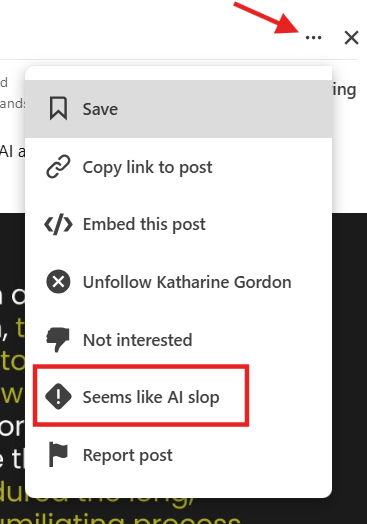
Source: Some_random_LinkedIn_post
- Coordinated or fake engagement. Engagement pods, or a group agreeing to like and comment on each other’s posts on cue. LinkedIn is actively dismantling this, and its detection isn’t looking at volume, it’s looking at the pattern: the same accounts engaging at the same times on posts outside their world. Trip that and reach gets throttled, sometimes overnight.
The rule: post something useful, in your lane, in your own voice and let people engage on their own.
Question 9: What Type of Posts does LinkedIn Algorithm Show to More People?
Short answer: LinkedIn pushes the post types that keep people on the platform and show real expertise. The ones that consistently reach more people:
- Document carousels. The multi-slide PDF posts you click through. They hold attention the longest, which LinkedIn rewards with more reach.
- Native video. Short videos uploaded straight to LinkedIn (not a YouTube link). LinkedIn has been pushing video hard, and it keeps growing.
- Text posts that teach something. A clear lesson, framework, or how-to from your own experience. People come to LinkedIn to learn, so useful text posts fit the feed naturally.
- Personal stories tied to a point. A real story from your work that carries a lesson. These pull people in and get read all the way through.
- A strong point of view. A genuine take on your industry that invites discussion. Posts that spark real conversation get shown to more people.
The common thread: native content (kept on LinkedIn), in your area of expertise, that people actually want to read.
Question 10: Should I Manage My LinkedIn Myself or Hire an Agency to Handle It for Me?
Two questions settle it. Is time or money scarcer for you right now? And can you stay involved enough that it still sounds like you, not AI?
There’s no single right answer, so match it to where you are:
| Do it yourself | Partner with a ghostwriter (like Concurate) | |
| Best when | Cash is tighter than time, you’re pre-PMF, and you enjoy writing | Time is scarce and LinkedIn already sparks real conversations |
| Your time | Several hours a week, every week | One call to share your stories and point of view |
| Content | You write, edit, and post it all | We draft a full week; you just review and reply yes or no |
| Running dry | On you to keep finding ideas | We keep researching and feeding you fresh angles |
| Your profile | You set up bio, About, recommendations | We build the whole handle before a single post goes out |
| Control | Full, hands-on over every word | You approve everything; your voice stays yours |
Question 11: Why Should One Choose Concurate Over Other LinkedIn Ghostwriting Agencies for Personal Branding?
We want to share a story from a recent sales call. The founder had already burned his hand with his last agency, and it showed. The moment the call started, it was rapid fire, no small talk, question after question, each one a scar from what he had been through before.
Here is what that agency put him through, and what we do differently:
| Other Agency | Concurate | |
| Target list | Scraped, got his account restricted | Manual, run through Sales Navigator |
| Comments & outreach | Unclear if AI-written | Never automated, never AI-generated |
| “Meaningful engagement” | Never defined | Engagement from people who match his actual buyer profile |
| Proof of progress | None | Monthly numbers: who engaged, who connected, who replied, who booked a call |
| His voice | Approved drafts written for him | A call every two weeks, we write down what he already thinks |
What he liked most, by the end, was not any single number. His last agency simply wrote the post and handed it to him to approve, another task on his plate. What stood out with Concurate was that we were not going to invent his opinions for him. We were simply going to write down what he already thinks.
Ending Notes: We keep this list updated with the questions we hear from founders like you. Have one that isn’t answered here? Connect with Anjali Chopra on LinkedIn to get the answer. Or, if you want to build solid relationships, generate leads, and be seen on LinkedIn, book your first strategy call with Concurate. We’ll map out where to start with your personal brand.