

| TL;DR: We analyzed how AI platforms like ChatGPT, Gemini, Claude, and Perplexity recommend business intelligence platforms and found that ThoughtSpot, Sigma Computing, and Sisense appear more often than many other BI tools. It’s because they’ve built content that clearly connects their products to high-intent buyer searches, measurable customer outcomes, comparison queries, use cases, and product education. If your BI platform isn’t showing up in these recommendations, you’re likely missing from buyer shortlists. This article breaks down what these companies are doing differently and shares practical strategies to improve your business intelligence AI visibility. |
We’ve spent a lot of time at Concurate studying why certain B2B SaaS companies show up in AI recommendations and why most don’t. And one of the more interesting patterns we’ve noticed is in the business intelligence category.
When a buyer asks an AI tool to recommend a BI platform, Tableau, Microsoft Power BI, and Google Looker come up constantly. That’s not surprising because these companies have the brand weight, content volume, and search footprint to match. But below that top tier, there’s a second cluster that shows up far more than most of their competitors: ThoughtSpot, Sigma Computing, and Sisense.
We dug into what those three are actually doing to earn that visibility. What we found is a set of content strategies that any BI platform can study and act on, whether they’re trying to break into that second cluster or just stop being invisible while better-funded competitors get the mention.
So, if you’re a BI company trying to show up more often in AI recommendations, this breakdown is for you.
How We Chose the Business Intelligence Platforms Performing Well in AI Search
Even before starting our search for the platforms that dominate AI visibility in the BI space, we had a fair idea of what to expect. And the results didn’t disappoint. As we thought, giants like Microsoft Power BI, Tableau, and Google Looker were cited the most across all queries on all AI platforms.
However, we wanted to look beyond the obvious names. For our article, we wanted to analyze companies that were earning steady AI visibility, not because of strong brand recall or years of category leadership. But purely because they had a clearer, more deliberate content approach.
So, we ran the following search queries on ChatGPT, Perplexity, Gemini, and Claude:
- Top BI platforms for analytics and reporting
- Best business intelligence software for enterprise teams
- Best BI platforms for SaaS companies
- Best BI platforms with AI-powered analytics
We used a mix of broad and high-intent queries so that we could get a clearer view of how AI tools respond when buyers search slightly differently. That’s where ThoughtSpot, Sigma Computing, and Sisense stood out.
5 Reasons Why AI Tools Recommend ThoughtSpot, Sigma Computing, and Sisense More Often than Others
Strong AI visibility isn’t guesswork. More often than not, it comes from applying the right content strategies consistently. This holds especially true in the business intelligence space, where legacy names take up most AI recommendations.
You see, ThoughtSpot, Sigma Computing, and Sisense don’t have the biggest marketing budgets or the longest publishing history. Yet, when you run enough queries, these three names keep surfacing alongside the category leaders more often than their similarly-sized competitors. This makes one thing clear: these three companies are intentionally giving AI tools clear reasons to understand and recommend them.
So we went and looked at their content to understand what they were doing differently. Here are the five patterns we observed:
1. They Create Content That Matches How Business Intelligence Buyers Actually Search
Today, more than 39% of consumers use AI tools to find new products. And when they do, they don’t always search with short keywords like “best BI software.” They ask more detailed questions, such as:
“We’re a 200-person manufacturing company looking for a BI platform that can connect with our ERP and help operations teams track production data. Which tools should we compare?”
“What are the best business intelligence platforms for a SaaS company that needs embedded analytics for customers?”
“Which BI tools are better for non-technical business users who need self-service reporting without depending on the data team?”
These are the kinds of searches that tell AI tools what the buyer does, what they need, who will use the product, and what problem they are trying to solve.
When AI tools recommend platforms for such queries, they look for content that matches their intent. This could be:
- a top tools list covering BI platforms for manufacturing platforms
- a use-case article explaining BI for SaaS with embedded analytics as one of the core features
- a comparison blog showing which BI tool is better for predictive analytics
- an alternatives page highlighting manufacturing-focused BI alternatives to a known platform
All of these are decision-stage content formats that help buyers compare options and move closer to a decision.
In our experience, companies that publish this kind of content show up more often in AI answers. That’s because their content gives AI tools clearer information about where a product fits, which use cases it supports, and why it should be considered for a specific query.
ThoughtSpot is a strong case in point.
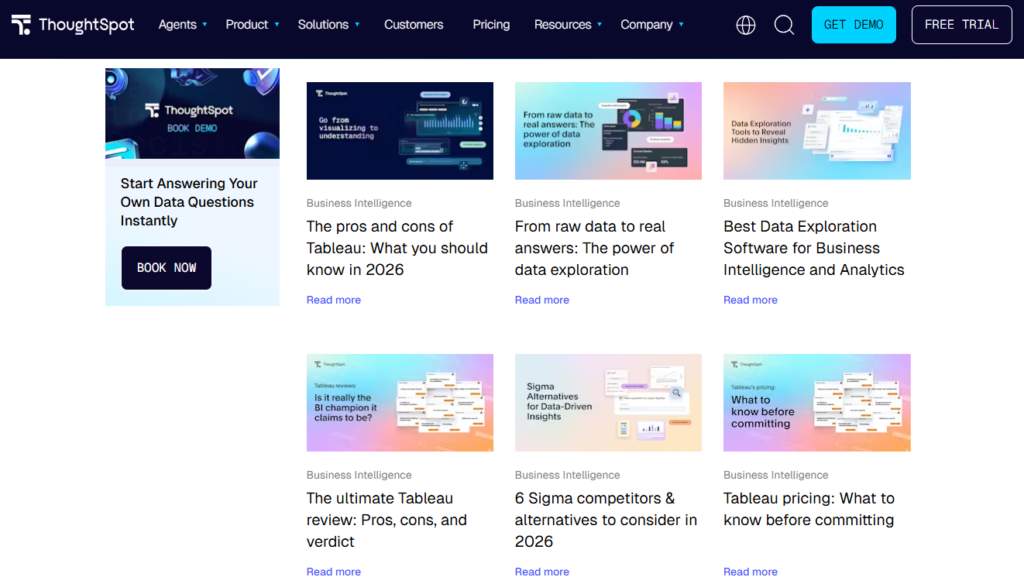
Source – ThoughtSpot
If you go to its Business Intelligence blog section, you’ll find topics that closely match the way buyers compare BI tools. For example:
- Sigma competitors & alternatives to consider in 2026,
- The pros and cons of Tableau,
- Tableau pricing,
- Tableau review, and
- Best data exploration software for business intelligence and analytics
But these pages don’t just target high-intent queries in the title. The content itself is built for buyers who are already comparing tools, checking trade-offs, and deciding which BI platform fits their needs. You’ll find a similar pattern in other categories they cater to, like Data Visualization and Business Analytics.
This helps ThoughtSpot in AI recommendations and Google because it does two jobs at once. The title helps ThoughtSpot match the buyer’s keyword on search engines, while the content gives AI tools enough detail to understand the page, trust its relevance, and connect it to the right recommendation.
2. Their Case Studies Are Built Around Numbers That AI Tools Can Actually Cite
Publishing case studies is standard practice in B2B SaaS, and nearly every BI platform does it. But those with stronger AI visibility don’t just publish customer stories. They build them around specific, measurable outcomes. And that is often what makes the difference.
You see, when a buyer asks an AI tool something like “which BI platforms help companies cut reporting costs” or “which analytics tools deliver fast time to value,” the AI needs something concrete to reference.
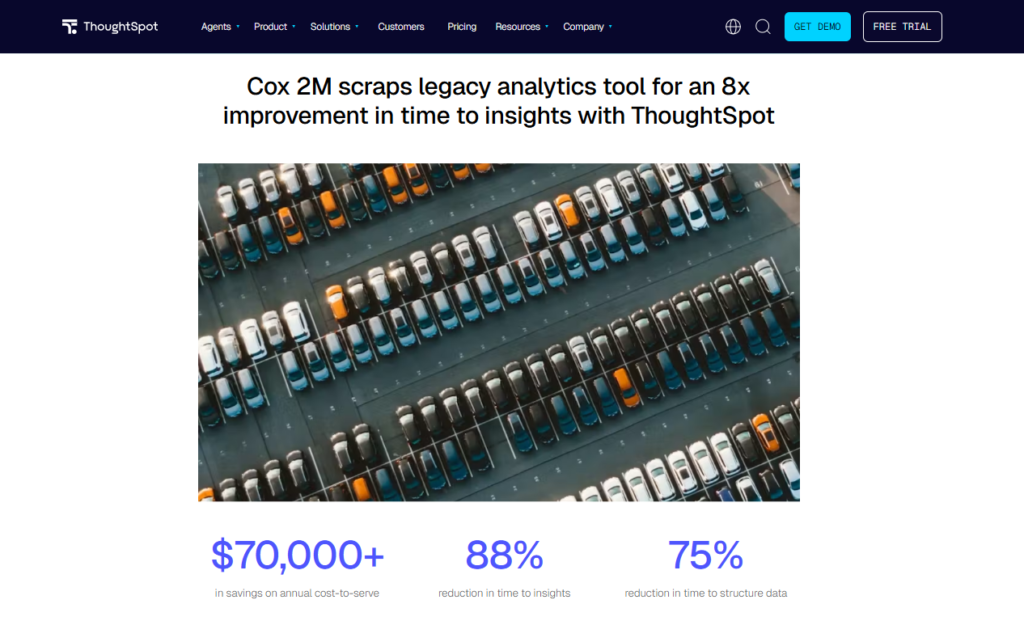
A case study that says “the customer saw significant improvements in operational efficiency” doesn’t give it much to work with. But one that says “time to insight dropped 88%, and ad hoc data costs fell by $70K annually” gives it something specific to cite.
ThoughtSpot and Sisense seem to have cracked this code. They don’t just publish case studies in volume. Most of them clearly quantify the results they’ve helped deliver.
For instance, ThoughtSpot’s Cox 2M case study clearly highlights outcomes such as:
- cost-to-serve falling by $70K annually
- time to insight dropping by 88%
- the team moving 8x faster on decisions
Source – ThoughtSpot
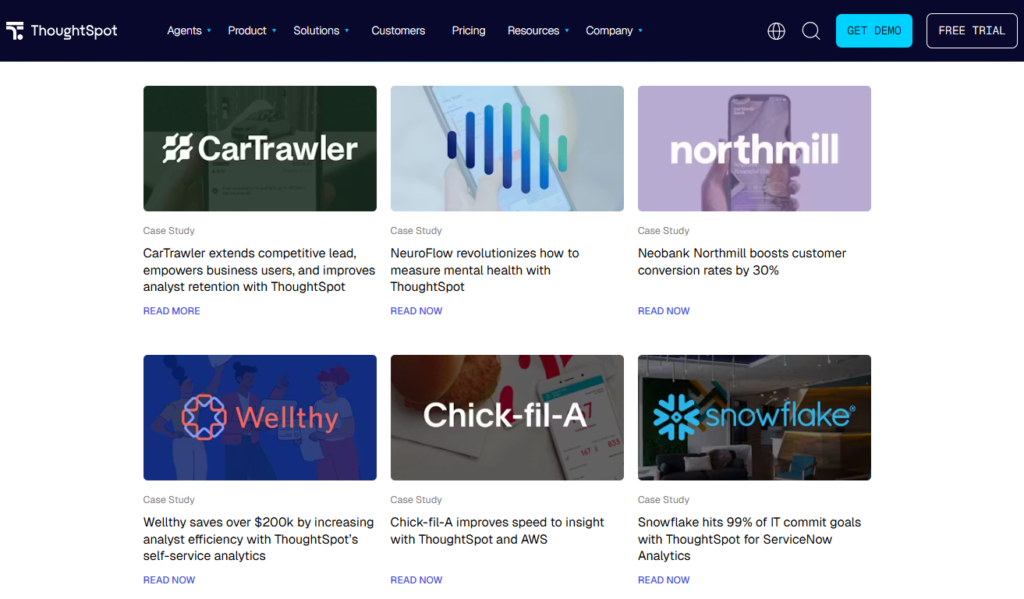
And this isn’t a one-off. ThoughtSpot has several case studies that follow the same data-driven format.
Source – ThoughtSpot
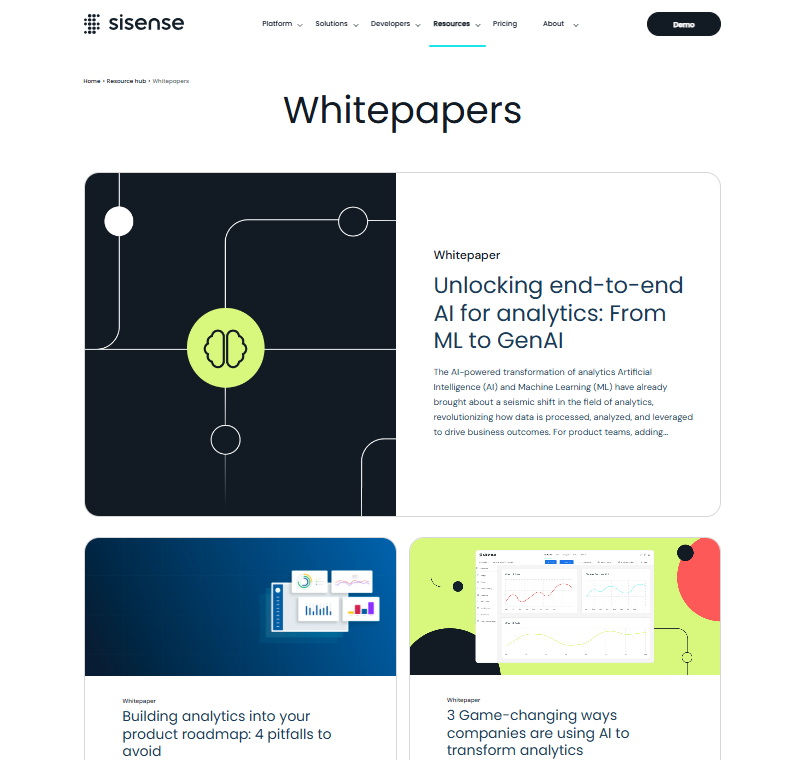
Sisense applies a similar approach.
Source – Sisense
Its Hastings Mutual case study highlights measurable outcomes like:
- a 2% revenue increase in commercial underwriting
- over $50M in upsell opportunities identified through their agency portal
- and $150K in annual cost avoidance from weather-driven risk insights.
The principle behind this is simple. When an AI tool is assembling a recommendation, it needs citable proof. A case study built around specific numbers gives it exactly that. The more concrete the outcome, the easier it becomes for AI tools to surface that content in response to a pointed buyer query.
3. They Control How They’re Positioned in Comparison Searches
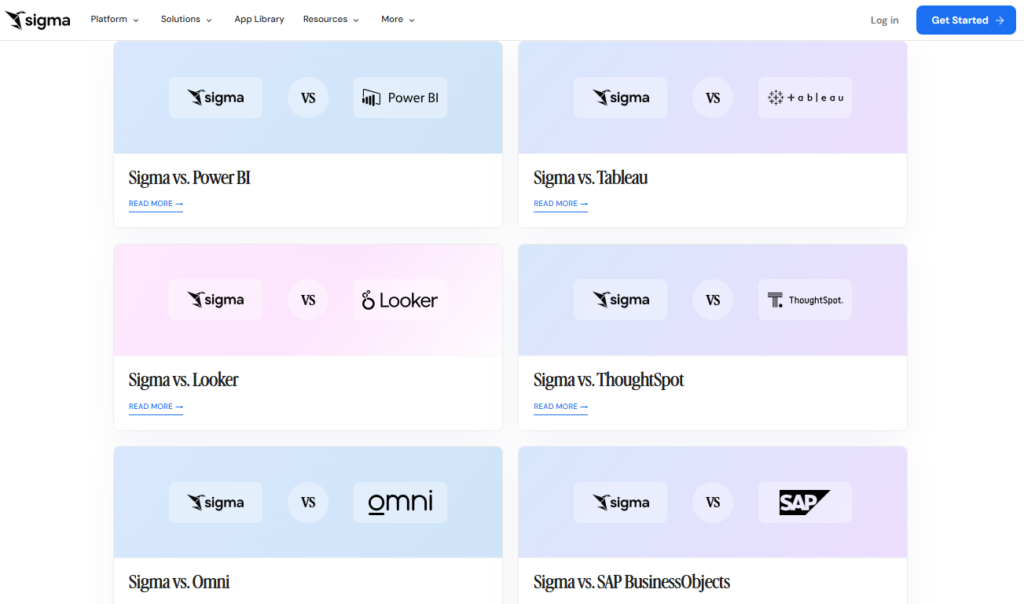
When evaluating BI tools, buyers often search for comparisons like “Sigma vs Tableau,” “best Looker alternatives,” or “Power BI vs Sisense vs Looker.” However, most platforms leave this conversation to review sites like G2 and Capterra, third-party brands, or competitors. That can be risky because someone else gets to explain your product at the exact moment a buyer is forming an opinion.
This is where BI platforms should take notes from Sigma Computing.
Source – Sigma Computing
It has dedicated head-to-head pages for every major competitor a buyer is likely evaluating alongside Sigma: Tableau, Power BI, Looker, ThoughtSpot, Omni, and others. Each page positions Sigma against a specific alternative using Sigma’s own framing, on Sigma’s own website.
In AI search, this kind of content helps tools understand where a tool fits. It shows which platforms it competes with, how it wants to be compared, and what differences buyers should notice. Since Sigma explains this on its own website, AI tools have a clearer source to draw from rather than relying solely on third-party pages or competitor content.
4. Their Training Content Helps Buyers Understand Ease of Adoption
Most BI platforms rely on publishing content that explains concepts rather than situations. While that’s useful for building awareness, it doesn’t do much for a buyer who’s trying to figure out how easy a specific platform will be for their team to learn and use. The same is true for AI tools.
When a buyer asks something specific, like “which BI platform is easiest for non-technical business users to onboard?” or “which BI tool has strong training for developers and analysts?”, LLMs have to rely on public reviews to surface the answer.
But ThoughtSpot University is a good example of what structured product training looks like.
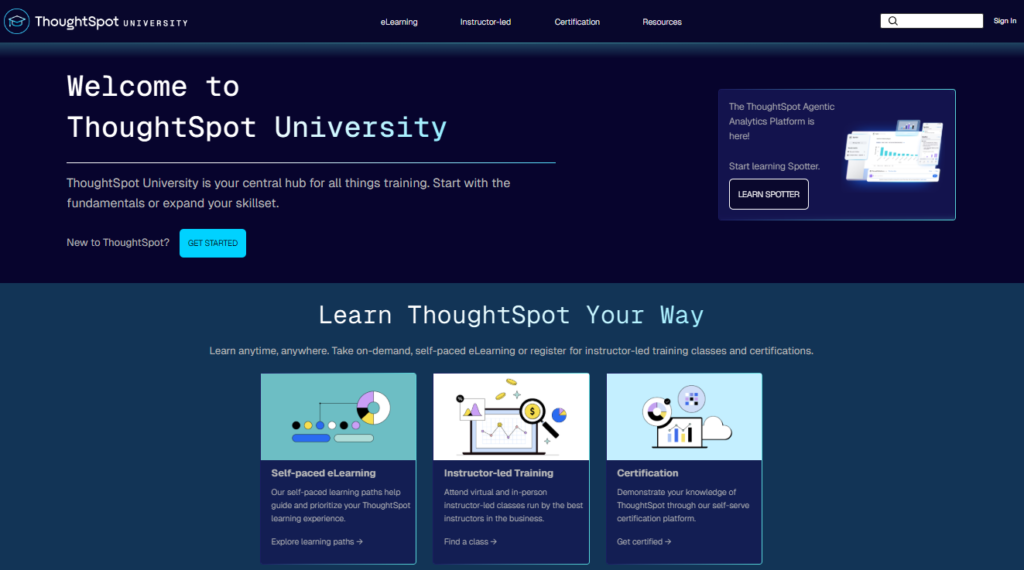
Source – ThoughtSpot University
It’s a full training platform organized around role-based learning paths for business users, data leaders, analysts, and developers working on Thoughtpost. A buyer evaluating ThoughtSpot can explore exactly what onboarding looks like for their specific team before they ever speak to a salesperson, which is a genuinely useful thing to offer at the evaluation stage.
Sigma Computing approaches this through a different set of formats.
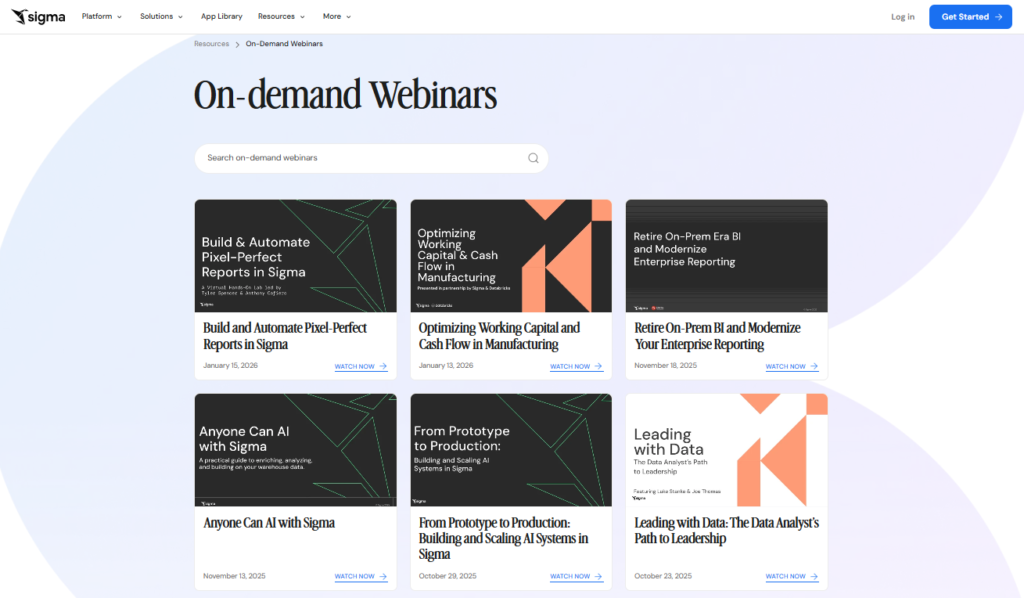
Source – Sigma Computing
Its QuickStart Guides, Training Shorts, and JumpStart Trainings give buyers a practical sense of what working with the platform looks like before they commit to a purchase. So, a developer evaluating Sigma can work through a hands-on guide, while a business user can follow a training built specifically for their role.
Such depth of role-specific, use-case-tied content gives AI tools a much clearer picture of where the platform fits and for whom. So, when a buyer asks an AI tool which BI platform works best for a specific role or workflow, a company that has documented those scenarios in detail is far better positioned to show up in the answer than one that hasn’t.
5. They Signal Depth and Topical Authority Through Their Resource Libraries
The more thoroughly a brand covers a topic in its public-facing content, the more likely AI tools are to associate it with that topic. A well-stocked library of reports, whitepapers, and ebooks is one of the clearest ways to demonstrate that coverage.
Sisense plays this well.
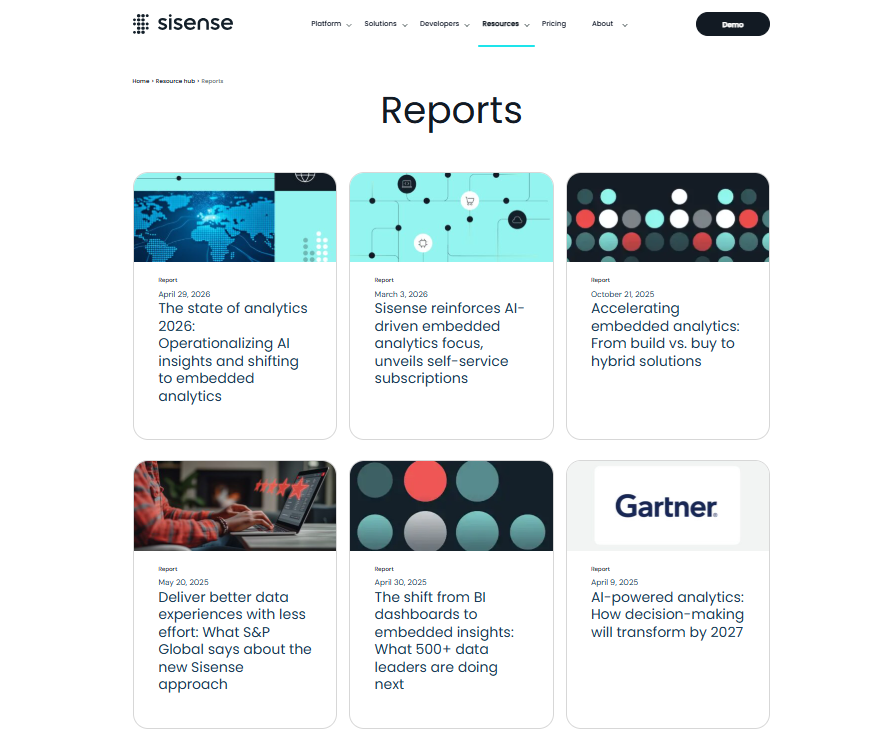
Source – Sisense
Its Guides and Reports section covers topics like the state of embedded analytics, the shift away from traditional BI dashboards, and how AI is changing data team workflows. These aren’t generic industry overviews. They’re topics that a data leader or product manager evaluating a BI platform would actually want to read.
Source – Sisense
Its Whitepapers section goes deeper, covering composable analytics, the build vs. buy decision in embedded analytics, and how organizations can get more out of their existing data infrastructure.
ThoughtSpot takes it further.
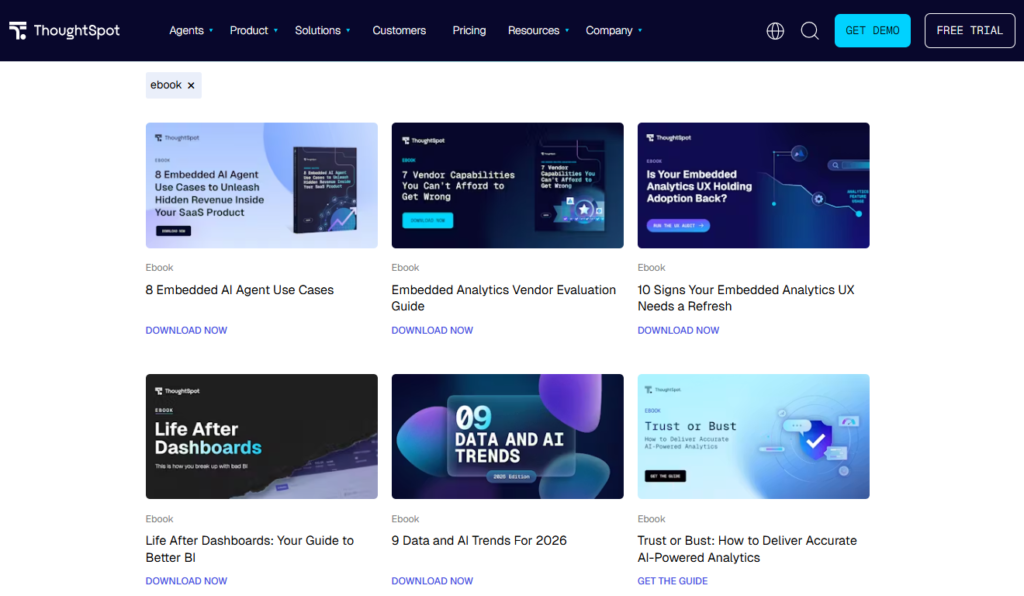
Source – ThoughtSpot
Its resource library doesn’t just have reports. It also includes ebooks on topics like BI strategy, data literacy, and AI-driven analytics, plus analyst reports from firms like Gartner. Everything is organized by role and industry, so whether you’re a data leader, a business analyst, or a product manager, there’s something in there that speaks directly to your situation.
All of this is publicly visible, which means AI tools can see the titles, topics, and descriptions even if the full content is gated. This can help AI tools connect a brand to the categories it consistently covers and consider it when a buyer asks about those topics.
That said, this is not an easy strategy to replicate. Building a strong resource library takes time, subject-matter expertise, and consistent investment. It also works only when the content adds something useful to the category. If a BI company publishes the same broad AI analytics or data literacy content as everyone else, it may add volume, but it will not create a strong reason for AI tools or buyers to see the brand differently.
So we’d recommend thinking carefully before investing heavily in this playbook. That said, there are a few practical strategies that are easier to implement and can still improve AI visibility for your BI platform. Let’s take a look.
3 Practical Steps to Improve AI Visibility for Your Business Intelligence Platform
So, where should a BI company start?
Not every company needs a massive resource library, a full training academy, or dozens of competitor pages from day one. The better approach is to start with the content gaps that directly affect how buyers compare, evaluate, and shortlist BI platforms.
Here are three practical ways to do that.
1. Publish Content for Buyers Who Are Already Comparing Tools
A lot of BI companies write content that helps buyers understand basic analytics topics, like what dashboards mean, how embedded analytics works, or what self-service BI means. It’s good for building awareness. But such content never helps buyers choose a platform.
At consideration and decision stages, they want specific details like what a tool does, its use cases, pricing, reviews, alternatives, etc. So, they search for queries like:
- Best BI platforms for SaaS companies
- Best business intelligence software for finance teams
- X alternatives for embedded analytics
- A vs B: What’s Better for Teams in 2025
- Best BI tools with AI-powered analytics
So, focus on building content around such questions. It tells search engines and AI tools who your product is for, which use cases it supports, and when they should recommend it.
If you look at Sigma Computing’s blog, you can see this approach in action.
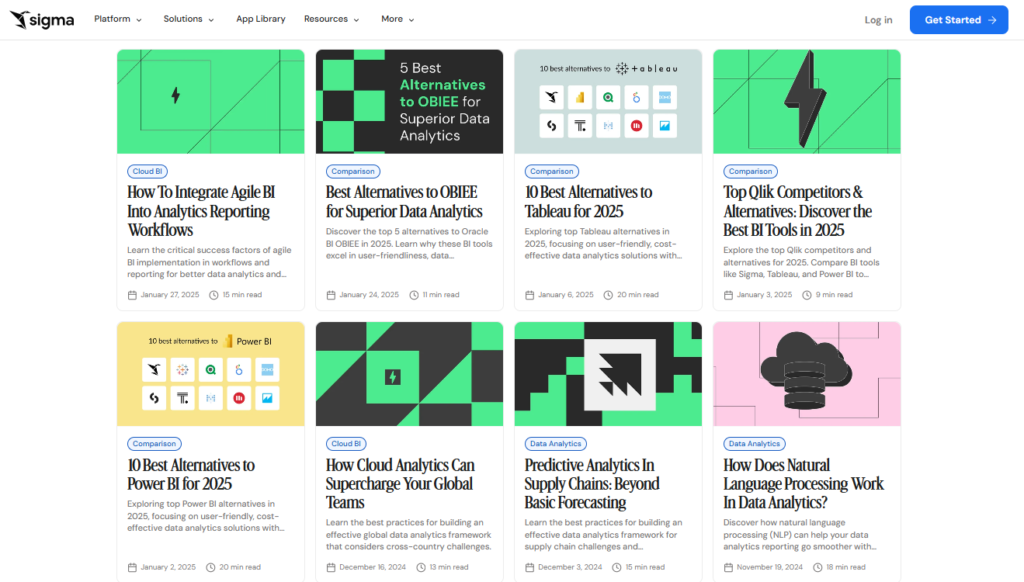
Source – Sigma Computing
The company has published pieces like “Best Alternatives to OBIEE for Superior Data Analytics,” “10 Best Alternatives to Tableau for 2025,” and “Top Qlik Competitors and Alternatives.” These articles target buyers who are already comparing tools and looking for the next best option.
Pro tip: Get very specific. Look at the exact questions buyers ask on platforms like Reddit, Quora, LinkedIn, and search engines, and build content on them. These places often show how buyers actually talk when they’re trying to choose a tool.
2. Build a Repeatable System for Decision-Stage Content, Not Just One-Off Pieces
Publishing one or two decision-stage articles isn’t enough. Platforms that show up often in AI recommendations usually create content across industries, roles, use cases, and competitors. That matters because buyers rarely ask the same question in the same way.
AI tools answer many different versions of the same question. So, if your content only covers one or two broad terms, you leave many specific buyer searches uncovered.
This is why having a repeatable content system matters. It means creating different content formats around the ways buyers actually evaluate BI tools. For example, comparison pages, alternative pages, industry pages, role-based pages, use-case pages, and best tools lists.
ThoughtSpot does this well.
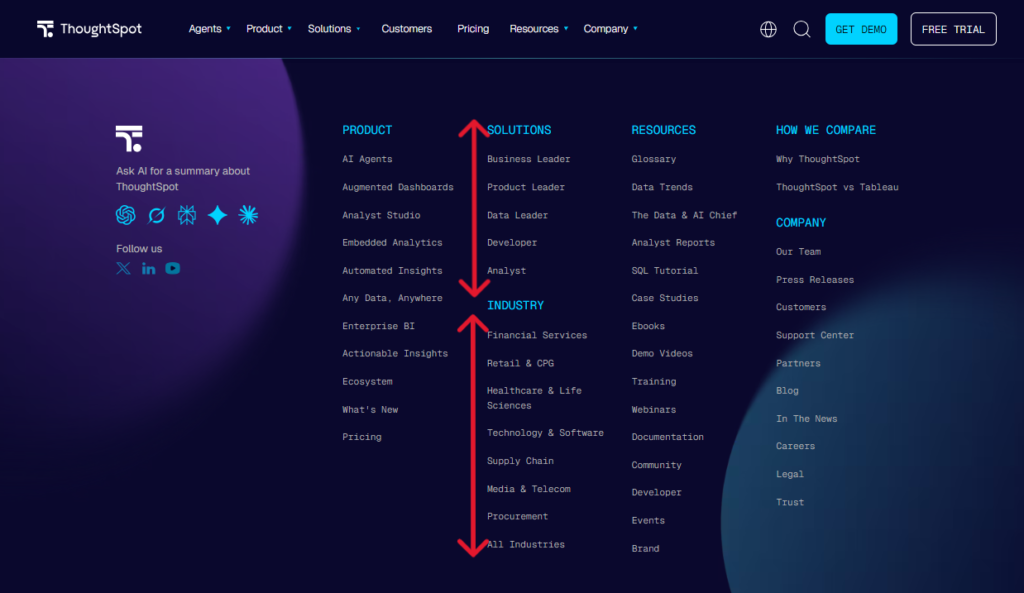
Source – ThoughtSpot
If you explore their Solutions section, you will find content targeting specific industries like financial services, retail, healthcare, and supply chain, as well as specific roles like data leaders, analysts, and developers.
BI companies can apply a similar approach by building repeatable content clusters. For example, if you want to target industry-led BI searches, you could create pages like:
- Best BI platforms for manufacturing companies
- Best BI software for healthcare analytics
- Best business intelligence tools for retail teams
If you want to target role-led searches, you could create content on topics like:
- Best BI tools for finance teams
- Best BI platforms for marketing teams
- Best business intelligence software for sales leaders
If you want to target competitor-led searches, you could create content on:
- Tableau alternatives for self-service BI
- Power BI alternatives for embedded analytics
- ThoughtSpot vs Sigma Computing
This approach helps you cover more high-intent searches without starting from scratch every time. It also gives AI tools a clearer pattern to work with. The more consistently your content connects your product to specific industries, roles, use cases, and competitors, the easier it becomes for AI tools to understand when your platform should be considered.
3. Build a Strong LinkedIn and YouTube Presence Around the Same Topics
Many BI companies still treat AI visibility as limited to website. But that’s too narrow.
AI tools don’t learn about a brand from one source alone. They pick up signals from the broader web, including third-party mentions, review sites, social platforms, videos, webinars, podcasts, and community discussions. This is why LinkedIn and YouTube should atleast be a part of your AI visibility strategy.
For BI platforms, LinkedIn is especially useful because it’s where buyers, data leaders, analysts, product leaders, and operators discuss problems in real time. If your company is posting useful content there, you create easily more public context around what your brand knows.
A strong LinkedIn strategy could include:
- Short posts explaining BI buying mistakes
- Carousels comparing analytics use cases
- Customer proof snippets
- Clips from webinars and product demos
- Practical takes on AI analytics, embedded BI, and self-service reporting
| Read Next: Top 5 LinkedIn Ghostwriting Agencies for Founders and Executives (& How to Evaluate Them) |
YouTube matters for a different reason. BI is a visual category. Buyers often want to see how your platform’s dashboards work, how data exploration feels, how embedded analytics looks inside an app, or how AI-powered querying actually behaves. Written content can explain these ideas, but video can make them easier to visualize.
A strong YouTube strategy could include:
- Product walkthroughs for specific BI use cases
- Dashboard build tutorials
- Short explainers on analytics concepts
This broader approach helps AI visibility because it gives your brand more public touchpoints around the same topics your buyers are searching for. If your website, LinkedIn, and YouTube all point to the same positioning, AI tools get a more consistent picture of what your platform does and where it fits. This improves your chances of showing up when buyers ask AI tools for platforms like yours.
Want to Improve Your AI Visibility in the Business Intelligence Space? We’re Here for You
Getting recommended by AI tools starts with making your product easier to understand, compare, and trust. That’s where many BI platforms struggle. They may have strong features, strong customers, and a clear market need. But their content doesn’t always make that obvious to AI tools.
At Concurate, we use our proprietary Perfect Match Framework to fix this gap.
We start by defining your ideal customer profile and checking where your brand currently shows up in AI answers. Then, we audit your content, search presence, and technical setup to find what’s working and what’s missing. From there, we build a plan to help your BI platform get found by the right buyers, create content that makes your positioning clearer, and monitor performance so your AI visibility keeps improving.
If you’re a BI company ready to fix your AI visibility gaps and show up in the buyer research journeys that matter, book our calendar today.
Frequently Asked Questions:
1. How often should I audit my business intelligence platform’s visibility in AI search?
Traditionally, every SaaS business, including BI companies should audit AI search visibility once every quarter because AI recommendations can change as competitors publish new content, review change, and AI tools pull from different sources. A quarterly check helps you see where your platform appears, how accurately it’s described, and which prompts need stronger content support.
2. Can a smaller BI platform appear in AI recommendations even if it has a lower domain authority?
Yes, smaller BI platforms can still appear in AI recommendations if their content is specific, useful, and well-structured. They may not win broad queries like “best BI tools” immediately, but they can show up for sharper searches around use cases, industries, features, alternatives, or buyer pain points.
3. Should I optimize content differently for ChatGPT, Perplexity, Gemini, and Claude?
No, you don’t have to optimize your content differently for different AI tools. Instead, just focus on making your content easy to understand and verify. You can do this by clearly positioning your platform, updating product information, creating comparison pages, and ensuring consistent messaging across your website and social media handles you can control. This can help boost visibility across all AI tools.
Disclaimer: The information presented in this article is compiled from publicly available sources, including company websites, industry reports, and social media. All trademarks, brand names, and logos mentioned are the property of their respective owners. We do not claim any ownership of third-party marks, nor do we imply endorsement or affiliation. This article is intended for informational purposes only.