

| TL;DR: We tested buyer-style iPaaS queries across ChatGPT, Gemini, and Perplexity. Workato, Boomi, and MuleSoft appeared more consistently than many other platforms. Their visibility was associated with four recurring patterns: clear use-case content, detailed integration resources, strong third-party presence, and measurable customer proof. This article breaks down the patterns behind that visibility and shares practical strategies challenger iPaaS brands can use to improve their presence in AI answers. |
Companies now increasingly rely on iPaaS platforms to connect the growing number of applications and workflows across their businesses. But choosing the right platform is difficult when most vendors promise similar benefits. Most of them offer faster integrations, easier automation, and greater scalability.
It is no surprise that buyers are increasingly asking AI tools which iPaaS platforms are best suited to their requirements.
We got curious and wanted to find out which platforms appeared most consistently across different AI tools. So we tested a few iPaaS queries across ChatGPT, Gemini, and Perplexity. We found that a few names surfaced repeatedly, despite there being over 270 solutions in the market.
We then reviewed these companies’ content strategy to understand what might be driving that visibility. This article breaks down the four patterns we found and explains what challenger iPaaS brands can learn from them.
Which iPaaS Platforms Show Up Most Often In AI Recommendations
To see which platforms appeared most consistently, we tested five iPaaS searches across ChatGPT, Gemini, and Perplexity:
- Best iPaaS platforms for enterprises
- Top integration platform as a service providers
- Best iPaaS tools for connecting business applications
- Best iPaaS for API integration and workflow automation
- Top iPaaS software for growing SaaS companies
The searches covered different evaluation priorities. Some focused on enterprise requirements, while others centered on application connectivity, API integration, workflow automation, or the needs of growing SaaS companies.
When we reviewed the responses, a few platforms appeared much more often than the rest. Workato, Boomi, and MuleSoft showed up most consistently across the searches.
That made us look deeper.
Were these platforms appearing only because they are well-known names? Or were they giving AI tools stronger signals around what they do, the use cases they support, and why they should be recommended?
So we dug deeper to find the patterns that help these vendors appear so consistently.
4 Reasons Why Workato, Boomi, And MuleSoft Keep Showing Up In AI Answers
We found that the platforms that appeared most consistently did more than explain their features. Their content clearly showed the problems they solve, the systems they connect, and the situations in which they are most relevant.
Across the three companies, these four patterns stood out.
1. They Create Content Around Specific Use Cases And Industries
Most iPaaS vendors explain their capabilities in broad terms. However, the companies that surfaced repeatedly go a step further by showing exactly how those capabilities apply to specific business processes.
You see, they do not rely solely on product pages to explain what they do.
They create content around the problems and specific workflows companies use iPaaS platforms to solve.
Boomi, for example, organizes its solutions around use cases it enables, such as order-to-cash, Customer 360, ERP modernization, legacy modernization, and data sovereignty.
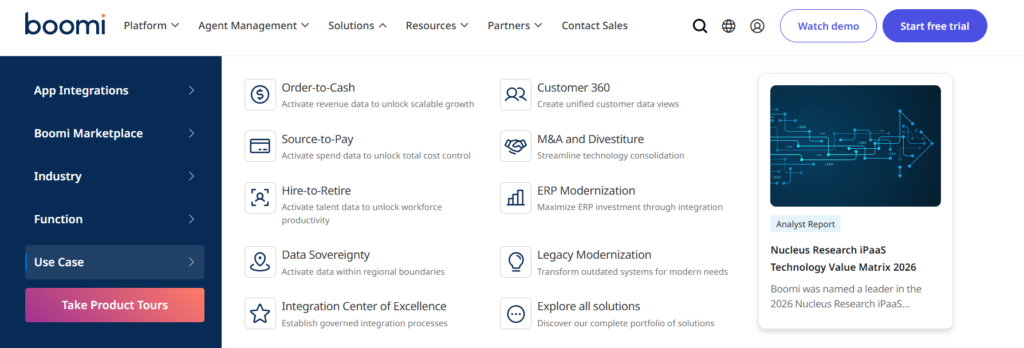
Source – Boomi
Workato takes a similar approach. Its use-case library is organized by both use cases and business functions such as IT, HR, sales, marketing, and customer support.
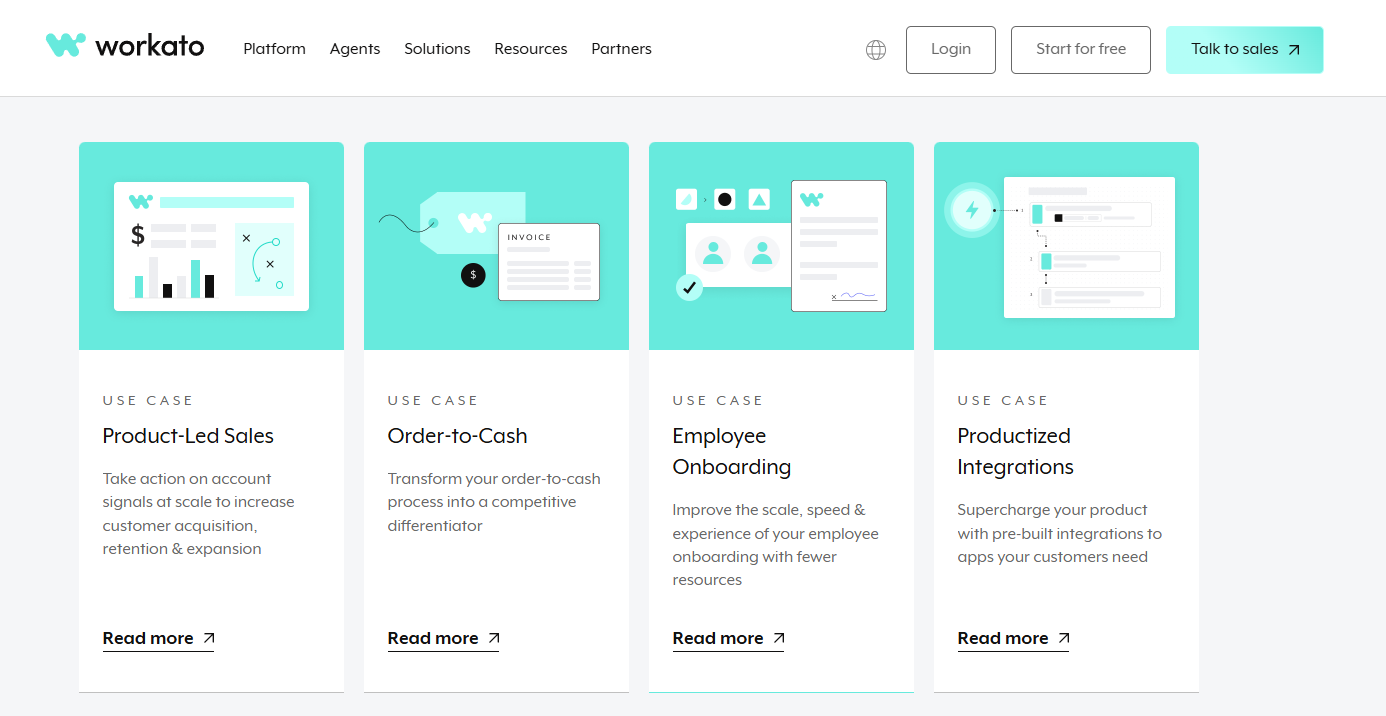
Source – Workato
This matters because buyers often describe their situation using specific prompts to AI tools. When searching for iPaaS solutions, they are likely to ask for tools that can modernize a legacy system, automate an order-to-cash process, connect Salesforce with NetSuite, or improve employee onboarding.
By creating dedicated content around these situations, the platforms make the connection between their product and the buyer’s requirement explicit. AI tools do not have to infer whether a particular iPaaS platform can support a workflow. They can find content that directly explains the relevant process, applications, and outcome.
We saw this reflected in our searches.
When we searched “Best iPaaS for product-led sales,” Workato and Boomi appeared prominently in the recommendations.
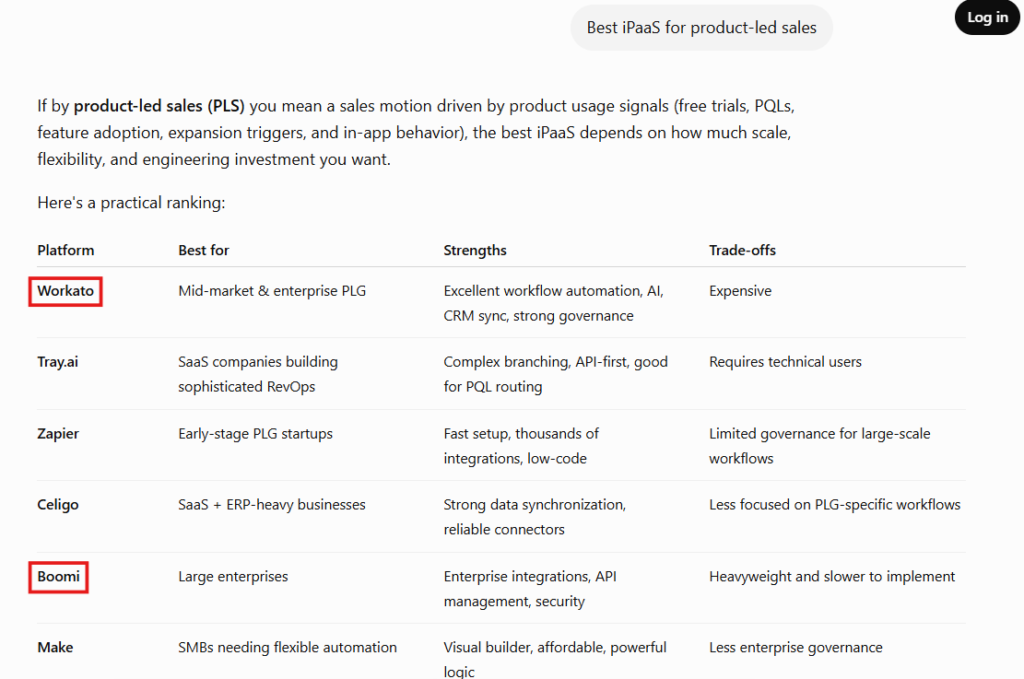
Source – ChatGPT
We noticed the same pattern when we searched for “Best iPaaS for legacy system modernization.”
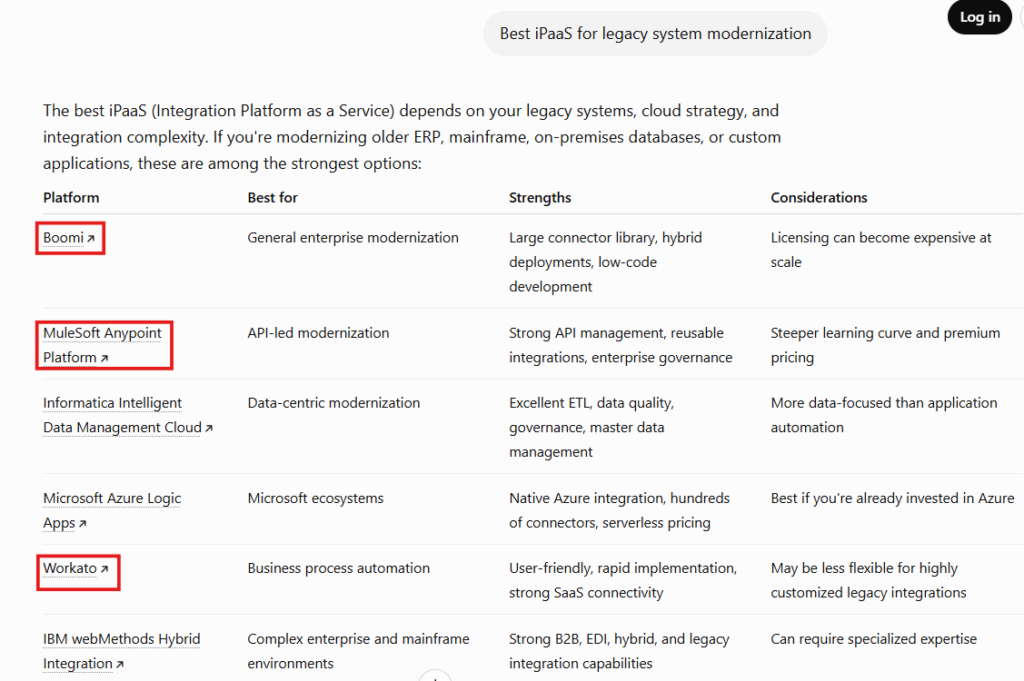
Source – ChatGPT
This kind of use case content helps AI tools connect each platform with specific business needs.
Their industry content adds another layer of specificity. By explaining how integration requirements differ across manufacturing, financial services, healthcare, retail, and other sectors, they give AI tools more context about which companies and situations their platforms may suit.
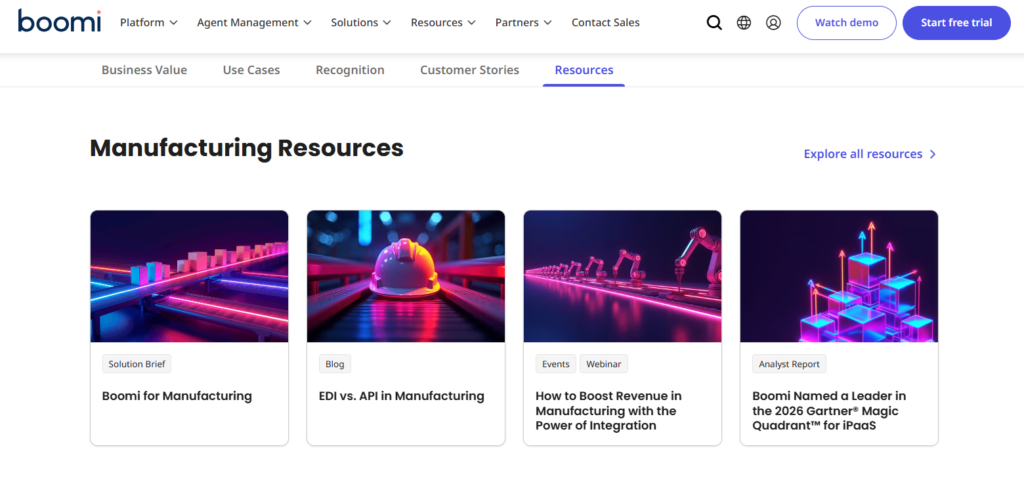
Source – Boomi
Together, these use cases and industry coverage may help explain why these platforms appear across a wider range of specific iPaaS searches, rather than only in broad category recommendations.
2. They Show Buyers Which Applications They Can Connect
iPaaS buyers often know which systems they need to connect before they know which platform to choose. For example, a company may need Salesforce to exchange customer and order data with NetSuite. Another business may need to connect SAP with newer cloud applications.
Before selecting an iPaaS platform, they would want to know whether a particular platform supports those applications and what the integration can help it accomplish.
That is where app-specific content helps. The companies that get recommended often make it easy for buyers to see which business applications their platforms support. They also explain how data and workflows can move between those applications and which workflows can be automated.
To do so,
- Workato maintains a large integration library and publishes detailed guides for systems such as NetSuite and Marketo. It also has resources on topics embedded iPaaS connectors.
- Boomi offers more than 1,000 prebuilt connectors and publishes practical resources across Salesforce, SAP, Workday, and other enterprise systems.
- MuleSoft’s Anypoint Exchange brings together connectors, APIs, templates, and implementation examples. Its supporting guides explain how teams can apply these resources in different integration scenarios.
The same pattern appeared in our searches.
When we searched for “Best iPaaS for integrating SAP with cloud applications,” the three platforms showed up, as each of them had dedicated content around SAP integrations.
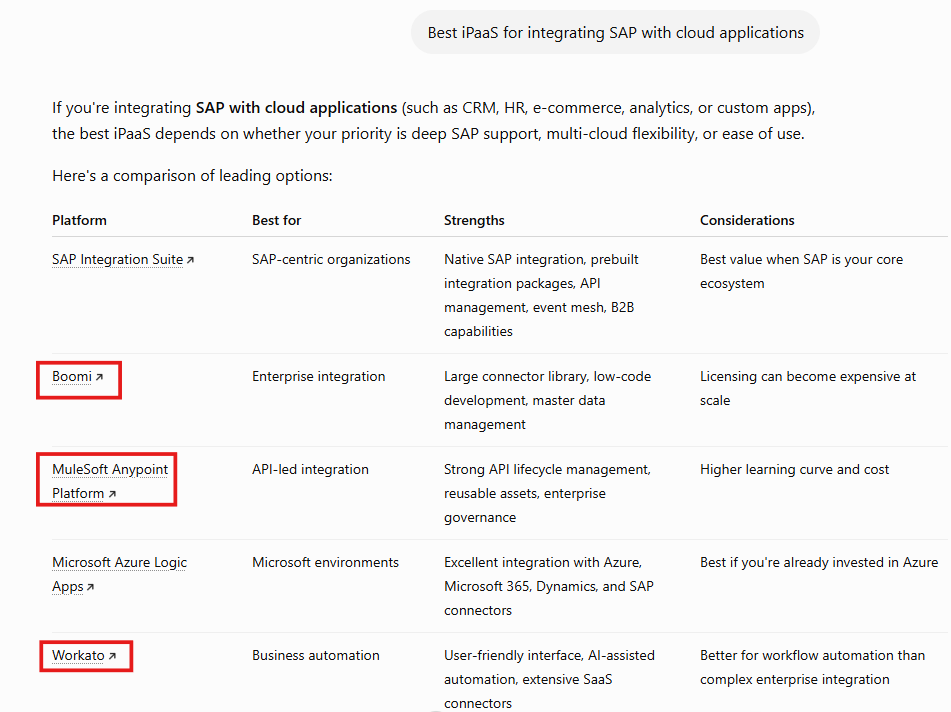
Source – ChatGPT
These resources gave AI tools something more specific to reference than a general product page. We found the same pattern in subscription billing. Our Chargebee content strategy analysis shows how integration guides help the platform appear when buyers ask whether it works with systems such as Salesforce and Stripe.
3. They Build Visibility Beyond Their Websites
Another pattern we noticed was that their visibility was not limited to blogs and product pages.
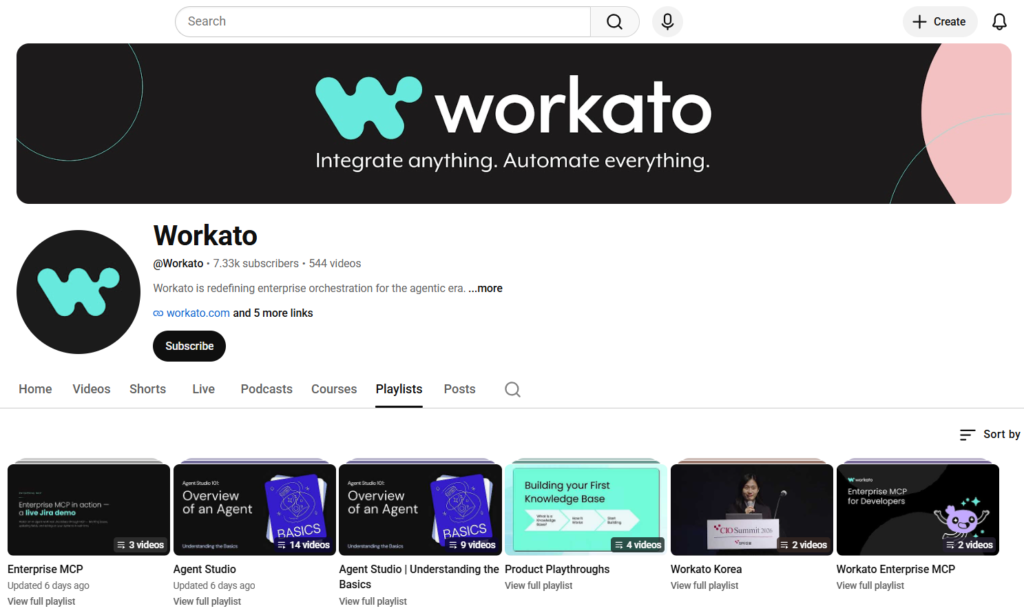
Workato has an active YouTube presence, where it regularly publishes videos and updates playlists around integrations, automation, product education, and AI. So does Boomi.
Source – YouTube
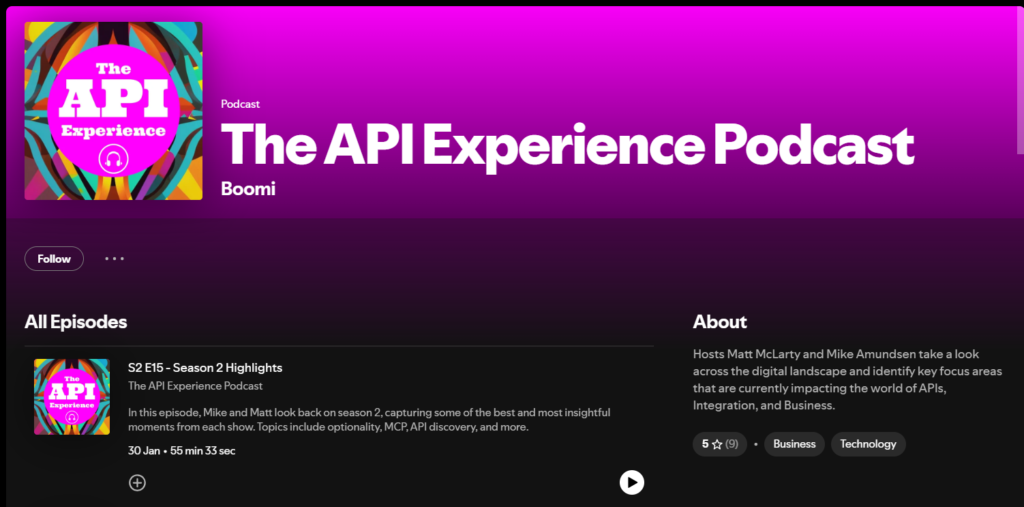
Moreover, Boomi extends its presence through The API Experience Podcast, which is also available on Spotify.
Source – Spotify
MuleSoft has an official subreddit channel and an active Reddit community where users discuss implementation questions, technical issues, and platform experiences.

Source – Reddit
These channels serve different purposes. In each case, they give buyers another place to discover, learn about, or discuss the company.
That matters because iPaaS buyers do not rely on a single source when researching platforms. They may watch a product walkthrough, listen to an expert discussion, or look through community conversations before forming an opinion.
This wider public footprint can give AI tools additional context about the topics, use cases, and technical questions associated with each platform.
4. They Back Their Claims With Customer Proof
Most iPaaS platforms talk about saving time, reducing manual work, and helping teams move faster. The difference is that these companies quantify the outcomes based on the scale of results achieved for real customers.
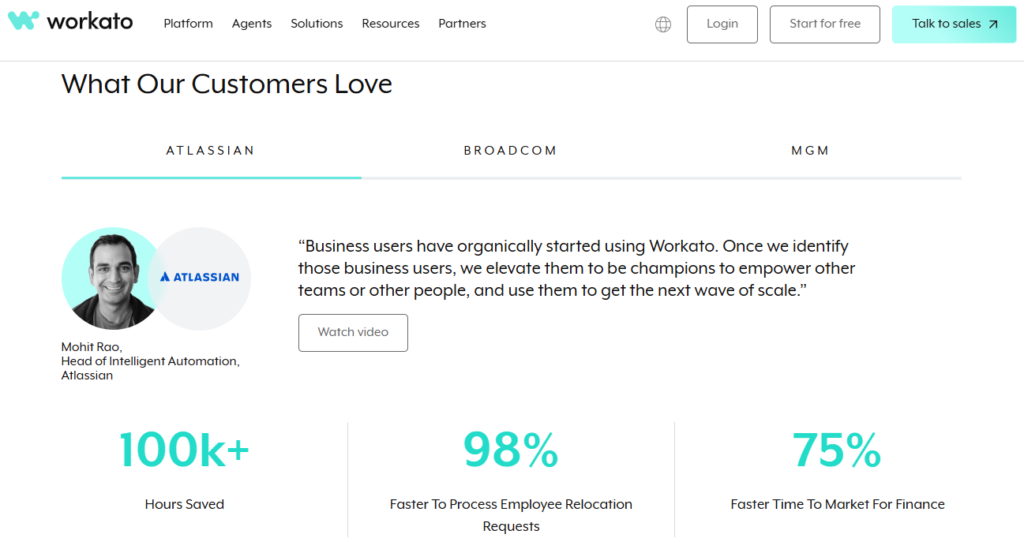
For example, Workato’s Atlassian case study highlights more than 100,000 hours saved through automation.
Source – Workato
Boomi shows how the Australian Red Cross connected its systems to create a more unified experience for 270,000 supporters.

Source – Boomi
These numbers make broad claims about efficiency and connectivity more concrete. Instead of simply saying that a platform improved a process, buyers can see what the platform helped achieve.
These case studies give AI tools something specific to work with. Instead of repeating generic product messaging, they can point to a real customer and a clear problem. They can also highlight a measurable outcome when explaining why a platform may be worth considering.
These patterns make one thing clear. Showing up in AI recommendations is not only about having a strong iPaaS product. It is also about making your strengths, use cases, and proof easy for AI tools to understand.
If your iPaaS brand is not appearing in those answers yet, here are three strategies you can prioritize so that your brand gets recommended too, the next time.
3 Strategies Challenger iPaaS Brands Can Use To Improve AI Visibility
To achieve visibility, challenger brands need not match larger vendors in content volume.
They just need to be more deliberate about where they show up. That means focusing on the searches buyers already make, the integration questions they need answered, and the proof that helps them trust a platform.
Here are three strategies you can focus on to improve your AI visibility.
1. Create Content That Helps Buyers Build An iPaaS Shortlist
Many iPaaS buyers begin by asking AI tools which platforms are worth considering.
Broad searches such as “best iPaaS platforms” are highly competitive. Challenger brands may have a better chance of being discovered by creating list-based content around the specific needs of their buyers.
For example, you can create content on:
- Best iPaaS platforms for mid-sized companies
- Best iPaaS for connecting CRM and ERP systems
- Top iPaaS tools for manufacturing companies
- Top iPaaS for growing SaaS companies
These listicles can help AI tools understand which platforms fit a specific buyer situation. However, a generic list of vendors will not be enough.
The content should explain which type of companies each platform is best suited for. It should cover which applications and integration needs it supports, and what buyers should consider before choosing. It should also show where your platform fits and include proof to support that recommendation.
This makes the shortlist more useful for buyers and gives AI tools a relevant source to draw from when answering specific iPaaS recommendation queries.
2. Create Comparison And Alternative Content
Now, just because a tool is popular, it does not mean the buyer will automatically go ahead with the tool.
Some are still checking whether another platform may be easier and cheaper to use, while still offering the integrations or those more aligned with their budget and technical needs. That is where comparison and alternative content become valuable.
There are good chances iPaaS buyers are searching for keywords like Workato Alternatives or MuleSoft Alternatives.
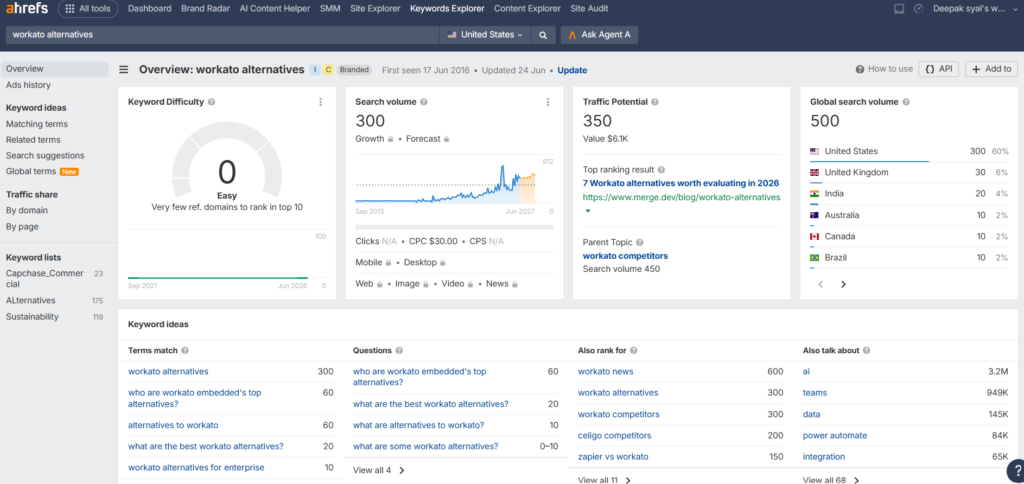
In fact, when we analyzed Ahrefs search data, we found that “Workato alternatives” has a monthly search volume of 500. This suggests buyers are actively evaluating alternatives to Workato, which means there is a good chance for challenger brands to be considered alongside established platforms.
Source – Ahrefs
You can also benefit by creating content around searches such as:
- Best alternatives to [Popular iPaaS Platform]
- [Your Brand] vs [Popular iPaaS Platform]
- [Popular iPaaS Platform] alternatives
- Best iPaaS platforms like [Competitor]
- Best [Competitor] alternatives for [Specific Use Case]
The content should clearly explain the features of each platform, where each fits, how both platforms differ, and when the challenger may be the stronger choice. This kind of content helps buyers easily compare options. It also gives AI tools clearer information about where your platform sits in the iPaaS market.
3. Build Trust Beyond Product Pages
iPaaS buyers rarely trust a platform based on product claims alone.
They also look at G2 reviews and analyst reports. Moreover, they might also explore LinkedIn discussions, YouTube videos, and Reddit threads to understand how a platform performs in the real world.
One example we found was a Reddit discussion where someone asked for recommendations to deploy an APIM instance. What we loved was how a Microsoft Azure employee answered the question directly. The response was useful and not promotional. That kind of participation helps improve customer experience and foster more communication.
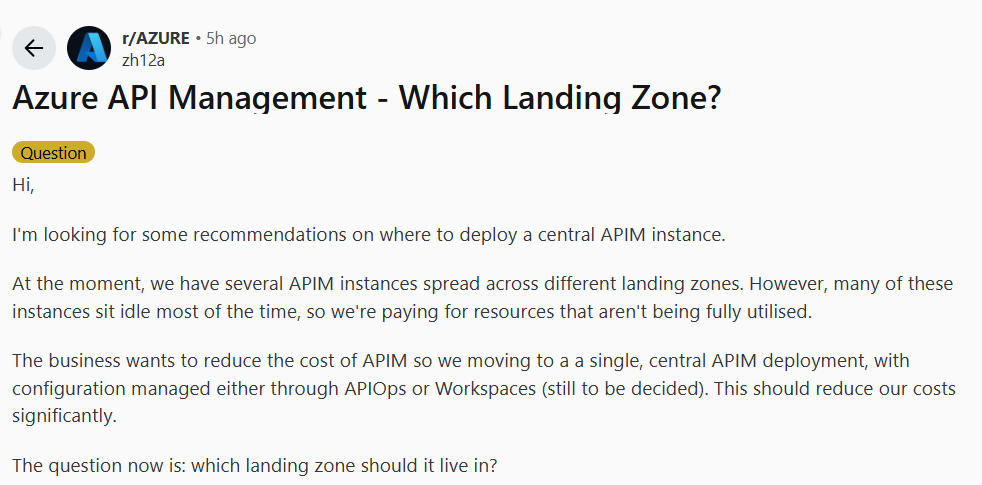
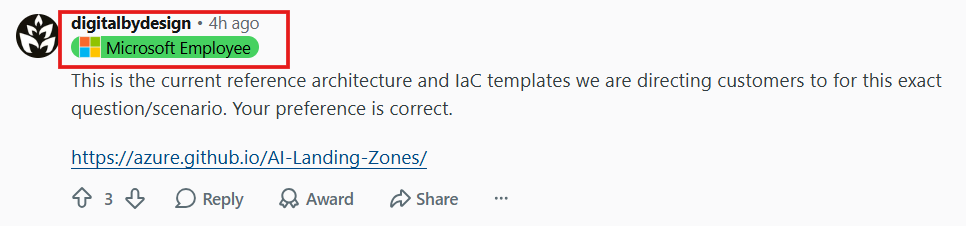
Source – Reddit
Challenger brands can take a similar approach. Encourage customer reviews, participate in relevant communities, and have your leaders share practical integration lessons on LinkedIn.
If your team lacks the time to build a presence on LinkedIn, our LinkedIn ghostwriting services can help. We can help turn your internal expertise into practical content for the conversations your buyers already follow.
The main takeaway is that AI visibility does not depend only on what you publish on your website. It also depends on whether your company appears in the places buyers use to research, evaluate, and discuss iPaaS platforms.
Building this wider presence requires a clear strategy across content, customer proof, and third-party channels. That is where expert SaaS content marketing agencies like Concurate can help.
How Concurate Helps iPaaS Platforms Improve AI Visibility
At Concurate, we use our Perfect Match Framework to understand when AI tools recommend your iPaaS platform, when they recommend competitors instead, and how accurately they describe where your product fits.
We then review the content and sources supporting those answers to identify what may be missing. That could be stronger coverage of a key integration, a clearer explanation of a specific use case, a comparison buyers are already making, or customer evidence that gives your claims more weight.
From there, we build a focused roadmap around the opportunities most relevant to your buyers, rather than producing content simply to increase volume.
If you feel that your iPaaS platform deserves to appear in more AI-generated shortlists, book a call with us. We will show you where your visibility stands today and where the strongest opportunities lie.
Discover More AI Visibility Insights
Our research covers several software categories, revealing how AI platforms recommend products to buyers. Explore the guides below to learn more.
- 3 Reasons Why AppFolio, Yardi, And Buildium Consistently Show Up In AI Answers
- 5 Reasons Why Workato, Boomi, And MuleSoft Keep Appearing In iPaaS AI Recommendations
Frequently Asked Questions
1. Does strong Google visibility guarantee that an iPaaS platform will appear in AI answers?
Not necessarily. Strong Google visibility can make your content easier to discover on Google, but it does not guarantee inclusion in AI answers. AI platforms may also draw signals from multiple third-party sources, including reviews, analyst reports, YouTube, and community discussions. Consistent presence across these sources can improve your chances of appearing.
2. How should iPaaS companies measure whether their AI visibility is improving?
You can measure AI visibility by testing a small set of searches that reflect how potential customers look for iPaaS platforms. You can test them regularly across ChatGPT, Gemini, and Perplexity, and track whether your brand appears, how prominently it is recommended, and which competitors show up alongside it. Over time, this will show whether your visibility is improving for the searches that matter most.
Disclaimer: The information presented in this article is compiled from publicly available sources, including company websites, industry reports, and social media. All trademarks, brand names, and logos mentioned are the property of their respective owners. We do not claim any ownership of third-party marks, nor do we imply endorsement or affiliation. This article is intended for informational purposes only.