

| TL;DR: Government software companies rarely struggle with product quality. They struggle with AI visibility for a few reasons. Their best content is often locked in RFPs and procurement documents. Their public messaging is written for procurement officers, not AI platforms. And the third-party ecosystem that validates vendors barely exists in their category. This guide covers nine GEO agencies that understand those specific challenges and what to look for before you hire one. |
When government procurement teams ask AI, “What’s the best case management system for state agencies?” or “List the top 5 fraud detection software for government agencies,” they often get the same set of names.
Not because those products are objectively the best. But when AI systems search the web to answer those questions, they find clear, public-facing content from those companies that they can understand and cite.
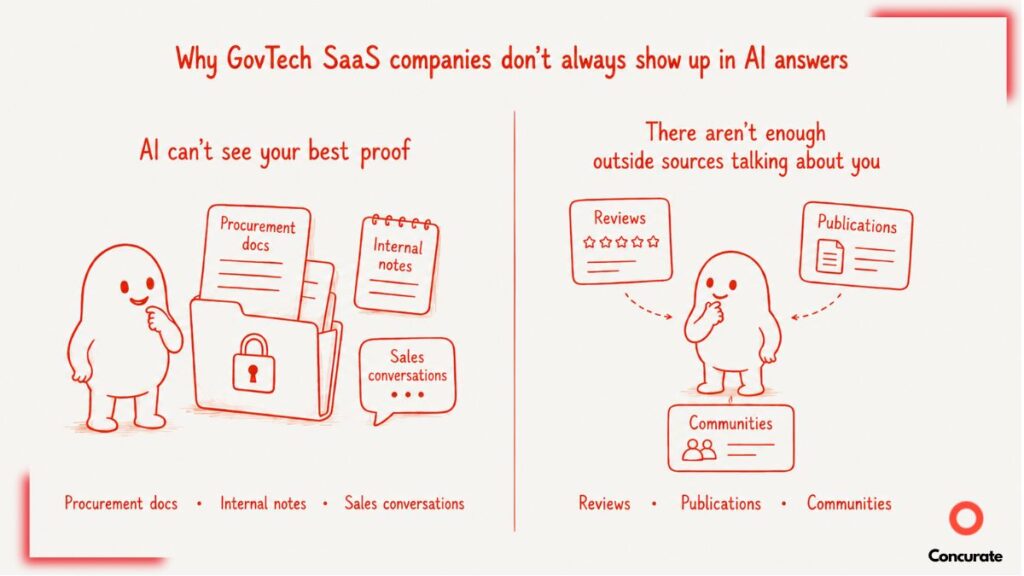
Meanwhile, your tool may offer better features and be more purpose-built for government agencies. But if your strongest proof sits inside RFP responses, internal documents, or sales conversations, AI tools may not have enough visible context to include you in the answer.
That is where generative engine optimization agencies for government software companies can help. In this article, we will cover nine GEO agencies that help close that gap. But before we get to that, let’s evaluate the reasons why AI visibility doesn’t materialize for many B2G SaaS companies.
3 Reasons Why B2G SaaS Companies Struggle To Show Up In AI Answers
So where does the visibility gap actually come from?
For many GovTech SaaS companies, the issue is not one single missing page or keyword. It is usually a mix of hidden expertise, formal messaging, long buying cycles, and weak third-party coverage.
Here are the three reasons we see most often:
1. Their Expertise Lives In Places AI Cannot Read
Most GovTech companies carry their real knowledge in request for proposals (RFPs), procurement documents, internal whitepapers, and gated resources. These are the places where the product’s depth actually shows. But that knowledge is often not available publicly.
For many GovTech companies, the website contains only a small fraction of the knowledge the organization actually possesses. The gap between what the company knows and what AI can find is enormous.
2. The Buying Cycle Is So Long That Nobody Thinks To Build Content For The Research Phase
B2G sales cycles run twelve to eighteen months or longer. Most GovTech companies focus their energy on relationship-building, approved purchasing routes, and direct outreach because that is what wins deals.
Content marketing feels like a long game, due to which it becomes deprioritized. The result is that when a government buyer does go to an AI platform to build an initial shortlist, the company has almost nothing there at that moment.
3. The Category Is Niche Enough That There Is Almost No Third-Party Coverage To Borrow From
In B2B SaaS, AI platforms have G2 reviews, comparison blogs, Reddit threads, and dozens of publications to pull from. GovTech works differently. The ecosystem of third-party content that AI platforms rely on for context and proof is nearly empty for most GovTech subcategories.
A company cannot rely on an ecosystem of reviews, comparisons, and community discussions that barely exists. They have to build it from scratch.
Understanding these challenges makes it easier to see why many GovTech companies struggle to gain visibility in AI search. This is where the right GEO agency can help. But not every GEO agency will be the right fit for a GovTech SaaS company. So before you choose one, here are the key factors to evaluate.
5 Questions To Ask When Evaluating A GEO Agency For Your GovTech SaaS Company
Not every GEO agency understands what makes selling to the government different. Most are wired for commercial B2B SaaS, where buyers are faster, search volume is higher, and the content ecosystem is rich. GovTech is none of those things.
Before you hire an agency, here are five things worth testing:
1. Do They Know How Government Buyers Actually Research Before An RFP Drops?
Government procurement does not begin with an RFP. It begins months earlier, when agency staff are quietly researching what solutions exist, which vendors have a track record, and what peers in other agencies have used. That research increasingly happens on AI platforms.
For example, a government buyer may ask questions like:
- What permitting software are growing municipalities using?
- Which vendors support digital inspections for county governments?
- What case management systems are commonly used by state workforce agencies?
These conversations often happen long before a formal procurement process begins. An agency that does not understand this pre-procurement research phase will build content for the wrong moment.
| Question to ask: What does your content strategy look like for buyers who are twelve months away from a purchase decision? |
2. Can They Write For A Non-Technical Buyer In A Technical Product Category?
GovTech products are often technically complex: permitting systems, case management platforms, and public records infrastructure. But the buyers are still human.
Program managers, agency directors, and budget officers are often the ones doing the AI research. That means the content cannot rely on technical depth alone. It also needs to make complex products understandable to the people building the shortlist.
A budget officer researching permitting software may care less about the underlying technology stack and more about deployment costs, maintenance requirements, and expected efficiency gains. Similarly, a program director evaluating a case management platform may be focused on implementation timelines, reporting capabilities, and whether staff can adopt the system easily.
A good agency should understand what each decision-maker needs to know, what concerns they are trying to resolve, and what information will help them move forward faster.
| Question to ask: Can you show examples of content you have written that makes a complex product clear to a non-technical government buyer? |
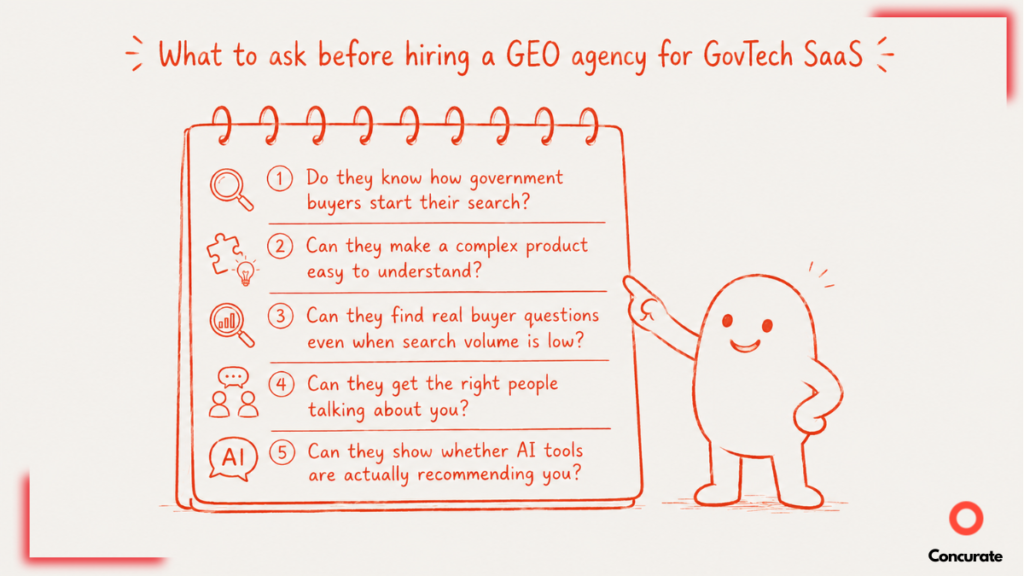
3. Do They Understand How To Build Visibility In A Low-Volume Category Where Keyword Tools Show Nothing?
GovTech search volumes are genuinely small. An agency that relies heavily on keyword volume data may conclude there is little opportunity because the numbers appear too low.
But low search volume does not mean low buying intent. In GovTech, many important searches happen as detailed questions inside AI platforms, not as high-volume Google keywords.
That is why the right agency needs an AI benchmarking process. They should test how government buyers may describe their situation across ChatGPT, Perplexity, Gemini, and other AI platforms. They should also study which vendors appear, why those vendors are being recommended, what content supports those recommendations, and where your company is missing.
This helps the agency find content opportunities that keyword tools would never show.
| Question to ask: What does your AI benchmarking process look like, and how do you find content opportunities when traditional keyword volume is low? |
4. Do They Have A Plan For Building The Third-Party Presence That Barely Exists In This Category?
In GovTech, public proof is often harder to find than in commercial SaaS. There may not be enough review pages, comparison articles, or community discussions explaining where your product fits.
That is why a GEO agency cannot focus only on your website. It should also have a plan to build external context around your company through public-sector publications, partner mentions, industry associations, event pages, expert commentary, and credible third-party references.
For example, public-sector technology conversations already happen on platforms like GovLoop, Government Technology, and StateTech. The point is not to get mentioned everywhere. The point is to identify which sources actually matter for your category and build visibility there.
A generic answer like “we will build backlinks” is not enough. You want to know how the agency will choose the right sources, what story they will tell, what proof they will use, and how those mentions will support your AI visibility.
| Question to ask: What is your plan for building third-party visibility outside our website, and which public-sector sources would you prioritize for our category? |
5. Can They Show You How They Measure AI Shortlist Placement, Not Just Content Output?
A GovTech company does not need more blog traffic. It needs to appear when a state IT director asks an AI platform which vendors to evaluate for a case management system. These are different things, and they require different measurements.
The strongest agencies can explain how they track visibility across AI platforms rather than focusing only on traffic or publishing output. If it is a content calendar with publish dates and traffic projections, they are measuring production, not placement.
| Question to ask: What does your reporting look like, and how do you measure AI visibility beyond content output? |
The right GEO agency can help a GovTech company turn hidden expertise into visible recommendations across AI search. Now let’s look at some of the agencies specializing in this space.
Top 9 Generative Engine Optimization Agencies For B2G SaaS Companies In 2026
By this point, the challenge is clear. GovTech SaaS companies need more than content that explains what their product does. They need content that helps AI tools understand when, why, and for which government buyer the product should be recommended.
That is where the right GEO agency can help.
The agencies listed below work in areas such as GEO, AI search, LLM visibility, SEO, content strategy, and digital authority. We focused on agencies that actively talk about AI search, have relevant experience with SaaS or government-facing organizations, and can support the kind of clear, structured content GovTech companies need to make it easier for AI platforms to understand.
I also made a short video on why this matters, which you can watch below:
Here are the nine agencies worth considering:
- Concurate
- REQ
- Omnius
- Go Fish Digital
- Stratabeat
- Spicy Margarita
- Silverback Strategies
- Animalz
- Amsive
Now, let’s take a look at each of them, starting with Concurate.
1. Concurate
You’ve built a strong GovTech SaaS product. But when someone searches on ChatGPT or Perplexity for solutions like yours, your name doesn’t show up. The same few vendors keep appearing.
This isn’t about your product. It’s about how your content shows up. And that’s where Concurate comes in.
Source – Concurate
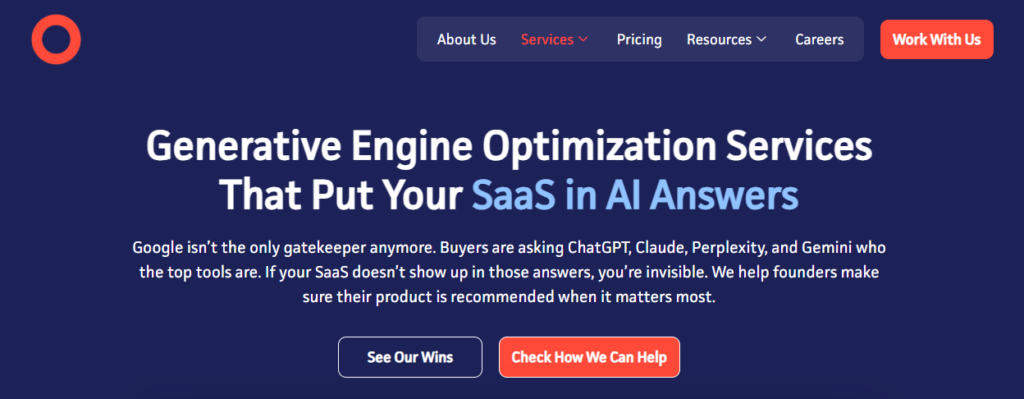
As a boutique content marketing and GEO agency, Concurate helps GovTech SaaS companies get found when government buyers are researching options on search engines and AI tools like ChatGPT, Perplexity, Claude, and more.
We help make sure that when someone searches for solutions in your category, whether it’s around permitting, case management, fraud investigation, public records, or public sector workflows, your product has a better chance of appearing in that response. Not because you’re the most well-known name, but because your content clearly explains what you do, where you fit, and why it matters.
How We Build AI Visibility For GovTech SaaS Companies
We approach this through our Perfect Match Framework, which you can understand more by reviewing the deck below.
Here’s how that looks. We start with understanding where your expertise currently lives. For many GovTech companies, the strongest proof is scattered across sales conversations, product demos, customer stories, internal notes, and technical material.
We identify what AI tools can already find about you, what they are missing, and which government buyer questions your content should answer more clearly.
From there, we benchmark how your brand appears in AI answers today. We look at which companies are getting recommended, what content supports those recommendations, and where your company has a realistic chance to show up.
Then we build the content strategy.
For instance, say a company sells permitting software. We do not create a single landing page and stop there. We break it down into multiple entry points across different content formats, including:
- Best permitting software for growing municipalities
- Permitting platforms for counties modernizing legacy systems
- Features to look for in permitting software for local governments
- How cities evaluate digital permitting solutions before procurement
Our goal is simple: show up across every variation of how a government buyer researches the solution across features that your product supports.
Another key part of how we work is decoding what already ranks and gets picked up across AI search. We actively study which companies keep appearing for high-intent queries, what kind of content they have built, how those pages are structured, and why AI systems are choosing them.
Once we understand those patterns, we do not copy them blindly. We apply those learnings in a way that fits the client’s actual product, positioning, and procurement environment.
This is also why we do not just create content for the website and stop there. We think in terms of content ecosystems. That means supporting core content with distribution, building external mentions, and ensuring the brand shows up across multiple surfaces that AI systems rely on.
So our work is not just about publishing more content. It is about making your product easier to reference across the places AI tools and government buyers may look.
At the core of all our work is a simple belief: content should not just generate visibility. It should help your company become part of the shortlist when buyers are actively evaluating vendors.
Ready to get your tool recommended when government buyers go looking for options? Book a call with us.
Pricing
Our monthly retainers typically range from $5,000 to $7,500, while one-time projects start at approximately $3,500.
Notable clients
PQAI, Datacipher, Triangle IP, Pinch Patent Drawings, Athena Security, InspireIP
Rating: 5/5 (2 reviews)
2. REQ
REQ is a digital marketing agency that works across brand, content, and digital visibility, especially for companies in regulated and public-facing spaces.

Source – REQ
Their work usually starts with how a company is described across its website. They review messaging, remove overlaps, and make sure every page supports a clear narrative. This helps visitors quickly understand what the product does and where it fits. They also align content with real buying journeys, so the information feels relevant at every stage.
Another strong point is how they handle structure. They organize content in a way that makes it easier to move between topics without losing context. Over time, this creates a more consistent and reliable presence online. This works well for teams that have strong offerings but struggle to explain them clearly across channels.
Notable Saas Clients with Public Sector Exposure: Carahsoft Technology, Forcepoint, Excella
Rating: 4.9/5 (60 reviews)
3. Omnius
Omnius is a content and SEO agency that focuses on improving how information is organized across websites.

Source – Omnius
They begin by mapping out existing content and identifying where things feel disconnected. Then they group related topics, remove duplication, and make sure each page serves a clear purpose. This brings order to content that may have grown without a clear plan.
They also spend time simplifying explanations. Complex workflows are broken into smaller, easier steps so readers can follow along without effort. At the same time, they ensure that similar ideas are explained in a consistent way across pages. This approach helps create a smoother reading experience and makes the overall story easier to understand.
Notable SaaS Clients with Public Sector Exposure: Meniga
Rating: NA
4. Go Fish Digital
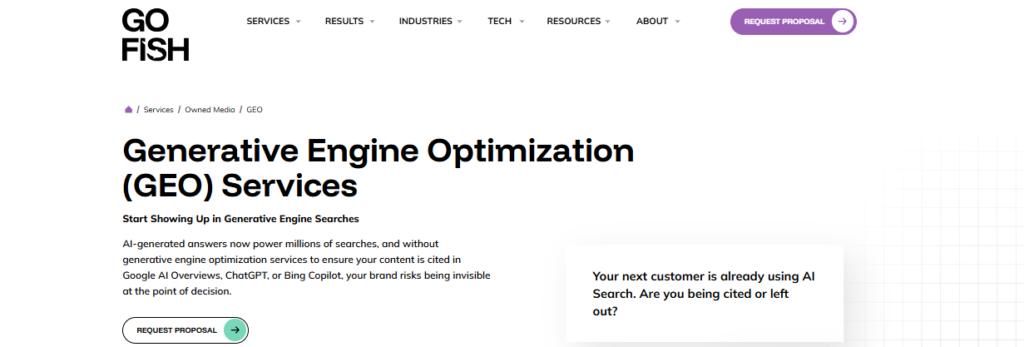
Go Fish Digital is a digital marketing agency with strong expertise in technical SEO and content discoverability.
Source – Go Fish Digital
They focus on how content is accessed behind the scenes. This includes reviewing site structure, fixing crawl issues, and making sure important pages are properly indexed. In many cases, they uncover valuable content that exists but is not easy to reach.
They also improve how pages are connected internally, so users and systems can move through the site more easily. Alongside this, they guide content teams on how to align topics with actual search behavior. This combination of technical fixes and strategic direction helps improve visibility more sustainably.
Notable Saas Clients with Public Sector Exposure: SAP, Adobe
Rating: 5/5 (13 reviews)
Also Read: 12 Technical SEO Agencies Setting the Standard in 2026
5. Stratabeat
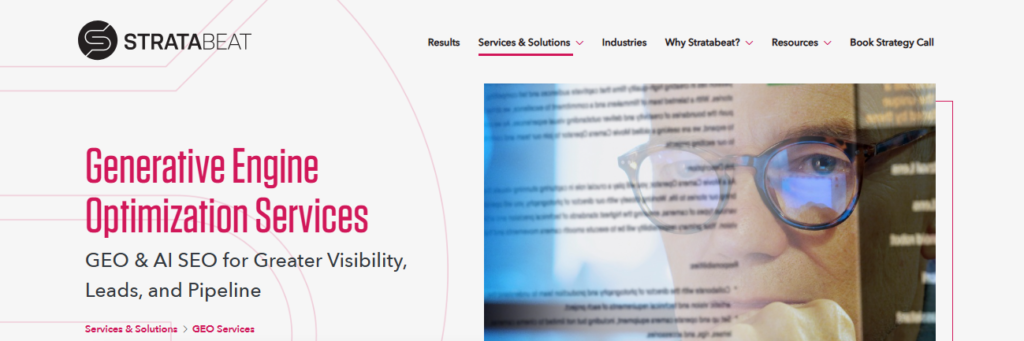
Stratabeat is a B2B marketing agency that focuses on building authority through focused content.
Source – Stratabeat
They work by identifying key topics where a company can go deeper and stand out. From there, they create detailed content that covers these areas from multiple angles. Each piece is connected, so readers can explore related ideas without friction.
They also structure content in layers. Foundational pages introduce core concepts, while supporting pages go into more detail. This creates a clear path for understanding. Over time, this builds a strong knowledge base that feels complete and well thought out.
Notable Saas Clients with Public Sector Exposure: AppFolio, Freshworks
Rating: 5/5 (12 reviews)
6. Spicy Margarita
Spicy Margarita is a marketing agency that focuses on positioning and messaging clarity.
Source – Spicy Margarita
They begin by helping companies explain their product in a simple and direct way. This often involves rewriting key pages, removing unclear language, and making sure the value is easy to grasp in a few lines. The goal is to make the message instantly understandable.
In addition, they also support brand-level communication, so the tone and voice feel consistent across channels. This creates a stronger and more recognizable presence.
Notable Saas Clients with Public Sector Exposure: Rillion, Givebutter
Rating: NA
7. Silverback Strategies
Silverback Strategies is a performance marketing agency that combines SEO, paid media, and content strategy with a strong focus on data.
Source – Silver Strategies
They start by analyzing how people search, what they click on, and where they drop off. These insights are then used to shape content priorities. This helps teams focus on what actually matters instead of guessing.
They also connect paid and organic efforts. For example, data from paid campaigns is used to identify high-performing topics, which are then expanded into content. This creates a feedback loop where each channel supports the other.
Notable Saas Clients with Public Sector Exposure: Discovery Education, LexisNexis
Rating: 4.8/5 (25 reviews)
8. Animalz
Animalz is a content marketing agency known for creating detailed, long-form content for SaaS companies.
Source – Animalz
They focus on clarity and depth. Each piece is built to explain a topic step by step, so readers can understand it without prior knowledge. This makes complex ideas easier to follow. They also plan content as a system. Topics are chosen carefully, and each piece connects with others to build a larger narrative. This helps create a body of work that grows stronger over time.
This can make Animalz relevant for unicorn companies that need to organize complex expertise into a clear, connected content ecosystem across products, markets, and audiences. Another key aspect they highlight is editing. Content goes through multiple rounds to improve flow, remove unnecessary parts, and sharpen key points. This results in writing that feels clean and easy to read.
Notable Saas Clients with Public Sector Exposure: Google, GoDaddy, Zendesk, Retool
Rating: NA
9. Amsive
Amsive is an AI SEO marketing agency that combines SEO, content, and analytics to improve visibility through ongoing optimization.
Source – Amsive
They track how content performs across different metrics, such as traffic, engagement, and conversions. Based on this data, they identify what needs improvement and make targeted updates.
Amsive also looks at how content is structured. This includes improving headings, reorganizing sections, and making key information easier to find. Even small changes can improve how content performs.
In addition, they focus on content gaps. By identifying missing topics or weak areas, they help teams build a more complete presence. This approach works well for companies that want steady, measurable improvement over time.
Notable Saas Clients with Public Sector Exposure: iCIMS
Rating: 4.8/5 (3 reviews)
And with that, our list of the best generative engine optimization agencies for GovTech SaaS companies comes to a close. Now, let’s look at a few things your team can do internally to make it easier for AI tools to understand.
What Government Software Companies Can Do Internally To Improve AI Search Visibility
If you’re just getting started with GEO, it can feel like something that requires external help right away. And while that’s true in the long run, there’s still a lot you can do internally to make things easier before you bring in an agency. For example:
- Be clear about what you do: When someone visits your website, they shouldn’t have to figure things out. So, keep your messaging simple and direct. Say what your product does, who it’s for, and where it fits. The clearer you are, the easier it becomes for AI systems to understand and pick up your content.
- Write like you answer customers: Think about the questions you already get in demos, emails, or sales calls. Turn those into content. Simple, direct answers work better than long explanations. In fact, this kind of content is exactly what AI systems look for when generating responses.
- Keep your content active: You don’t need a large content engine to get started. Even small, consistent updates make a difference. So, refresh pages, add new explanations, and keep your messaging aligned across the site. Over time, this builds a stronger presence.
These steps are not just basic housekeeping. They decide whether AI platforms have enough public evidence to connect your company with the problems government buyers are already researching.
But for GovTech SaaS companies, AI visibility usually needs more than a few website updates. Your expertise, use cases, proof, technical messaging, and third-party presence all need to work together.
Bringing all of that together into a focused AI visibility strategy is where Concurate can help.
Need Help With AI Search Visibility?
GovTech companies often have deep expertise that never makes it into the AI conversations where buyers begin researching vendors. At Concurate, our goal is to help close that gap.
Our GEO Services: If your GovTech SaaS company wants to increase its visibility across ChatGPT, Perplexity, Gemini, and other AI search experiences, learn more about our GEO services here.
Our Content Marketing Services: If you also need support with thought leadership, buyer education content, decision-stage content, use-case pages, or broader content marketing for government buyers, learn more about working with us.
Our best ideas don’t come from trends. They come from testing. Subscribe to our weekly newsletter for practical marketing insights based on real campaigns and continuous experimentation.
Frequently Asked Questions:
1. What makes GovTech SaaS harder to optimize for AI search compared to other SaaS categories?
GovTech SaaS is harder to optimize than other SaaS categories because the information in this space is complex, confidential, and fragmented. In addition, it’s stored in the form of PDFs, RFP documents, or gated resources that AI tools cannot easily access. So, even when content exists, it is not available in a format that AI systems can process easily. As a result, these companies struggle to appear in AI-generated answers.
2. Why is topical depth more important than traffic in GEO?
AI systems rely on clarity, not volume. In GovTech, search demand is already low, so getting more traffic does not help much. Instead, what matters is how well your content explains your category. When you consistently cover your product, its use cases, and how it fits into real workflows, it becomes easier to understand your expertise. This clarity helps AI systems connect your brand to specific topics.
3. How do compliance and security messaging impact GEO in GovTech SaaS?
Compliance and security messaging impact GEO in GovTech SaaS because they determine how credible your product is. If your content does not clearly explain how you handle data, security, and regulations, it creates doubt and weakens trust.
On the other hand, when you present this information clearly and in a structured way, it improves both clarity and trust. This positions you as a credible, reliable source and increases your chances of being cited in AI-generated responses.
Disclaimer: The information presented in this article is compiled from publicly available sources, including company websites, industry reports, and social media. All trademarks, brand names, and logos mentioned are the property of their respective owners. We do not claim any ownership of third-party marks, nor do we imply endorsement or affiliation. This article is intended for informational purposes only.