

| TL;DR: We asked ChatGPT, Gemini, and Perplexity to recommend AI visibility tools for different types of use cases, features, and buyer profiles. Otterly AI, Peec AI, Profound, and Semrush appeared more often than most. Their market presence may help, but our analysis suggests there are other factors influencing how consistently they are recommended. This article examines those factors and explores what challenger companies can do to improve their AI visibility. |
If you’ve built an AI visibility tool, you’ve probably noticed something uncomfortable. Buyers are searching for tools in your space, and when they ask AI for recommendations, the same few names keep coming up, while others with comparable features rarely get a mention.
The tools winning those recommendations aren’t always the oldest or the most feature-rich. So what is working in their favor? From the outside, it’s hard to pinpoint what. You don’t know if it’s their content, their distribution, the sites linking to them, or simply how long they’ve been around. Without knowing what is actually driving those recommendations, it’s difficult to close that gap.
That’s why we ran multiple buyer-style queries to identify which tools were consistently recommended, then dug into their content strategy to understand why. What we found was consistent with our other AI visibility audits. In this article, we will break down these patterns and also explore what other tools in this space can learn from them.
Which AI Visibility Tools AI Platforms Recommend Most Often
To find out which AI visibility tools get recommended most often by AI platforms, we ran seven searches across ChatGPT, Gemini, and Perplexity based on use case, features, and buyer profiles.
The queries included:
- Top AI visibility tools for startups and small businesses
- Top enterprise AI visibility platforms for large brands
- Top affordable AI visibility tools
- Top AI visibility tools for marketing agencies managing multiple clients
- Top AI visibility tools for competitor tracking and share-of-voice analysis
- Top AI visibility tools for tracking citations and sources
- Top AI visibility tools with content optimization recommendations
We chose this mix because someone looking for an affordable tool may receive very different recommendations from someone managing several brands or tracking competitor citations. In other words, we wanted to see whether the same names could hold up across different buyer needs. Also, since most of the tools promise a similar set of features, we really wanted to know if there are any tools that appear across most of these searches.
To our surprise, out of the 21 responses across three platforms, Otterly AI appeared 19 times, while Peec AI appeared 17 times. Profound and Semrush followed closely, appearing 16 times each.
That consistency is what caught our attention. These four tools were recommended for different types of buyers and requirements. So we reviewed their websites and content strategy to understand what may be helping AI platforms recognize where each tool fits and recommend it accordingly.
3 Reasons Why Otterly AI, Peec AI, Profound, And Semrush Consistently Show Up In AI Answers
These tools offer several similar features. However, they appeared across searches with very different priorities. Some of these searches focused on affordable options for startups. While there were others that asked for agency options, citation tracking, competitor analysis, or whether the tool offered content recommendations.
In our analysis, three things stood out that we believe may be helping AI platforms understand when and why to recommend them.
1. Their Comparison And Alternative Content Help Buyers Make A Decision
These companies focus heavily on publishing comparison and alternative content for buyers who have already narrowed their options.
You see, these searches often happen close to a decision. The buyer knows at least one tool and now wants to see what else is available or how two products differ. By creating content around those searches, each company gives itself a chance to be considered alongside competitors, even when the buyer starts with another brand in mind.
For instance, Otterly AI has a dedicated alternatives hub comparing it with several popular tools buyers may already be considering.
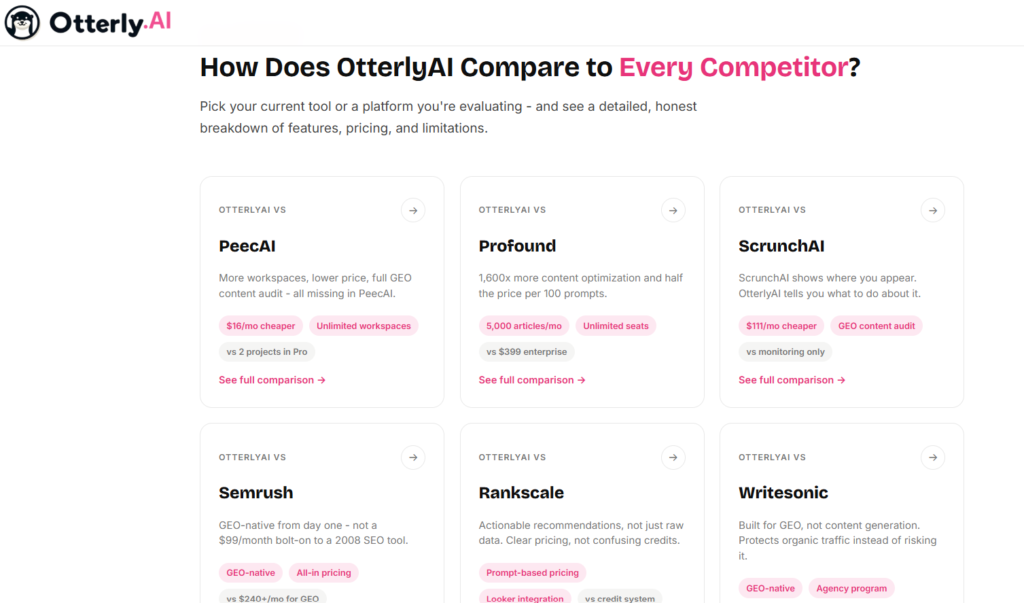
Source – Otterly AI
We also saw this type of content reflected in AI answers. When we searched for AthenaHQ alternatives for marketing agencies, Profound appeared as a recommendation in ChatGPT. The reason? They published a comparison article on the best AI visibility tools for marketing agencies.
This listicle helped the company appear because it closely matches what we were looking for: AI visibility tools suited to marketing agencies. Moreover, given its extensive feature list that appeals well to agencies, ChatGPT positioned Profound within that category and suggested it as an AthenaHQ alternative.
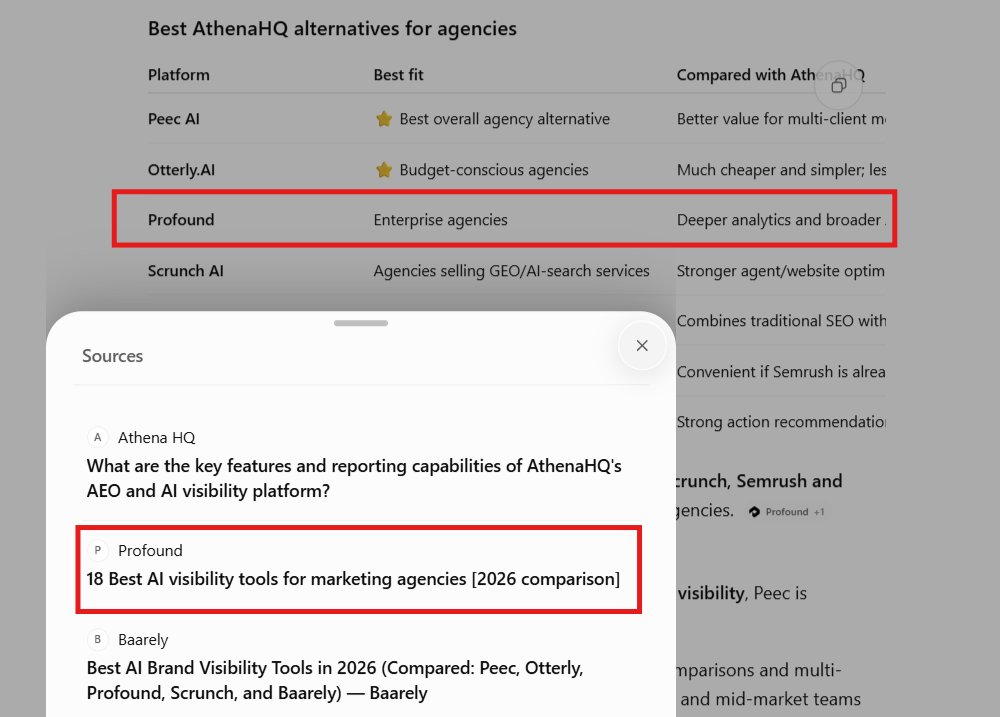
Source – ChatGPT
The company also created individual comparison content such as Profound versus Otterly and Profound versus Writesonic, among others, to enter those comparison searches.
There is a practical reason comparison content works well for AI visibility. Vibe coding has made software easier to build, and new tools launch every day. Many of them make similar claims, which makes it harder for buyers to figure out what actually sets one apart from another.
Comparison content helps answer that question. It puts the alternatives side by side, explains where they differ, and shows who each tool is best suited for. That gives buyers a clearer way to evaluate their options. It also helps AI platforms understand when one tool might be a better fit than another, even when the search starts with a competitor’s name.
2. They Create How-To Articles And Guides Around AI Visibility Problems
People do not always ask AI or LLM platforms which tool they should buy. They often begin with practical questions about tracking mentions, measuring visibility, improving rankings, or monitoring citations.
And this is where the content strategy of these companies gets interesting. When AI answers these questions, it needs content that clearly explains the process. Publishing around these topics helps a company become associated with the problems its tool solves, not only with its product category. Not to mention, it also builds topical authority.
For instance, Peec AI has created how-to articles covering different parts of the AI visibility process, including:
- How to measure AI search visibility and revenue: The KPIs that matter
- How to choose the right prompts for LLM tracking
- How ChatGPT Shopping Works, and How to Get Your Products Recommended
Similarly, Otterly has also published several how-to articles, such as:
- How to Win Citations in ChatGPT, Perplexity & Google AI Overviews
- How to Track AI Search Engine Citations & Sources
- How to Optimize Content for AI Search
Profound has published a detailed guide on how to rank in ChatGPT, connecting the company with a problem its potential buyers are already trying to solve.
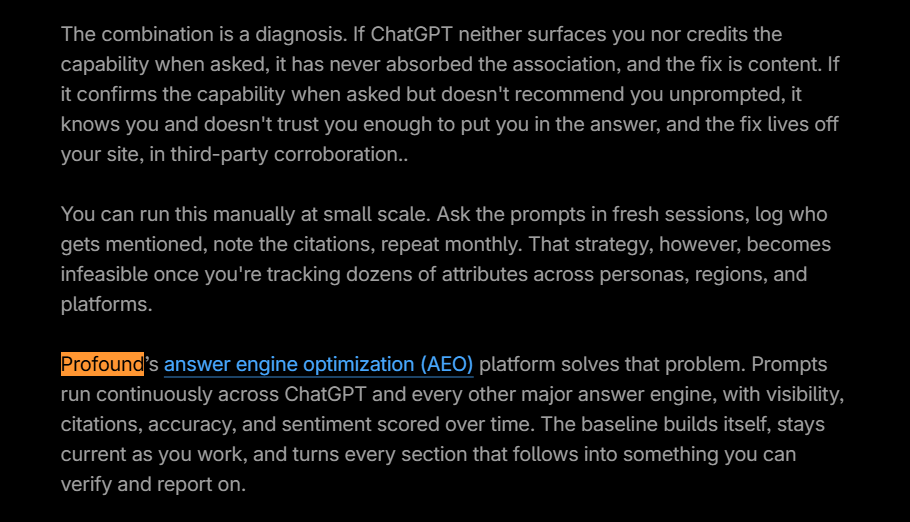
Source – Profound
It also has a detailed AEO Guide and a guide on how to choose an AI visibility provider.
Semrush covers the same area through its GEO Guide. Its how-to articles include How to Optimize for AI Search Results in 2026 and How to Optimize Content for AI Search Engines.
Although the subjects differ, all four companies are using the same content strategy. They answer practical questions people ask before they are ready to compare tools. Their how-to articles and guides also include original research, product examples, and relevant features that show where their platforms fit into the process. We also saw this strategy executed by popular patent drafting companies to enhance AI visibility. You can read all about it here.
This also increases the brand recall value for these companies while giving AI platforms relevant content to retrieve when answering questions about tracking, citations, rankings, optimization, provider selection, and competitor research.
Related read: Profound Review: How Much Can It Really Tell You About AI Visibility?
3. They Build Visibility Beyond Their Own Website
A company’s website is only one part of its online presence. When people ask for opinions, explanations, or recommendations, AI may also draw information from third-party sources. By contributing to relevant conversations across the web, companies can appear in more places that AI can use to understand their expertise and reputation.
Here are a few of the above companies that have achieved this visibility:
They Answer Questions On Reddit
Profound runs its own subreddit, where employees start discussions, answer questions, and offer practical advice. In a way, these conversations show how Profound responds to the problems people are actually raising around AI visibility.

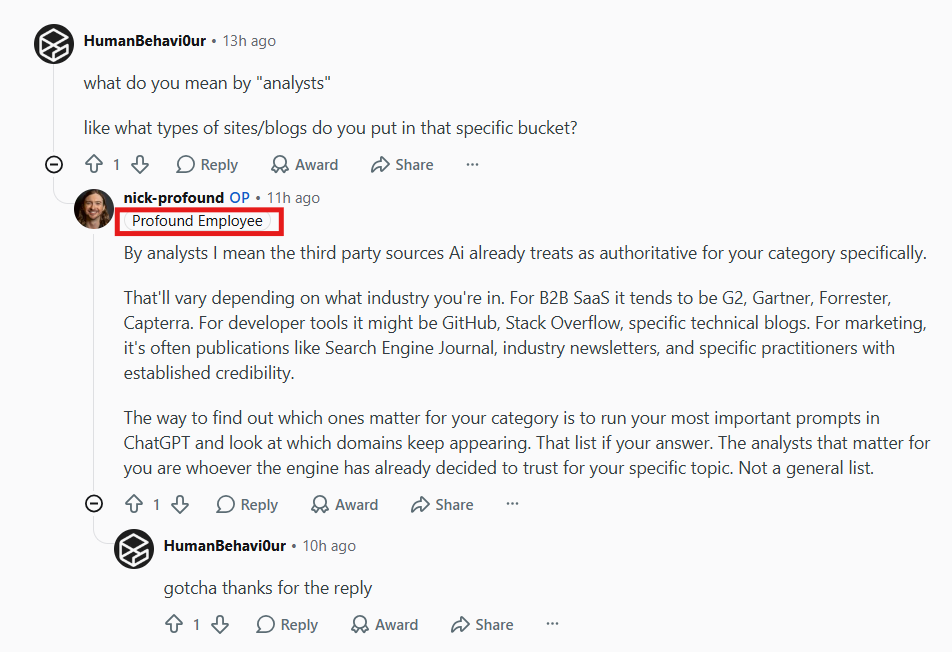
Source – Reddit
They Explain AI Visibility Through Videos And Podcasts
Semrush publishes videos about SEO, content, and digital marketing on its YouTube channel. Moreover, it has an AI Visibility Fundamentals series, which turns the new and complex topic into accessible video lessons that can surface for educational searches.
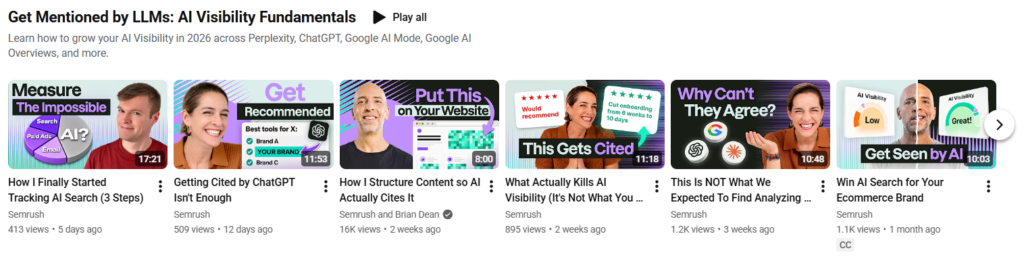
Source – YouTube
Peec AI also publishes a GEO video series. It covers subjects such as common GEO strategy mistakes and how LLMs learn about a brand.

Source – YouTube
Additionally, Profound uses podcasts for longer conversations through The Marketing Engineer on Spotify. The podcast features marketers who are building AI systems, tools, and workflows within their companies.

Source – Spotify
They Share Research And Updates On LinkedIn
Peec AI and Semrush use LinkedIn to share research, insights, and product updates. This keeps both brands connected to current developments and professional discussions around AI visibility.
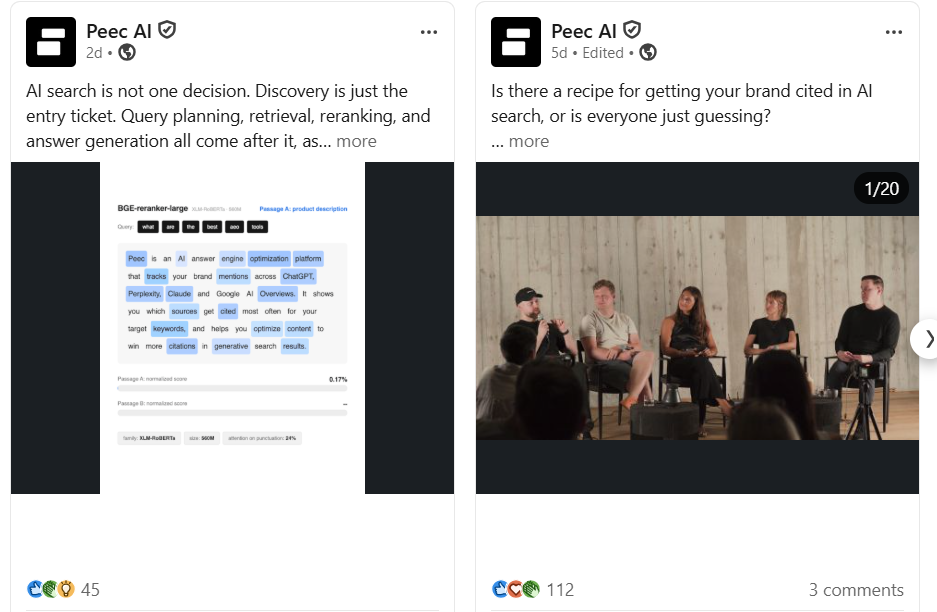
Source – LinkedIn
Across these platforms, the companies adapt their content to how people consume information. Reddit supports direct conversations, while YouTube and Spotify allow for deeper explanations.
LinkedIn, on the other hand, provides a platform for sharing timely research and industry insights. Together, these activities expand their presence beyond their product pages and create more opportunities for buyers and AI platforms to encounter their expertise.
Now, let’s find out some of the practical ways you can improve your chances of being recommended in AI answers.
4 Strategies Challenger AI Visibility Companies Can Use To Get Recommended In AI Answers
When established tools appear repeatedly in AI answers, their visibility can feel difficult to compete with. However, here’s the good news: the patterns we observed among those recommendations are things other companies can build deliberately.
The starting point is making your tool easier to understand wherever people research the category. Buyers should be able to compare it with known options, learn from your expertise, and find credible information about it beyond your product pages.
Here are four ways challenger AI visibility tool companies can improve their chances of being included in AI answers.
1. Build Shortlist Content Around Use Case, Features, And Buyer Profiles
Broad topics like “top AI visibility tools” are difficult for newer companies to compete for. Established tools already have more public evidence supporting them. A better starting point is to build shortlists around how buyers narrow their options. That gives challenger companies more specific topics to target.
For instance, you can create listicles based on:
Use Cases
- Top AI visibility tools for tracking brand mentions in AI answers
- Top AI visibility tools for benchmarking share of voice against competitors
- Top AI visibility tools for measuring GEO performance over time
Features
- Top AI visibility tools with automated prompt discovery
- Top AI visibility tools with citation and source tracking
- Top AI visibility tools with content optimization recommendations
Buyer Profiles
- Top affordable AI visibility tools for marketing agencies
- Top AI visibility tools for enterprise brands
- Top AI visibility tools for startups and small businesses
Importantly, each article should explain who the tools suit, how they address the requirement, and what evidence supports their inclusion. Getting that balance right is what makes a shortlist useful rather than self-promotional.
We explain how to approach B2B SaaS listicles with this in mind in this video.
2. Help Buyers Evaluate Their Options With Comparison And Alternative Content
Once buyers have a shortlist, they usually ask more specific questions. They want to compare two tools, understand what they would gain by switching, or find an option better suited to their requirements.
For challenger brands, these searches create an opportunity where an established tool has a gap. If a leading tool is expensive and yours costs less, comparison content can make that difference clear. For instance, someone searching for Profound alternatives may want a more affordable option, giving your tool a relevant reason to appear.
For your brand, potential topics can include:
- [Your Tool] vs [Established AI Visibility Tool]
- Top [Competitor] alternatives for enterprise reporting
- Top alternatives to [Established AI Visibility Tool]
You should avoid simply declaring your tool the better choice. Details about pricing, coverage, reporting, integrations, and ideal use cases help buyers compare options and give AI platforms clearer reasons to include your tool.
3. Turn Customer Results Into Credible Proof
Many AI visibility tools make similar promises around mentions, citations, and share of voice. So when buyers compare them, they naturally want to see whether those promises hold up for real customers.
That is where case studies help. You could show how a customer increased AI share of voice from 8% to 21%, doubled its citations, or began appearing in 40% of tracked AI answers. Including the starting point, timeframe, and work completed makes those numbers credible.
For buyers, this turns a broad product claim into a result they can evaluate. It also gives AI platforms clearer proof to reference when explaining why your tool may suit a use case.
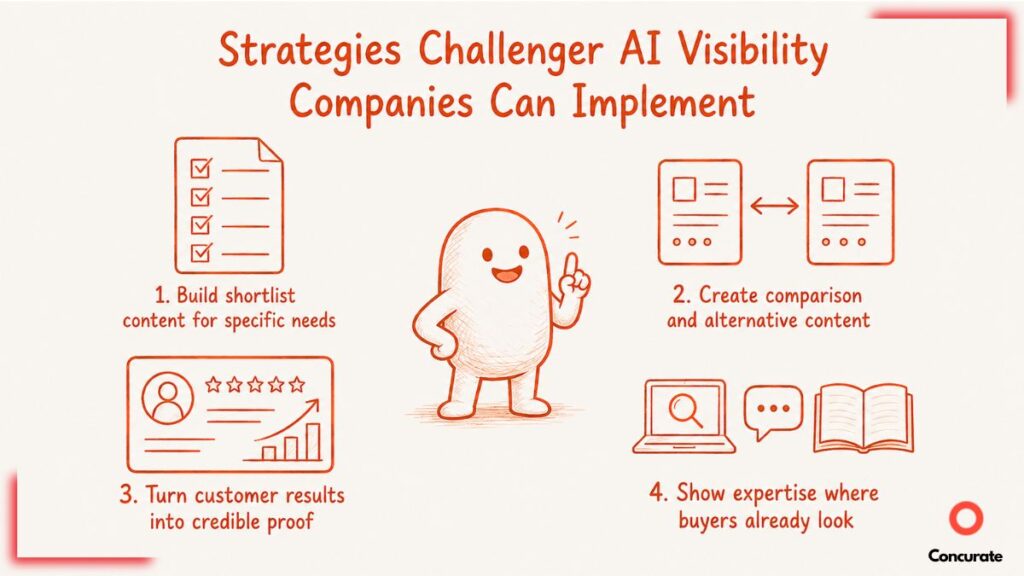
4. Share Your Expertise Where Buyers Already Look
Buyers often look beyond a tool’s website, checking G2, YouTube, Reddit, and LinkedIn before choosing.
On Reddit, founders or product experts can join relevant discussions (like the ones shown below) and help users make sense of their options. You can explain what to compare, where tools differ, and which trade-offs matter without turning the conversation into a product pitch.
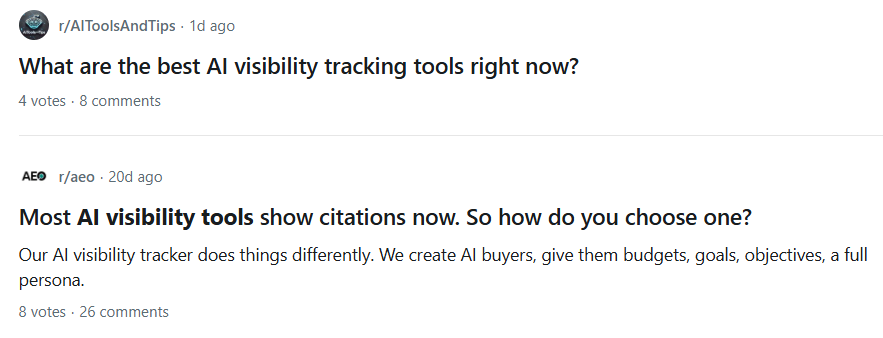
Source – Reddit
Your YouTube channel could feature a live AI visibility audit, explain how to build a useful prompt set, or compare one brand across different AI platforms.
On LinkedIn, you can explain changes in AI search or unpack common reporting mistakes. Your experts may have useful insights but little time to turn them into regular posts. Our LinkedIn ghostwriting services help develop those insights into content that retains their voice.
Over time, these contributions create a public record of your AI visibility expertise beyond your website, helping buyers and AI platforms understand where your company fits.
How Concurate Helps AI Visibility Companies Improve AI Visibility
If you have built an AI visibility tool, you know how important it is to show up when buyers ask AI for recommendations. Yet your competitors may still be the ones making the shortlist.
At Concurate, we help SaaS companies understand why that happens and identify what they can do about it.
Our Perfect Match Framework begins with the buyers you want to reach and the specific questions they ask. We test those searches, study which competitors appear, and examine the content and external sources supporting their recommendations.
This helps us identify what may be holding your company back. Maybe AI platforms cannot clearly understand who your tool suits. You may be missing comparison content, practical guides, customer proof, or credible conversations beyond your website.
We then build a focused roadmap to close those gaps through content, thought leadership, and wider brand visibility.
If buyers are asking AI for tools like yours and your company is missing from the shortlist, book a call with us. We will show you where competitors are being recommended instead and which visibility gaps are worth addressing first.
Frequently Asked Questions
1. Why does our AI visibility tool appear in one platform but not another?
ChatGPT, Gemini, and Perplexity are variable and do not always use the same sources or interpret a query in the same way. Their answers can also change as models and search indexes are updated. That is why visibility should be assessed across several platforms and related queries. A single appearance is useful, but repeated recommendations provide a more reliable picture.
2. How often should we test whether our tool appears in AI recommendations?
For a fast-moving category like AI visibility, monthly testing is a practical starting point. Use the same core queries each time so you can track changes accurately. You can then add new questions as buyer priorities, platform features, and category language evolve.
3. Is the number of AI mentions the best way to measure visibility?
Mention count tells you how often your company appears, but it does not show the quality of those appearances. You should look at where your tool is placed, how it is described, which buyer it is recommended for, and whether the information is accurate. A relevant recommendation for your ideal customer may be more valuable than several generic mentions.
4. What should we do if AI platforms describe our tool incorrectly?
You can start by checking which sources may be shaping the incorrect answer. Then make your website, documentation, pricing pages, and public profiles clearer and consistent. Important details should be easy to find and regularly updated.
Disclaimer: The information presented in this article is compiled from publicly available sources, including company websites, industry reports, and social media. All trademarks, brand names, and logos mentioned are the property of their respective owners. We do not claim any ownership of third-party marks, nor do we imply endorsement or affiliation. This article is intended for informational purposes only.