


| TL;DR: Most API-first companies have a visibility problem. That is where generative engine optimization comes in, and why agencies like Concurate, Draft.dev, Skale, and Flying Cat Marketing are worth paying attention to. Each agency rings a different angle to AI visibility, from use-case content and segment-level landing pages to technical storytelling and decision-stage SEO. This guide helps API-first companies figure out which kind of GEO partner fits where they are and where they want to go. |
Your API may be strong. Your docs may be solid. Your integrations may work exactly as they should. But if a developer asks ChatGPT or Claude for an API in your category and your name does not show up, you are out of the running before the evaluation even begins
That is the visibility problem many API-first companies are dealing with today. Users are no longer discovering tools the same way they did a few years ago. They are asking AI platforms for recommendations, shortlists, and comparisons, then moving forward with the options they deem best. If your API is not part of that conversation, it gets missed. Working on GitHub alone won’t help you.
You need the right content outside your documentation to help AI systems and your users understand where the API fits. Otherwise, your API can slip into the abyss while others get picked.
Thankfully, this is where generative engine optimization agencies for API-first companies can help save the day.
Top 8 Generative Engine Optimization Agencies for API-First Companies
The problem doesn’t stop at visibility either. Even if your API shows up in an AI answer, you still have to convince your potential buyers to choose it. But most companies describe their APIs in broad terms, with heavy jargon and no clear value proposition. So, even though they see it, they still skip it.
Fixing this issue means one thing: showcasing your API’s real value to your audience. But internal teams usually focus on explaining features and updating docs, while generalist agencies simply chase rankings and traffic. In both cases, the content exists, but the value isn’t conveyed, which is why leads don’t come in.
This is where the GEO agencies for SaaS and API platforms listed below stand apart. They simplify how your product is explained, shape your content around real use cases, and structure it coherently, so both AI tools and developers can easily understand its value. As a result, they improve API discoverability in AI search to make sure your product doesn’t just show up, but actually gets chosen.
- Concurate
- Draft.dev
- Column Five
- evolv
- Skale
- MADX Digital
- Flying Cat Marketing
- Perceptric
Now, let’s take a look at every agency, starting with Concurate.
1. Concurate
Most developers who would benefit from your API will never find it. Not because they are not looking, but because when they type their problem into ChatGPT or Perplexity, a different product shows up instead of yours.
That is the quiet problem for API-first companies today.
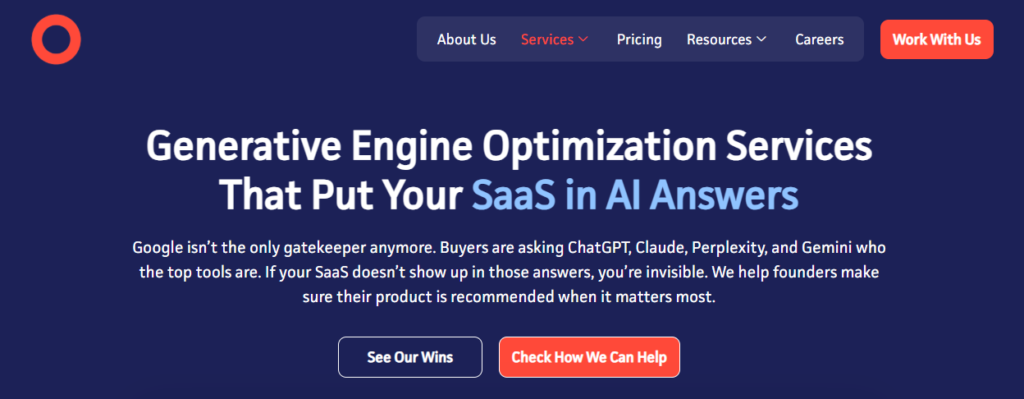
Source – Concurate
At Concurate, we are a boutique content marketing and GEO agency that specializes in building exactly that layer for API-first and developer-tool companies. We help you show up on AI platforms at the precise moment a technical buyer is comparing options and deciding what is worth trying.
Our motto? When someone asks an AI tool the “best API for X workflow” or “which API should I use for Y use case,” your product should show up and get chosen. Simple.
What Our GEO Approach for API-first Companies Looks Like
Most technical buyers come in with a specific problem. They compare options fast, which is why they rely heavily on AI platforms to decide what is worth evaluating. So, we do not focus on keywords. We focus on the decision journey.
We start by mapping out exactly how your buyers think when they are assessing an API, what they type into ChatGPT or Perplexity, what comparisons they are running, and what issues they need resolved. Then we build content that sits directly inside those moments.
For API-first companies, that means creating use-case landing pages tailored to specific buyer segments. It also means creating problem-led content that surfaces outside your docs but naturally pulls buyers toward them. And it means comparison and alternative pages that help technical buyers self-qualify before they ever speak to anyone on your team.
How We Applied This Strategy For an API-First Client
We recently worked with a company offering a niche search API used by researchers, universities, law firms, and patent professionals. Their problem was the same as most other API-first companies: a strong product that didn’t get much visibility outside its existing user base. So, we curated a strategic GEO approach to help them reach new users.
We started by building use-case landing pages targeting each buyer segment. Instead of one generic API page, we created dedicated pages for researchers, university labs, law firms, and patent attorneys.
Here are a few snapshots from their website:
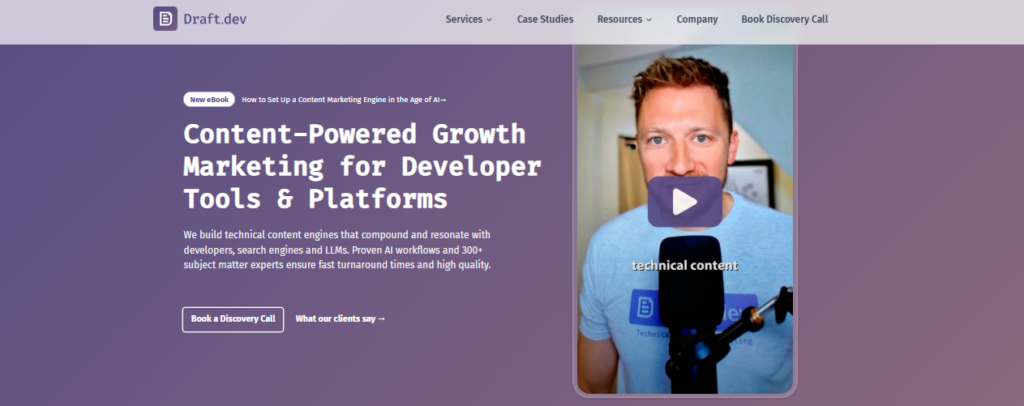
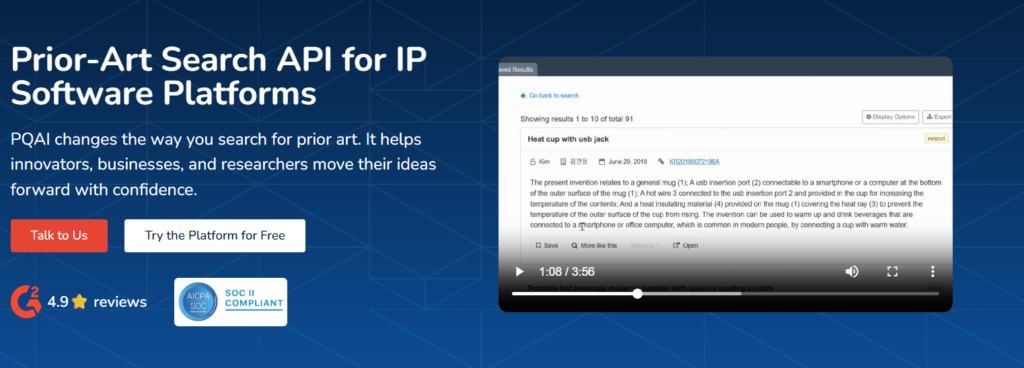
Each page spoke directly to the problems that segment was trying to solve and the queries they were typing into AI platforms.
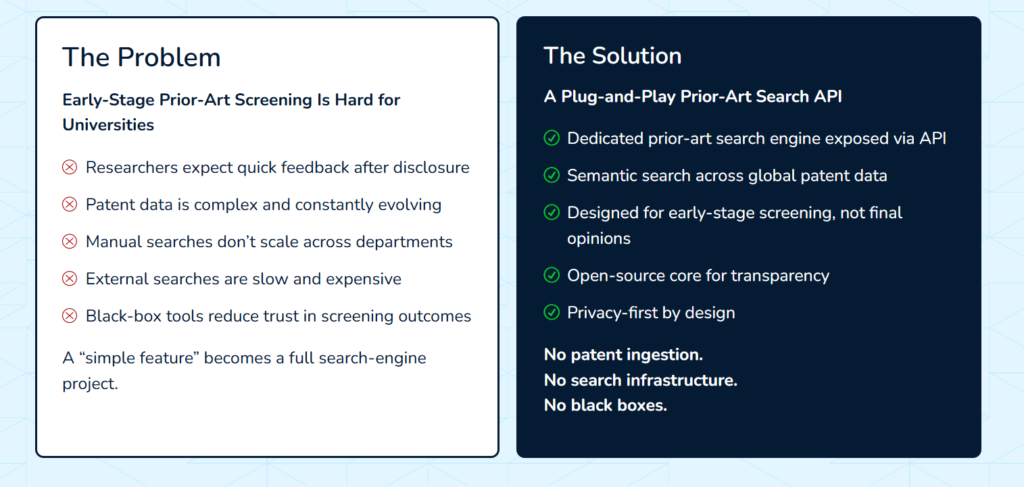
Moreover, the structure, depth, and specificity of each page were designed so that AI systems could easily understand what the product did, who it was for, and why it was the right fit for that particular use case.
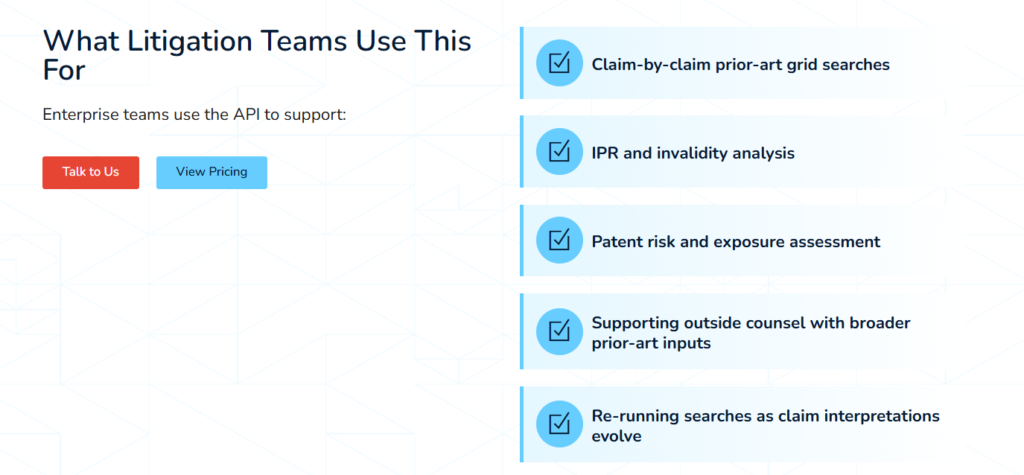
Alongside that, we developed a sustained content program built around the topics and questions their buyers were actively bringing to AI platforms. Not broad informational articles, but pieces that mapped to real decision-stage queries. Like comparisons, use-case breakdowns, and category-level content.
Each piece was built to add to the overall authority signal, so that across multiple queries and multiple surfaces, the same brand kept showing up as a credible source.
We also took care of their LinkedIn presence, keeping it active and consistent. This helped the brand look credible and engaged across the social surfaces that AI platforms pull from when assessing authority.
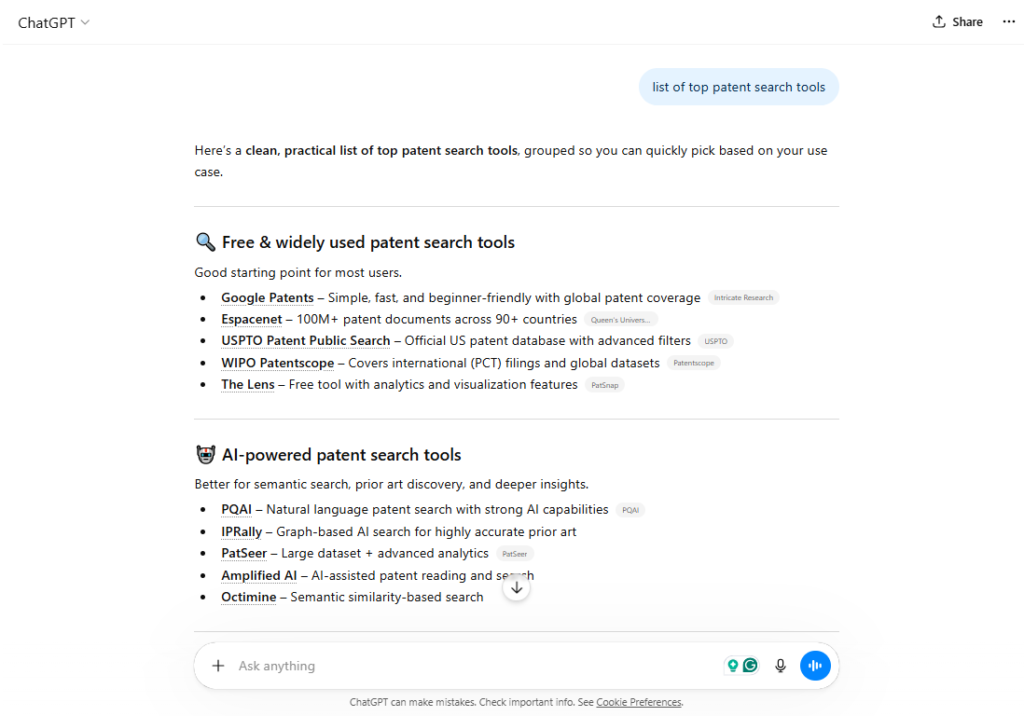
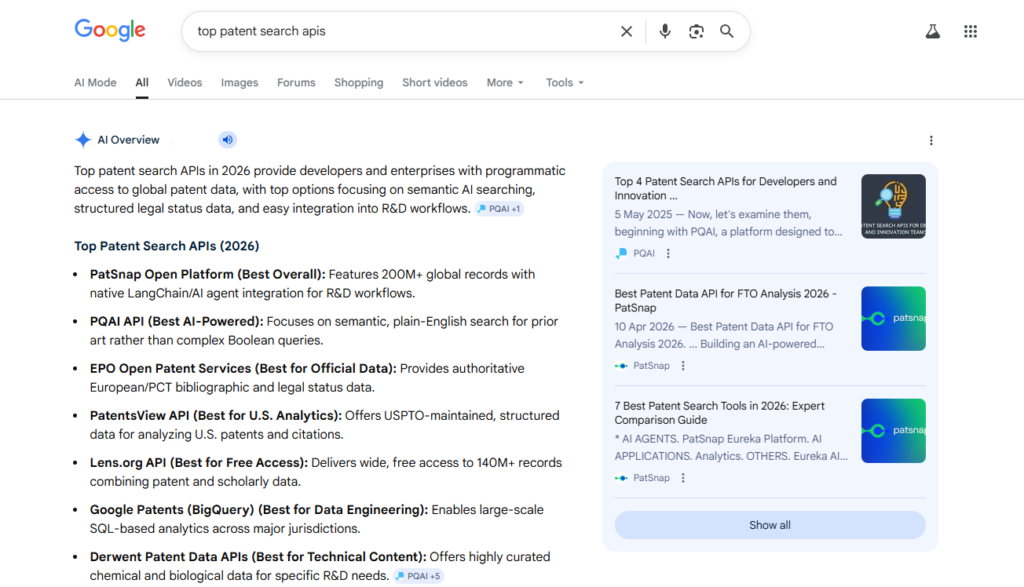
The result? Today, when anyone searches for keywords like “top patent search tools” or “top patent search APIs” on ChatGPT, Perplexity, or any other AI, our client consistently appears in the answers.
Their pages also show up in Google AI Overviews for these queries.
That kind of visibility is never just one thing. It comes from building authority across every surface AI platforms look at, not just your website. This includes LinkedIn, YouTube, Quora, etc.
So alongside the core content work, we help you build and maintain that broader presence consistently, because gaps across these surfaces are what hold most API-first brands back from being cited at all.
Every engagement for us starts with a close look at your specific category:
- which competitors are already getting cited
- how their content is structured
- what signals AI platforms are responding to
That research shapes everything we build for you. After all, the goal is simple: the right technical buyer, at the right moment, already convinced your API is worth evaluating.
If you want your API-first product to show up where it matters most, let’s talk.
Pricing
Our monthly retainers usually fall between $5,000 and $7,500, and specific one-off projects begin at about $3,500.
Notable clients
PQAI, Datacipher, Triangle IP, Pinch Patent Drawings, Athena Security, InspireIP
Rating: 5/5 (2 reviews)
2. Draft.dev
Draft.dev is a developer-focused content agency that works closely with engineering teams to create content developers actually trust.
Source – Draft.dev
Instead of relying on generalist writers, they bring in experienced developers to write tutorials, guides, and technical content. This approach makes the content feel more credible for AI discovery. It also helps ensure that the explanations reflect how things actually work. As a result, the content is easier to follow and more useful for someone trying to get started.
Moreover, the agency excels in breaking down complex APIs into clear, step-by-step explanations. This not only improves AI visibility but also helps developers take action without confusion.
Notable API-First Clients: Status Hero, Loft Labs
Rating: NA
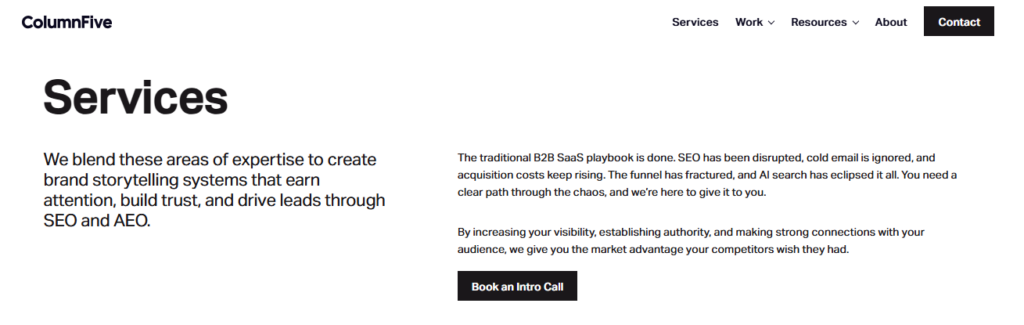
3. Column Five
Column Five is a content marketing agency known for combining storytelling with data-driven strategy.
Source – Column Five
Rather than producing content in isolation, they focus on how ideas are connected and presented. This helps create a more cohesive narrative that is easier to follow and cite for AI tools. They combine writing with visuals and structured storytelling to simplify complex topics. So, even technical ideas become more accessible without losing depth.
Another strength lies in how they approach content longevity and performance. Instead of treating it as a one-time output, they structure it to stay relevant, reusable, and easy to update. This makes the content more adaptable across formats and builds credibility over time.
Notable API-First Clients: GitHub, Vercel, Okta
Rating: 4.9/5 (18 reviews)
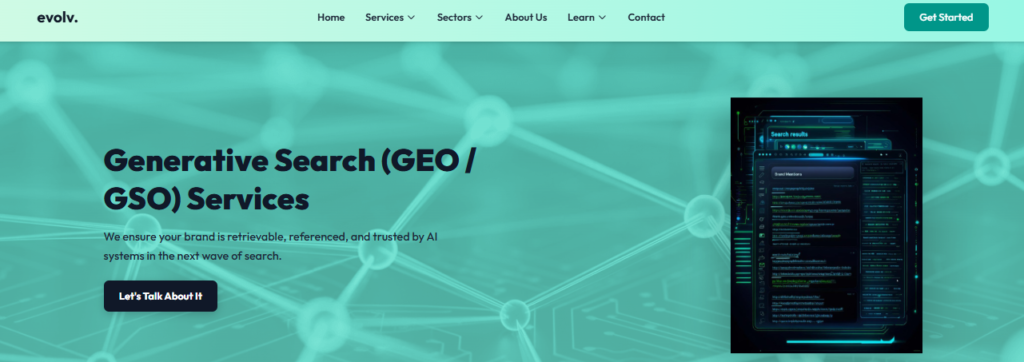
4. evolv
Formerly known as Accelerate Agency, evolv is a SaaS-focused GEO and content agency that works with high-growth technology companies.
Source – evolv
They focus on improving content performance while making it easier for users to make decisions. So, instead of creating broad, general pages, they write specific use cases linked to user intent. This makes it easier for the content to rank in AI search while also helping a developer to quickly understand whether the API is relevant to them.
Additionally, they structure content in a way that answers key questions directly. This speeds up evaluation and increases the chances of being cited in AI-generated responses.
Notable API-First Clients: Databricks, Dialpad, Brightpearl
Rating: NA
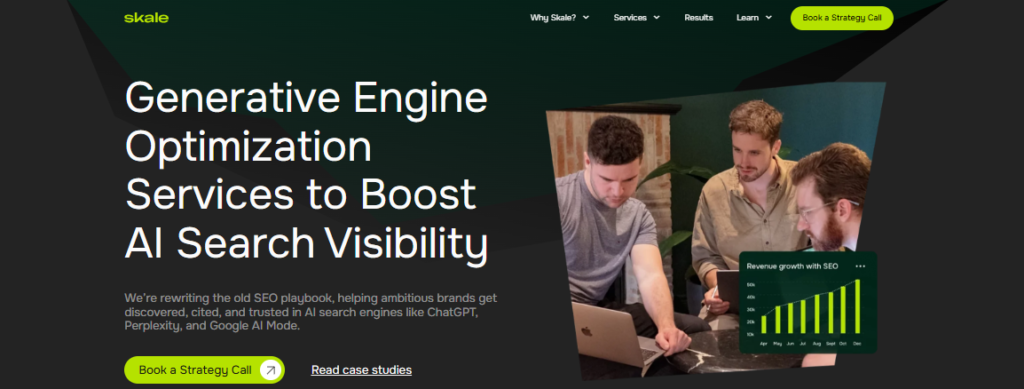
5. Skale
Skale is a B2B SaaS agency that specializes in driving revenue through organic growth. Their work is built around product-led growth models, which makes them a strong fit for API-first companies.
Source – Skale
The agency’s USP lies in connecting visibility with real usage. They deeply focus on how content is understood and acted on once it shows up in AI-driven results. So, they organize content around real-world scenarios and applications. This makes it easier for both AI and developers to quickly understand the API’s value proposition.
In addition, their structured approach ensures consistency across pages, which improves the overall experience. As a result, developers can move forward with more clarity and confidence.
Notable API-First Clients: Typeform, Appcues
Rating: 4.9/5 (16 reviews)
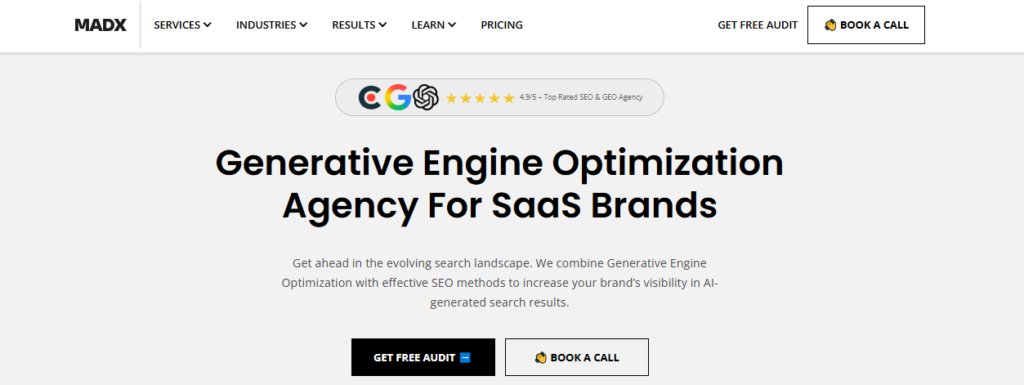
6. MADX Digital
MADX Digital is a GEO agency that works with SaaS and subscription-based businesses.
Source – MADX Digital
Their approach is heavily focused on building scalable growth systems rather than one-off campaigns. For API-first companies, this is particularly useful because their growth largely depends on consistent AI visibility and ongoing adoption.
One of their key strengths is simplifying complex messaging. They take technical concepts and present them in a way that is easier to understand, without removing important details. This helps reduce confusion for developers who are trying to evaluate an API. This also improves how well the content surfaces and performs in AI search.
Notable API-First Clients: MoonPay, Vercel
Rating: 5/5 (11 reviews)
7. Flying Cat Marketing
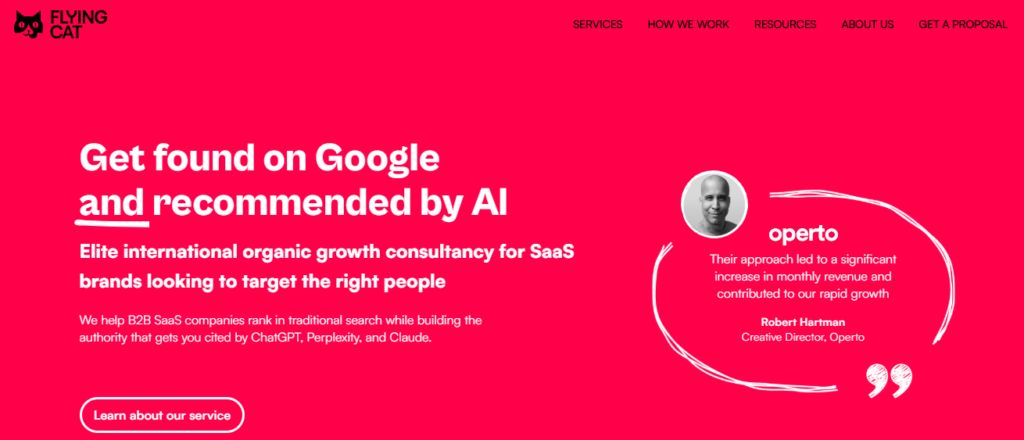
Flying Cat Marketing is a content marketing agency that works with SaaS and developer-focused companies to create high-quality, search-driven content.
Source – Flying Cat Marketing
What sets them apart is how they build connected content systems rather than isolated pieces. They map out how developers search, learn, compare, and implement, then create content that supports each of these steps.
This includes everything from problem-led pages and integration guides to comparison content and decision-stage resources. For API-first companies, this creates a clear path from discovery to adoption instead of leaving users with scattered information.
They also prioritize capturing real, high-intent developer queries and turning them into focused, standalone pages. This helps cover long-tail searches that are often picked up by AI tools when generating answers.
Notable API-First Clients: Livestorm, Operto Guest Technologies
Rating: 4.9/5 (10 reviews)
8. Perceptric
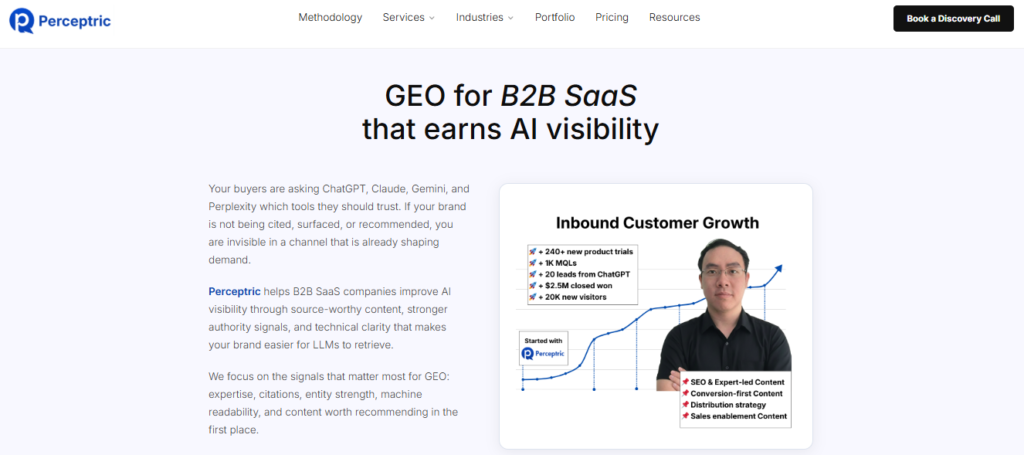
Perceptric is a newer, GEO-focused agency that centers its work around AI search and generative discovery.
Source – Perceptric
Unlike traditional agencies that are still adapting, Perceptric is built for this shift, and that shows in how they approach content. They focus on optimizing existing content instead of creating new content. This includes improving how documentation, use cases, and endpoint-level pages are structured so key information is easier to find and act on.
They also emphasize precision, ensuring each piece of content supports a specific step. This keeps content consistent across onboarding, docs, and deeper implementation layers. As a result, it becomes easier for AI systems to interpret and surface, while helping users move from exploration to actual usage without friction.
Notable API-First Clients: DeepIDV
Rating: NA
Now that we’ve come to the end of our list of the top AI SEO agencies for SaaS APIs, we’ll break down how we curated it in the first place.
How We Selected the Best GEO Agencies for API-First Companies
We wanted this list to be practical and grounded in how discovery actually works today, especially for API-first companies. So, instead of solely relying on claims or rankings, we looked at how these agencies perform in real-world scenarios.
Here’s the exact methodology we followed:
- Firstly, we used Google to build an initial pool of agencies that position themselves around GEO, AI search, LLM SEO, or SaaS SEO with API relevance. This helped us identify a wide range of potential options.
- Next, we checked how these agencies perform on AI platforms like ChatGPT and Perplexity. The idea was to see whether they practice what they preach.
- Finally, we reviewed their client work to ensure they’ve worked with API-first or developer-focused companies. This helped us confirm they understand how API adoption works, not just traffic or rankings.
And that’s how, after hours of deep research and analysis, we were able to come up with eight solid LLM SEO agencies for API-first businesses. Now, read the next section as we enlist how you can apply some of these strategies internally.
What API-First Companies Can Internally Do to Improve GEO
GEO can feel like something that needs expert handling, and in most cases, it even does. But before bringing in an agency, there are a few practical things API-first teams can do on their own to start improving how they show up in AI-driven discovery.
That said, here are the most basic LLM SEO strategies for API-first companies:
- Add use-case context: Go beyond explaining what the API does. Rather, add short sections that show how it is used in real scenarios. For example, instead of just documenting a payment endpoint, explain how it can be used to handle subscriptions or marketplace startup payouts. This helps both developers and AI tools understand where your API fits.
- Write answer-first content: Look at the kind of questions your users ask in support tickets, sales calls, or forums and turn them into clear, direct answers on your site. As a GEO best practice, start with the answer and then explain it briefly. This format works well because AI tools prefer content that can be easily extracted and reused. Over time, this increases your chances of being cited in responses.
- Improve clarity in key pages: Identify your most visited documentation or landing pages and simplify them. For example, break long sections into smaller parts, use clearer headings, and remove unnecessary complexity in language. Remember, the goal is not to “dumb things down” but to make them easier to scan and understand. When content is easier to read, it becomes easier for AI systems to process as well.
By following these tips, you can easily build a basic GEO foundation. However, to consistently show up in AI-generated answers and connect that visibility to real API usage, a deeper and more structured approach is needed. That’s where working with specialized AI search optimization agencies for APIs like Concurate becomes important.
What Makes Concurate the Best Generative Engine Optimization Agency for API-First Companies
Building a strong API is hard work. But in a world where developers are asking AI platforms for recommendations instead of scrolling through search results, a strong product alone does not guarantee you get chosen.
At Concurate, we work with API-first companies to close that gap. We go beyond surface-level content and dig into the exact queries your buyers are typing, the segments they belong to, and the decision signals that AI platforms respond to. Every piece of content we build, from use-case landing pages to category-level articles, is designed to position your API as the obvious answer when it matters most.
Among the top generative engine optimization agencies for API-first companies, what sets us apart is simple. We treat your buyer’s decision journey as the brief, not your feature list. Because when the content reflects how developers actually think and search, AI platforms take notice.
You have already built something worth recommending. Now, book a call with us today, and let’s make sure AI platforms know exactly when and why to recommend it.
Frequently Asked Questions:
1. Why do most API documents not get cited by AI?
Most API documents don’t get cited by AI because they are written as technical references, not direct answers. AI tools look for clear, simple explanations that match real questions. Whers most documentation explains endpoints and features, but not when or why to use them. This makes it hard for AI surfaces to extract useful answers. As a result, even good APIs don’t get AI visibility.
2. How does GEO impact long-term API adoption?
GEO impacts long-term API adoption by making the API consistently visible in real problem-based searches. When developers keep seeing the same API in relevant answers, it builds familiarity. This makes them more likely to trust and try it. Over time, this repeated visibility turns into actual usage.
3. How to make an API-first company “easy to recommend” by AI systems?
An API-first company becomes easy to recommend by AI when its content clearly explains what the API does and where it fits. AI tools prefer content that directly answers a question. If the use case is clear, the API is easier to surface. Simple language and clear structure also help.
4. What should API-first companies prioritize first when starting with GEO?
API-first companies should start by creating content that clearly answers the problems their users are searching for. This means writing content around real pain points, use cases, etc. That’s because when content is tied to clear problems, it becomes easier for AI tools to pick it up. It also helps developers quickly see the value.
Disclaimer: The information presented in this article is compiled from publicly available sources, including company websites, industry reports, and social media. All trademarks, brand names, and logos mentioned are the property of their respective owners. We do not claim any ownership of third-party marks, nor do we imply endorsement or affiliation. This article is intended for informational purposes only.