


| TL;DR: Ecommerce SEO decides whether buyers see your products or your competitors’.The agencies listed below specialise in helping brands win high-intent visibility across Google and generative engines. If ranking, discoverability, and predictable revenue matters for you, this list is your starting point. |
If you run an ecommerce company, you already know how difficult the landscape can be.
If your products are not in the top results when people search, the sale is as good as gone. It does not matter how good your product is. If buyers see three competitors before they ever see you, they are going to click and convert from them.
People click on what they see first. And now with shopping behavior depending on generative engine recommendations, SEO has become more important than ever. If you are invisible there, forget about getting sales from these channels.
It is needless to say that SEO is more important for ecommerce companies than for anyone else. And not everyone can get it right. With stakes this high, you need experts who can help you claim those top positions and turn search into a predictable revenue channel.
That is what this guide helps you do.
Top 14 Ecommerce SEO Agencies Helping Brands Win in Google and AI Search
Ecommerce SEO is different from other industries because every page has the potential to drive revenue, and every missed ranking becomes someone else’s sale. As search behaviour shifts across Google, shopping surfaces, answer engines, and generative models, brands now need partners who can strengthen both discoverability and conversion, not just rankings.
Here’s the list of agencies that consistently help ecommerce companies secure visibility where buyers are actually searching.
Here’s the list:
- Concurate
- WebFX
- SmartSites
- OuterBox
- Inflow
- BlueTuskr
- Sure Oak
- Straight North
- Thrive
- Siege Media
- Searchbloom
- Uproer
- HigherVisibility
- Uncommon Logic
Let’s look at first company on the list.
1. Concurate
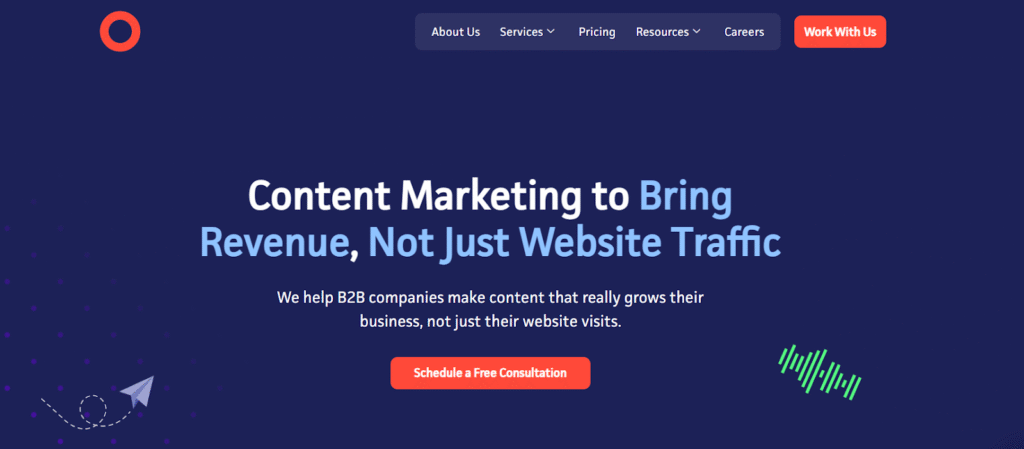
At Concurate, we are huge believers in the power of Pain Point SEO. We believe that users don’t need more generic explanations anymore. Search engines don’t need more generic pages. And generative engines already surface the obvious answers anyway.
What actually drives performance today is content that solves one specific intent with clarity. The kind of page a buyer lands on and immediately feels, “This is exactly what I was looking for.” That philosophy shapes all our work.
That’s why our work is built around high-intent, pain-point-driven content that answers what buyers are actually trying to figure out, and not the top-of-funnel clutter everyone else produces.
Because when you solve the exact problem a buyer is facing, you immediately drive them closer to conversion.
As a content-first agency, our approach naturally expands into whatever supports that intent: programmatic SEO, technical SEO, ecommerce SEO, local SEO, AEO, and generative engine optimization. We use the model that fits the problem.
And across every implementation, our results have been spectacular. But we will talk about that later. Let’s talk about our approach to eCommerce SEO now.
Source – Concurate
Our Approach to eCommerce SEO
Our ecommerce SEO work covers every stage of the buyer journey. We write SEO optimized blog content, including problem solving guides, comparison pieces, and listicles that capture bottom-funnel demand.
We also create structured, search ready content for your category pages, subcategory pages, and brand collections, so your core revenue pages compete in the top positions instead of sitting on page three.
Beyond content, we strengthen domain authority through clean, white hat backlinks and a steady off-page program built to match your category’s competition.
How We Applied eCommerce SEO for one of our Clients?
An ecommerce client came to us a few months ago with strong products but limited search visibility. When we reviewed their site, three issues stood out immediately:
- Key category and product pages were not discoverable because crawling and indexing were blocked by structural issues.
- Page-level signals were unclear, with duplicate titles, missing H1s, and metadata that made it hard for search engines to understand what each product or category represented.
- Their content and collection structure didn’t match buyer behaviour, especially across gifting use cases, seasonal intent, and audience-led searches.
To fix this and improve their site health, we focused on improving how the site aligns with real ecommerce search patterns. Here are a few changes we applied:
- Cleaned pagination paths so Google could correctly identify primary category pages and not waste crawl budget on unnecessary variants.
- Fixed redirect chains, corrected internal 4xx links, and rebuilt the sitemap so only active product and category URLs were highlighted for indexing.
- Improved load speed by minifying JS and CSS, helping product pages load faster and reducing drop-offs.
- Rewrote metadata and added missing H1s so each category and product communicated its purpose clearly to both buyers and search engines.
- Reorganised the blog and collection guides into clear clusters (men’s gifting, women’s gifting, corporate gifting, seasonal searches, product-specific intent), making it easier for buyers to navigate and for Google to surface relevant pages.
These changes strengthened the site’s ecommerce foundation significantly. It also improved how search engines understood their catalogue, and helped competitive categories start gaining visibility.
And this was only one part of the work. We continue to support them with ongoing blog updates, new content, and continuous technical improvements as their catalogue grows.
You see, everything we do is designed to help ecommerce brands win where it matters most: high-intent keywords, revenue generating pages, and AI powered recommendations.
If you want visibility that actually converts, book our calendar today and see how Concurate can help you accelerate growth.
Notable Clients: Datacipher, RatioTech, TriangleIP, InspireIP, PQAI, XoXoday
Best For: Ecommerce brands looking to strengthen high-intent search visibility while expanding reach across generative engines and social channels.
Pricing: Most of our partnerships fall between $5,000 and $7,500 monthly, with project-based work beginning at $3,500.
2. WebFX
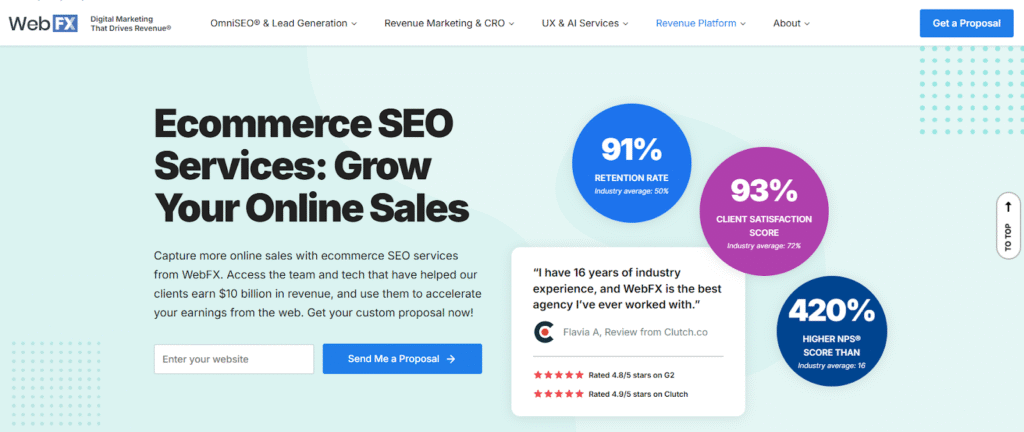
WebFX is a digital services company that also offers ecommerce SEO as part of its broader marketing portfolio.
Their work includes technical fixes, keyword mapping, product and category page updates, basic content assets, link outreach and routine performance reporting.
Source – WebFX
For ecommerce brands, the agency provides audits, ongoing on-page improvements, quarterly content or CRO assets, and competitor snapshots. They support common ecommerce platforms like Shopify, WooCommerce, and BigCommerce and follow a structured process for keyword targeting and tracking.
Most clients work with a dedicated contact who coordinates tasks with different internal teams. The agency focuses on maintaining steady SEO activity across technical, content, and tracking needs.
Notable Clients: Hilton, Verizon, O’Reilly Auto Parts, Fujifilm, and Subway
Best For: Ecommerce brands that want a large agency with established processes and consolidated reporting tools.
Pricing: Custom plans beginning around $2500 per month, depending on store size and monthly asset requirements.
3. SmartSites
SmartSites is a digital marketing firm that includes ecommerce SEO as one of its core service lines. Their work centres on making product pages easier to discover, improving how URLs, tags, and on-page elements are structured, and ensuring that search engines can understand the relevance of each item in the store.
They also manage keyword research for individual pages and support basic technical improvements. The agency’s approach emphasises the connection between code, content and the context in which a customer searches.
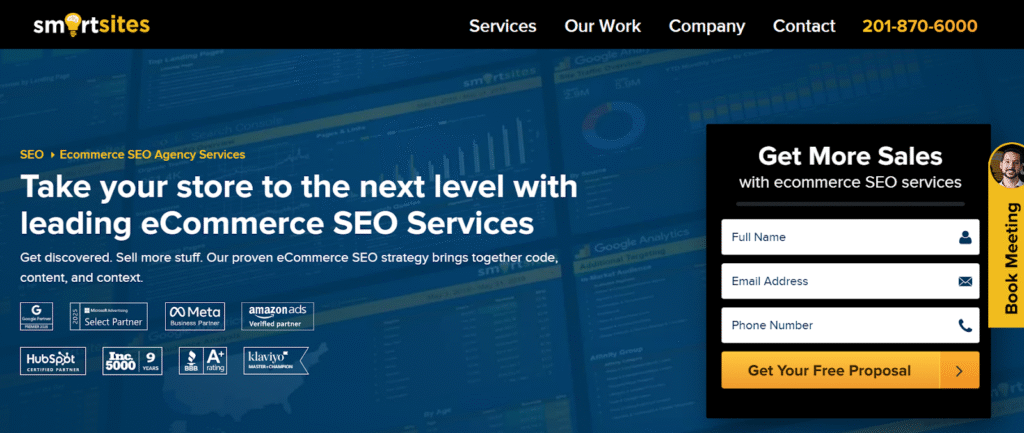
Source – Smartsites
In addition to search visibility, they pay attention to how shoppers interact with a site.
Usability and relevance signals are part of their process because both influence how a store performs on search engines. They also support remarketing foundations by ensuring organic visitors can be included in follow-up campaigns.
SmartSites works across platforms like Shopify, Magento, and WordPress and provides routine performance updates.
Notable Clients: Mercedes-Benz of Huntington, Sharemoney, 1800 Get A Rug, Ethos Spa, and Anexio
Best For: Ecommerce brands that want ongoing optimisation across technical structure, content relevance, and page-level improvements.
Pricing: Pricing is not publicly listed; plans vary based on scope and combined services.
4. OuterBox
OuterBox places most of its ecommerce SEO effort on how stores perform across both Google search and newer AI-driven recommendation surfaces. Their work leans heavily on reorganising site structure, improving category depth, rewriting product page elements and correcting technical gaps that hold rankings back.
A large portion of their process also centres on making websites easier for search engines to interpret through structured content and cleaner internal linking.
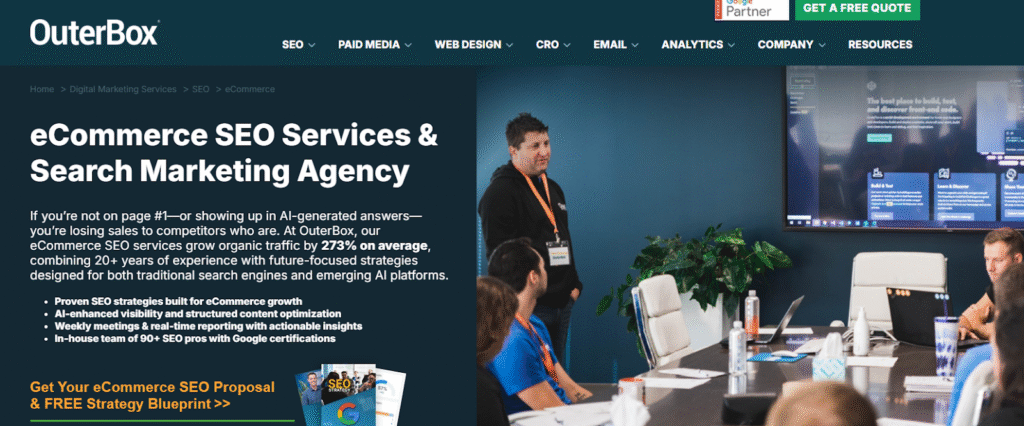
Source – Outerbox
They run their campaigns with a sizeable in-house team, covering SEO execution, content development, analytics, and development changes.
Clients receive scheduled weekly calls, task-level logs and real-time reporting dashboards that show what was completed and what is planned next. The agency works across Shopify, Magento, WooCommerce, BigCommerce, and several other ecommerce platforms, which allows them to handle both content and code updates directly.
Notable Clients: Warehouse Lighting, Corsa Performance, a national fitness equipment retailer, and multiple Shopify and BigCommerce stores
Best For: Brands that want frequent communication and a search program that prioritises structure, crawl efficiency, and ongoing category improvements
Pricing: It is not publicly listed; typically varies based on platform, product volume, and technical workload
5. Inflow
Inflow works as a full-service ecommerce marketing partner with a clear focus on customised strategy. They cover SEO, PPC, paid social, CRO, email, SMS, and analytics, and they use these channels together instead of running them in silos.
Their ecommerce work spans several retail categories from outdoor and pets to apparel, home goods, and B2B, backed by long-running relationships with brands across the US and Europe.

Source – Inflow
They also support a wide mix of platforms, including Shopify, BigCommerce, Magento, WooCommerce, Volusion, and proprietary builds. Their case studies highlight outcomes like major increases in organic traffic and revenue for brands that use them for cross-channel improvements.
Notable Clients: KEH Camera, Simms Fishing, Gaia, EarthKind, Vitrazza
Best For: Ecommerce brands that want SEO woven into a multi-channel setup and prefer working directly with senior strategists
Pricing: Custom. It varies based on goals, channel mix, and the level of ongoing optimisation
6. BlueTuskr
BlueTuskr positions itself as an e-commerce focused SEO and marketing company that builds long-term organic growth strategies for online brands. Their work covers technical fixes, keyword analysis, competitor research, site health, core-page optimisation, and article creation.
They also run off-page programmes that include backlink outreach, guest posts, toxicity checks, and routine testing. The company emphasises customised plans, ongoing reporting, and daily monitoring rather than one-time optimisation.
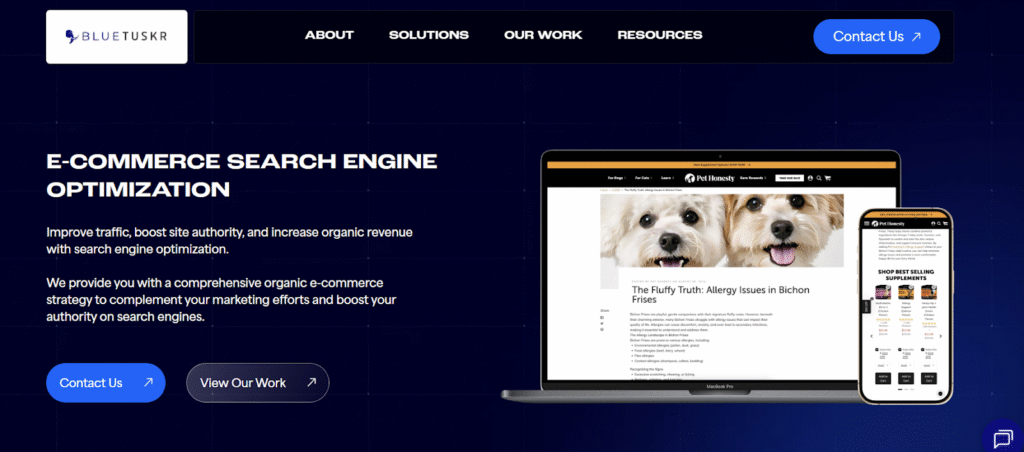
Source – Blue Tuskr
Their site highlights ecommerce revenue gains driven through technical improvements, page optimisation, and steady content updates. They also promote metrics such as annual organic revenue generated, average organic traffic growth, and the size of their in-house team.
Notable Clients: Canon, Pet Honesty, Pepe tools, Styku
Best For: Ecommerce brands needing sustained, content-led SEO with technical and off-page support
Pricing: They offer custom pricing.
7. Sure Oak
Sure Oak’s ecommerce SEO process includes technical audits, backlink checks, keyword and competitive research, content optimisation, detailed briefs, copywriting support, and ongoing reporting.
They also emphasise frequent status meetings and long-term strategy reviews. Their page focuses heavily on structured execution, outlining tasks from onboarding through implementation.
Source – Sure Oak
The agency supports WordPress, Shopify, WooCommerce and Wix and positions its work around winning qualified search traffic instead of only optimising product descriptions. Their site also highlights a collaborative approach shaped around each client’s industry and goals.
Notable Clients: Novarad, APS Payroll, ZenPack, Easy Ringer
Best For: Brands wanting a structured, audit-heavy SEO programme with consistent reporting
Pricing: Not listed publicly. You can contact their team for more information
8. Straight North
Straight North is a digital marketing agency that includes ecommerce SEO within a larger performance-marketing offering. Their work centres on improving indexation, fixing structural issues on large catalog sites, and lifting organic revenue through targeted keyword expansion and content updates. They also handle technical clean-ups, category and product optimisation, link acquisition and ongoing reporting.
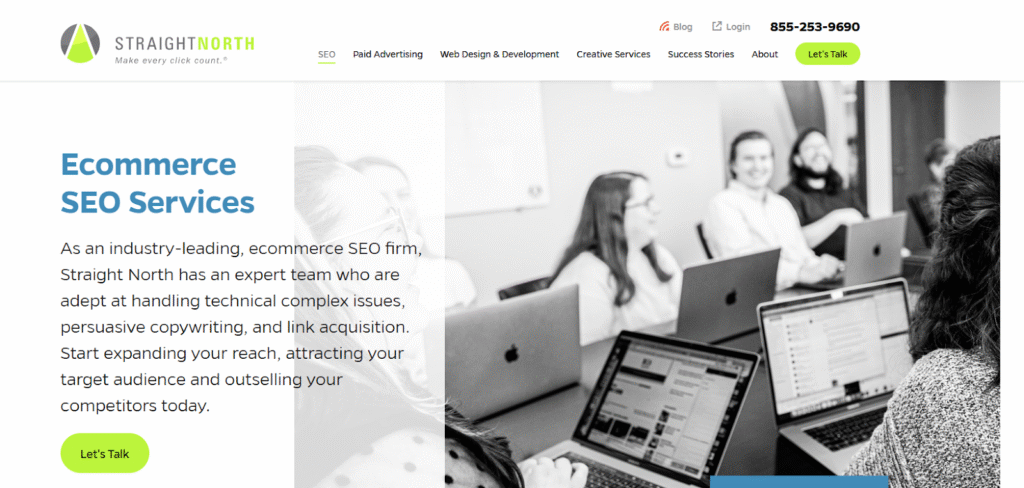
Source – Straight North
Much of their public casework highlights gains in leads, traffic, and conversions across a mix of ecommerce, local, and national brands. The agency positions SEO as part of a wider execution layer where content, technical fixes, and link outreach run together rather than in isolation.
Notable Clients: SeaCa, Sourgum, FMH Conveyors (Duravant), BillingPlatform, Vitrazza, KEH Camera, Modern Bathroom
Best For: Ecommerce brands wanting support across technical SEO, catalogue optimisation, and long-form content updates backed by structured reporting.
Pricing: Custom, based on store size, keyword scope, and ongoing content or link requirements.
9. Thrive
Thrive offers ecommerce SEO within a broader set of services, such as PPC, web design, email automation, and marketplace management.
Their ecommerce SEO offering covers keyword research, technical SEO, on-page improvements, local SEO, and optimization for platforms like Amazon and Walmart Marketplace. They also provide content writing, CRO testing, and Shopify-related design support.
Source – Thrive
The agency’s website lists additional services including schema implementation, product page optimisation, Google Business Profile management, and reporting through Google Analytics. Their ecommerce work is positioned as part of a multi-channel setup rather than a single-channel focus.
Notable Clients: Brands selling on Amazon, Walmart Marketplace sellers, Shopify-based ecommerce stores
Best For: Businesses needing ecommerce SEO alongside marketplace optimisation, PPC, email, and design support.
Pricing: Custom, based on platform, catalog size, and required services.
10. Siege Media
Siege Media is an e-commerce–focused organic growth agency that blends content production, link acquisition, and SEO-driven design.
Their work revolves around building long-tail landing pages, designing conversion-friendly assets, and creating content that attracts both traffic and backlinks. They also support brands with technical SEO input, localisation, and scalable content programs.
Source – Siege Media
Their public case studies highlight traffic gains, ranking improvements, and authority-building through tools, calculators, guides, and large-scale content programs. The agency positions itself as a partner for brands that need search visibility supported by strong design and consistent content velocity.
Notable Clients: Airbnb, On Running, Skyscanner, Williams Sonoma, Mixbook, Audible, Neighborly, Shutterfly, Newsweek.
Best For: Ecommerce brands needing content-led SEO, link acquisition, and design-driven ranking assets at scale.
Pricing: Custom, based on content volume, design requirements, and SEO scope.
11. Searchbloom
Searchbloom is an SEO-focused agency that supports ecommerce brands with structured, prioritised optimisation for large and complex catalogues.
Their approach centres on detailed audits, keyword grouping, on-page improvements, technical clean-ups and a clear sequencing of tasks so teams know exactly what gets worked on first. They also emphasise scalable execution for sites with thousands of category and product URLs.
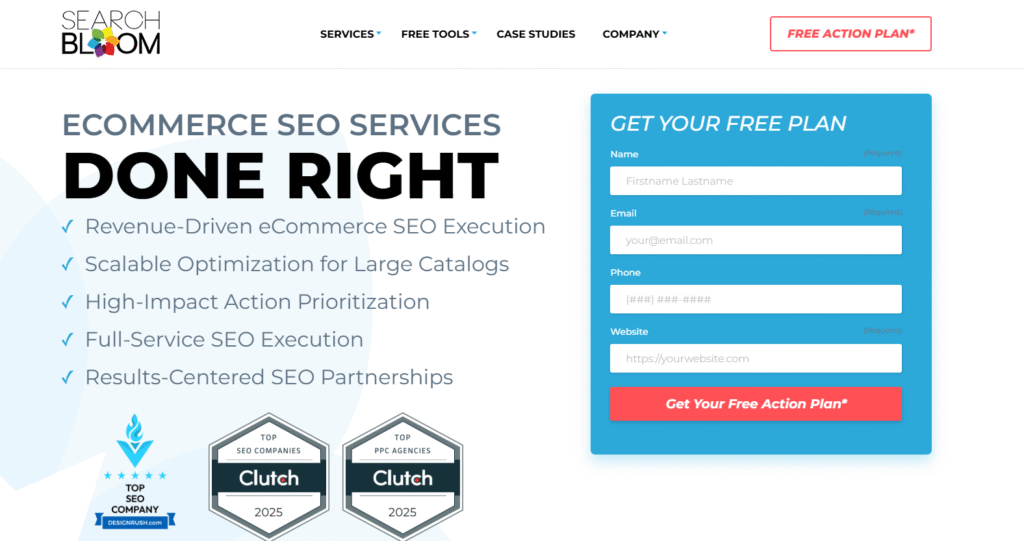
Source – Searchbloom
Much of their published work shows improvements related to better site organisation, stronger keyword coverage, faster page performance, and overall gains in organic revenue.
The agency also highlights its focus on collaborative planning, roadmap transparency, and meeting revenue-oriented targets rather than just traffic metrics.
Notable Clients: DeWils Fine Cabinetry, Granite Seed Company, Acupuncture Practice, Wholesale Ecommerce Business
Best For: Ecommerce stores needing structured, step-by-step optimisation for large product ranges, with an emphasis on technical health and revenue-focused SEO.
Pricing: They offer custom pricing, depending on site size, number of SKUs, and level of ongoing optimisation required.
12. Uproer
Uproer focuses on SEO and paid search for ecommerce companies looking to turn search into a predictable revenue stream. Their positioning centres on partnering with brands that want sales impact rather than surface-level SEO metrics, with an emphasis on consistent execution, content optimisation, and category-level visibility.
Source – Uproer
Their ecommerce work often highlights revenue improvements tied to clearer keyword strategy, product-page refinement, and steady ongoing optimisation. The agency also supports brands with GEO/AEO formatting to improve search presence across traditional and generative engines.
Notable Clients: They work with clients across various industries.
Best For: Ecommerce brands wanting a hands-on SEO partner focused on revenue, clarity, and ongoing operational support.
Pricing: Pricing is customized, based on channel involvement and monthly optimisation scope.
13. HigherVisibility
HigherVisibility is a long-running digital marketing agency that includes ecommerce SEO as part of a broader search and performance offering. Their focus lies in resolving common ecommerce visibility issues like declining organic traffic, weak product-page performance, indexing gaps, and content thinness.
It is done through structured on-page, technical, and off-page improvements. Their process includes platform analysis, schema implementation, keyword research, content creation, and ongoing reporting via their InSite dashboard.
Source – HigherVisibility
Their client work highlights lifts in traffic, product-page visibility, and organic revenue across different ecommerce categories. Much of their execution revolves around stabilising search performance after redesigns, improving category relevance, and strengthening domain authority through targeted outreach and content marketing.
Notable Clients: Brilliant Earth, Dip N Dive, Scrip Hessco
Best For: Ecommerce brands seeking a structured SEO program covering technical, content, and link acquisition with regular reporting and strategic oversight.
Pricing: Custom, based on store size, platform complexity, and monthly SEO scope.
14. Uncommon Logic
Uncommon Logic is a performance-focused SEO agency that applies a search-experience approach to ecommerce growth. Their work prioritises understanding user intent, improving on-site experience, and aligning SEO execution with broader business goals.
Their ecommerce offering spans SEO audits, visibility research, technical and architectural fixes, content strategy, backlink strategy, and ongoing optimisation programs.
Source – Uncommon Logic
Their process centres on analysing search behaviour, improving crawlability, shaping content to match visitor expectations, and supporting conversions across the entire journey. They also handle SEO for site relaunches, ensuring structural stability and continuity during major platform changes.
Notable Clients: Foss Swim School, Soothems, Perfect Memorials, Coborn’s, Acucraft Fireplace Systems, Boppy, Escali, Coolibar
Best For: Brands wanting an intent-driven, UX-aligned ecommerce SEO approach that emphasises visitor experience and conversion readiness.
Pricing: The agency offers a custom pricing model, depending on site size, technical requirements, and ongoing optimisation needs.
How to Evaluate the Right Agency Partner
It’s easy to get lost in big claims and fancy presentations, but a few simple checks can help you spot a genuinely capable agency.
- Category understanding comes first: The agency should already understand your market, your buyers, and the nuances of how your product is evaluated, so you’re not spending time educating them.
- They focus on revenue, not noise: Look for teams that talk about qualified traffic, conversions, and sales impact instead of broad impressions or vanity keyword wins.
- Their process is structured: From research to content to technical work, they should follow a clear workflow that shows how each step ties back to business goals.
- They can identify quick wins early on: A good agency should be able to spot high-impact gaps like pages, keywords, or optimizations that move the needle without waiting for long cycles.
- They communicate clearly and consistently: You want transparency around what’s done, why it matters, and what’s next, not vague updates or overcomplicated reports.
Last but not least, the right agency aligns with your team, understands your internal constraints, and adapts their approach instead of pushing templated solutions.
Now that you know what a solid agency partnership should look like, let’s have a look at a few clear steps you can implement immediately.
5 Simple Changes That Improve Ranking and Conversions
At its core, ecommerce growth is the result of a few fundamentals executed consistently. These are five areas every brand can work on internally, even without an agency.
1. Prioritise high-intent pages
Product pages, category pages, comparison pages, and “best of” assets convert the fastest because they match buyers who are already evaluating options.
How to implement: Review your analytics to identify which pages attract bottom-funnel traffic and improve their clarity, structure, and internal links first. Treat these as your revenue anchors.
2. Fix the structural issues that block visibility
Search engines won’t rank what they can’t crawl. Slow pages, inconsistent metadata, and cluttered URL paths directly affect discoverability.
How to implement: Run a technical audit (Semrush + Screaming Frog is enough) and fix the highest-impact issues, like page speed, duplicate metadata, redirect chains, and indexation rules.
3. Add decision-support content, not just keywords
Most product and category pages underperform because they don’t answer the questions buyers have before purchasing.
How to implement: Add short FAQs, sizing notes, comparison details, gifting logic, and use-case guidance. For teams that also rely on visual explainers or internal enablement decks, tools like an AI presentation maker can help turn product comparisons, buying guides, and use-case content into structured assets that support both SEO and conversion.
4. Improve relevance through internal links
Internal linking shapes how search engines understand your catalogue and how buyers move through it. It also lifts underperforming pages by connecting them to stronger ones.
How to implement: Link related categories, seasonal pages, bundles, and high-margin products. This improves discoverability and pushes buyers toward pages that matter most.
5. Test one element at a time
Most ecommerce sites change layouts or messaging without measuring impact. Small adjustments often make bigger differences than major redesigns.
How to implement: Run simple experiments, like change the order of content blocks, update headings, move reviews higher, or streamline descriptions. Track each change individually to see what actually improves performance.
These principles don’t require heavy tools or complex workflows. They simply require attention to intent, structure, and consistency. These are three things that directly influence how buyers find and evaluate your products.
And sometimes doing it internally is not possible if you lack experts well-versed with it. That’s where agencies like Concurate can help take your eCommerce SEO to the next level.
Why Concurate Is the Partner Ecommerce Brands Grow Faster With
If you’ve come this far, you already know one thing: ecommerce growth isn’t just about publishing content or fixing a few SEO issues. You need a partner who understands how buyers actually make decisions and how search, social, and generative engines shape those decisions long before someone checks out. That’s exactly where Concurate steps in.
We strengthen the parts of your site that influence this visibility. This includes your catalogue structure, content layers, metadata, and the way your pages communicate with search systems. When these pieces work together, discovery becomes consistent and buyers reach you faster.
If you’re ready for an agency that treats your growth like its own, let’s talk. Book our calendar today and let us help you build the momentum your ecommerce brand deserves.
Frequently Asked Questions
1. What is Ecommerce SEO?
Ecommerce SEO is the process of optimizing online stores so their product, category, and content pages rank higher in search results. The goal is to attract buyers who are already searching for what you sell and convert them into customers.
2. Why do Ecommerce brands need an agency?
Most ecommerce websites have large catalogs, technical complications, and thousands of URLs. An agency helps prioritize what should be fixed first, builds scalable workflows, and ensures your content, structure, and visibility all align to drive revenue.
3. How long does Ecommerce SEO take to show results?
Timelines vary by site size, competition, and existing issues. Most brands start seeing meaningful movement within 3-4 months, with significant revenue shifts typically appearing between 6-12 months.
4. Does SEO still matter with AI search taking over?
Absolutely. Ecommerce brands now need visibility across both traditional search and AI-driven answers. Agencies that understand generative engine optimization, structured content, and entity building help you appear in Google, ChatGPT, Perplexity, Gemini, and voice assistants.