

| TL;DR: Traditional SEO alone is no longer enough when buyers are using ChatGPT, Gemini, Perplexity, Claude, and Google AI Overviews to compare vendors. Before choosing a GEO agency, look at whether they can build decision-stage content, strengthen third-party visibility, map real buyer scenarios, and create proof-led content that AI platforms can trust. In this guide, we compare 18 GEO companies, including Concurate, Grow and Convert, Omnius, Skale, and Avenue Z. We also explain how Concurate’s Perfect Match GEO Framework helps B2B and SaaS brands improve AI visibility and generate qualified leads, not just traffic. |
A few months ago, a B2B SaaS company came to us after spending a year with a content marketing agency that had done solid work by traditional SEO standards.
Traffic was up. They ranked on page one for several informational keywords. There was consistent in publishing too.
But when we checked their visibility across ChatGPT, Perplexity, Gemini, and Claude for buyer-intent queries like “best [product category] for [specific use case]” or “top [solution type] for [industry],” their brand did not appear.
Their competitors, some even much smaller in revenue, did. But they didn’t.
Given how much buyers now rely on AI to build shortlists, this was a huge gap. That’s why in 2026, traditional content marketing alone won’t do. You need an agency that understands generative engine optimization.
To make the choice easy, in this article, we look at the key factors to consider when evaluating GEO agencies and explore 18 companies worth considering.
4 Reasons Why Most Companies Struggle With AI Visibility
Before we get into how to choose a GEO agency, it helps to understand why many companies struggle to show up in AI search in the first place.
In our experience, most companies do not have an AI visibility problem because their content is bad. They have the problem because their content was built for a different search behavior.
Here are the common gaps we see:
1. Their Content Is Built Around Google Keywords, Not How Buyers Search
A buyer may not simply ask ChatGPT or other AI tools for “endpoint security software.” They may ask something like:
“We are a 200-person healthcare company looking for endpoint security software. What are the best options within this specific budget that offer strong threat protection and HIPAA compliance?”
That is a very different query. If your content is only built around primary and secondary keywords without any buyer scenario specificity, AI platforms may not understand when and where to recommend you.
2. Their Content Is Either Informational Or Educational Pieces
Many companies limit themselves to publishing trend pieces, how-to guides, and educational blogs. That content can bring traffic, but it does not always help when a buyer asks AI tools what to buy, which vendor to compare, or which solution fits a specific use case. AI platforms often pull from bottom-of-funnel content like comparison pages, “best of” lists, use-case pages, and detailed product content.
3. Their Brand Is Missing From Third-Party Sources
AI tools do not rely only on your website. They also pull authority signals from social handles, review platforms, third-party lists, industry publications, forums, and community discussions. If your brand is not mentioned in those places, AI platforms have fewer trust signals to work with.
4. Their Content Is Not Specific Enough For Real Buyer Scenarios
One broad landing page cannot cover every situation your buyers ask about. AI platforms often respond differently based on industry, company size, use case, geography, or tech stack. If your content does not cover those variations, your brand may stay invisible for high-intent searches where you are actually a fit.
Traditional SEO metrics do not show the full AI visibility picture either. A page can rank on Google and still never get cited by ChatGPT, Perplexity, Gemini, Grok, or Claude.
Plus, while there are numerous playbooks on the internet, suggesting to add schema, clear headings, and FAQ sections, those tactics only go so far.
The bigger challenge is strategic execution. That is, building the content, authority, and proof AI platforms need before they can confidently recommend your brand.
That is also why choosing the right GEO agency matters. In the next section, we will look at the key factors to consider when evaluating generative engine optimization agencies.
5 Factors to Consider When Evaluating Generative Engine Optimization Agencies
Once you know why companies struggle with AI visibility, the next question is simple: how do you choose the right GEO agency?
To put it in one line, a good GEO agency should help you build the content, authority, and proof AI platforms need to confidently recommend your brand.
But you need more than that. Here are the five factors we would recommend you look at.
1. Do They Build Decision-Stage Content Or Just Informational Blogs?
This is one of the biggest differences between agencies that improve AI visibility and agencies that only produce content.
AI platforms often pull from decision-stage content when buyers ask for recommendations. Think comparison pages, best of lists, use-case pages, alternative content, and detailed product or service content.
For example, when a buyer asks, “What are the best project management tools for remote engineering teams?” AI tools will not cite a generic article about productivity trends. It will pull from content that compares tools, explains use cases, and helps the buyer evaluate options.
When evaluating an agency, ask for the content they have produced for other clients. If most of their work is educational blogs and thought leadership articles, they may still be thinking like a traditional SEO agency.
A strong GEO agency should know how to create decision-stage content that gets your brand into AI shortlists.
2. Do They Build Content for Real Buyer Scenarios?
Buyers do not ask AI tools one generic question. They describe their situation.
They may mention their industry, company size, budget, location, compliance needs, tech stack, or use case. AI platforms use all of that context before deciding which companies or tools to recommend.
That means one broad landing page is not enough. The right GEO agency should map the real scenarios where your brand should appear and create content around them.
This is where GEO moves beyond keyword research. When evaluating an agency, ask how they plan content. If they only rely on keyword tools and search volume, they may miss the way buyers actually use AI platforms. A good agency will combine keyword data with prompt testing, buyer research, sales insights, and scenario mapping.
3. Do They Build Your Presence Beyond Your Website?
AI platforms do not rely only on your website. They also pull from third-party sources such as review platforms, third-party lists, social platforms, and community forums. If your brand is missing from these sources, AI tools have fewer signals to work with.
This is why offsite visibility matters. A good GEO agency would understand where AI platforms are pulling information from in your category. Then they should help you build presence across those sources, not just publish more content on your own site.
When evaluating an agency, ask whether their GEO strategy goes beyond your domain.
If the entire plan is limited to publishing on your blog, they are missing a large part of how AI recommendations work.
4. Can They Measure AI Visibility, Not Just Traffic and Rankings?
Traditional SEO dashboards do not show the full picture. You can rank on Google and still not appear in ChatGPT, Gemini, Perplexity, Claude, or Google AI Overviews for queries buyers ask.
That is why GEO reporting needs to measure AI visibility directly.
A strong agency should be able to show:
- Which prompts your brand appears for
- Which AI platforms mention you
- Which sources those platforms cite
- How your AI visibility changes over time
When evaluating agencies, ask what their reporting looks like.
If they only show rankings, impressions, traffic, and AI referral clicks, they may not be measuring the right thing. You need visibility across the prompts your buyers actually use.
5. Do They Use Original Data and Expert-Led Content?
AI platforms prefer content that is specific, useful, and backed by proof.
Generic articles built from secondary research are less likely to stand out. But content with original data, expert interviews, product insights, benchmarks, statistics, and technical depth gives AI tools stronger reasons to cite your brand.
This matters especially in B2B categories where buyers ask detailed questions.
The right GEO agency should know how to extract insights from your internal experts, sales teams, customer conversations, and proprietary data. That is what makes your content different from every other article on the same topic.
When evaluating an agency, ask how they create content.
If the process depends only on writers researching your industry from the outside, the output may lack depth. A strong GEO agency should have an interview-led process that captures what your company knows better than anyone else.
These five factors should help you separate agencies that only optimize content from agencies that can improve your actual visibility across AI search.
Now that we have looked at these factors, let’s dive into the agencies that offer generative engine optimization for companies across verticals.
18 Top Generative Engine Optimization Agencies for AI Visibility
By now, you know what to look for in a GEO agency.
The right partner should not just optimize pages or add AI-friendly formatting. They should help your brand appear in the right buyer searches, build authority beyond your website, and create content that AI platforms can trust enough to recommend.
That said, it is not easy to evaluate every agency on your own. So, we have put together a list of generative engine optimization agencies worth considering in 2026:
- Concurate
- Grow and Convert
- Omnius
- Skale
- PipeRocket
- Epic Slope partners
- Omniscient Digital
- Avenue Z
- iPullRank
- First Page Sage
- Victorious SEO
- WebFX
- Siege Media
- Ignite Visibility
- Spicy Margarita
- Intero Digital
- Single Grain
- Seer Interactive
We will now begin with the top company on the list.
Concurate
Concurate is a generative engine optimization agency for B2B and SaaS companies that want to get recommended across the places where buyers now make decisions. That means, not just traditional search but AI surfaces like AI Overviews, ChatGPT, Gemini, Perplexity, Claude, Grok, and more.
Source – Concurate
You see, we do not look at GEO as just adding schema, FAQs, or AI-friendly structuring to existing pages. Those things help, but they are not enough to make AI platforms confidently recommend your brand.
Our work starts with a simple question: when your ideal buyer asks an AI tool for the best companies, tools, or solutions in your category, does your brand show up as the right match? Because if you are not appearing in those shortlists, you are missing the moments where buyers are actively evaluating options.
Over time, we have turned the process we follow across GEO engagements into our proprietary Perfect Match GEO Framework. You can view it below to see how we approach GEO at Concurate.
The Perfect Match GEO Framework is not a theoretical process. It is how we approach content strategy, AI visibility, and pipeline-focused execution for our clients.
Here are a few examples of how this approach has translated into stronger visibility, attract qualified leads, and build stronger content ecosystems.
Capturing Enterprise IT Leads Through Buyer-Focused Content
For a client in enterprise IT services, we focused on creating decision-stage and consideration-stage content directly tied to their service offerings.
Given their wide breadth of services, we built content clusters around each offering. These pieces began surfacing across Google AI Overviews and multiple generative engines, bringing in impressions that converted into qualified leads.
Here are a couple of examples:
When we asked ChatGPT to share the top edge integrators in India for enterprises, the client appeared in the recommendation list.
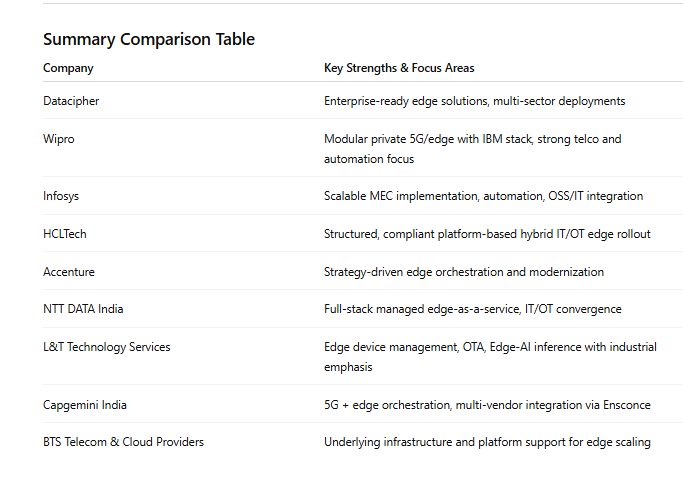
When we queried Perplexity for the top 5G integrators in India for Enterprises, our client’s name surfaced there as well.
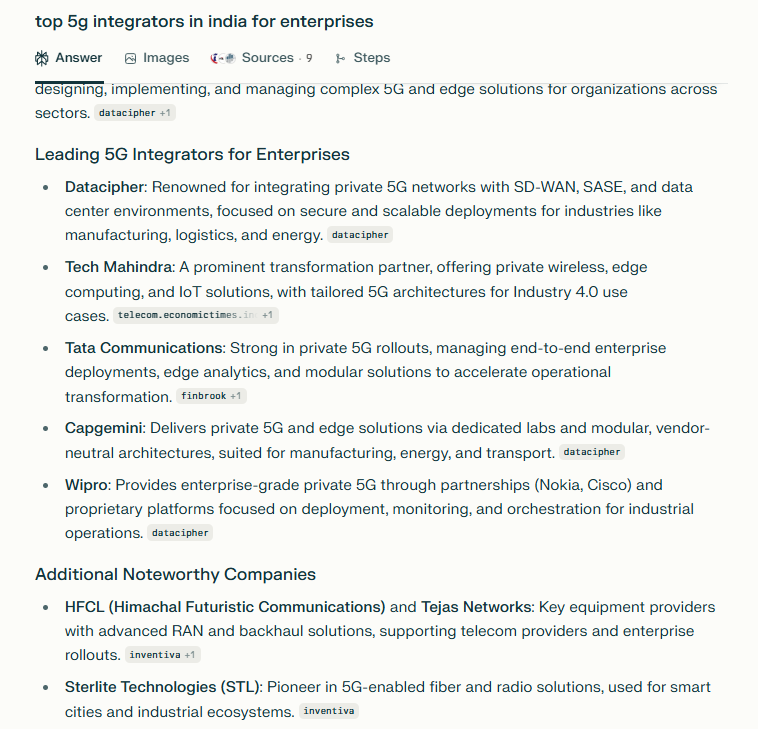
It did not stop at AI recommendations. Our end goal was to generate leads for our client, and we achieved success there too. Our campaign generated 100+ qualified leads within 6 months. You can read the detailed case study to learn more.
Driving Course Enrollments with a Multi-Pronged Content Strategy
For an educational training client of ours, who worked with multiple global OEMs, we knew a keyword-only strategy would fall short.
Instead, we designed a multi-pronged content engine tailored for buyers evaluating high-value certifications.
We used some out-of-the-box approaches here. Instead of targeting high-ranking keywords in the domain, we made them specific to the courses and certifications they offered. This meant creating:
Detailed certification and course guides: We created in-depth articles covering each course and certification, including its modules, prerequisites, outcomes, and related FAQs. Our idea was to give prospective learners all the information they needed before signing up for the course.
YouTube explainers: For visual learners, we created short two-minute videos that simplified course information and expanded reach beyond search. We also posted these videos regularly on their LinkedIn page.
LinkedIn posts: We also posted high-quality carousels and course schedule posts for all OEMs across multiple time zones. This way, we amassed relevant impressions that brought engagement and converted directly to leads.
This structure also worked because it mirrored the learner’s journey: social proof through regular testimonial posts on LinkedIn, easy discovery on YouTube, and full details on the website, all linking seamlessly to enrollment pages.
The result was a significant lift in leads and a rapidly growing follower base on LinkedIn, translating directly into enrollments. Over twelve months, consistent posting and cross-channel storytelling helped our client build a strong digital footprint and become a go-to source for enterprise IT certifications.
These are just a couple of examples that show how we approach GEO at Concurate. We do not stop at technical fixes or content volume. We build content ecosystems around real buyer questions, category relevance, expert insight, and measurable business outcomes.
In the age of generative engines, expertise is non-negotiable. That’s why at Concurate, we don’t rely on generic content mills. Instead, we bring in writers with 3-7+ years of deep domain experience, whether in patents, cybersecurity, or enterprise IT. Every piece is fact-checked and refined by seasoned editors who understand the industry inside out.
This mix of strategy, execution, and expertise is what allows us to consistently put our clients in front of buyers, across Google, ChatGPT, Gemini, and beyond.
By now, the decision should be pretty easy for you. You want to work with us, don’t you? Just book time on our calendar, and we will walk you through how we can plan AI visibility for your brand.
Want to check more options? No worries, feel free to scroll further to find what other companies are doing in generative engine optimization.
Grow and Convert
Grow and Convert is a content marketing agency that emphasizes conversion-driven SEO. Their process is structured around four pillars: content strategy, writing, promotion, and conversions, with the goal of generating qualified leads.
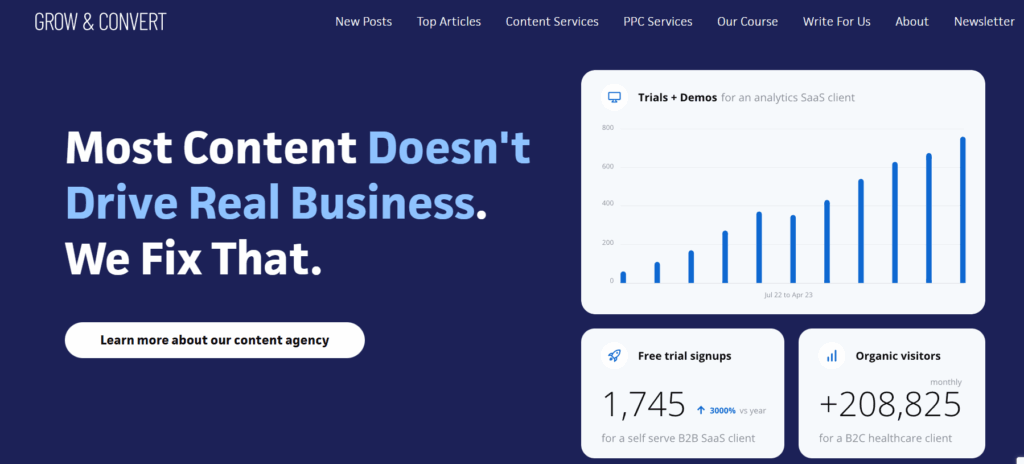
Source – Grow and Convert
The agency also applies this approach to generative engine optimization, ensuring that clients’ content is cited and surfaced across AI-driven platforms like ChatGPT, Gemini, and Perplexity. Their focus on product-centric and bottom-of-funnel content helps brands capture visibility where buyers are closest to making purchase decisions.
Grow and Convert positions itself as a long-term partner for SaaS and B2B companies that need content built around business outcomes. Rather than chasing vanity traffic, they specialize in creating high-intent, LLM-friendly content designed to convert readers into leads.
Omnius
Omnius is a Europe-based B2B SEO and LLMO (Large Language Model Optimization) agency that works exclusively with SaaS, fintech, and AI companies. Their services include SEO, content marketing, programmatic SEO, and conversion optimization.
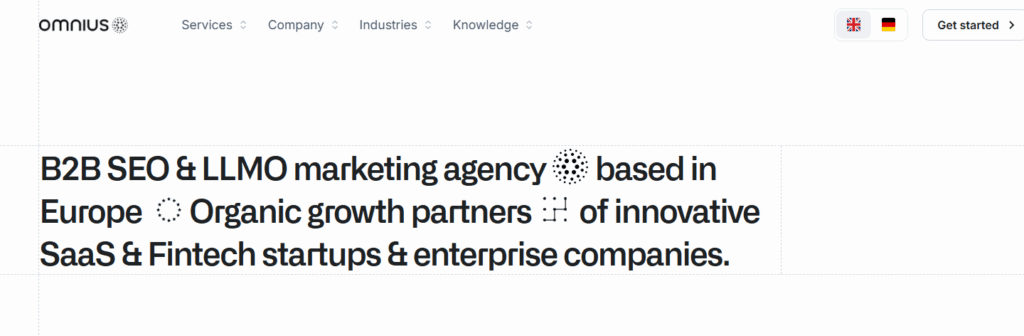
Source – Omnius
They also offer generative engine optimization, helping brands improve visibility inside AI search engines. Their GEO approach covers AI crawler optimization, structured data, semantic content clustering, and zero-click query targeting.
Omnius also has dedicated landing pages across major AI surfaces, which speaks volumes about their positioning strategy.
That said, they position themselves as a focused partner for startups and enterprises that want long-term organic growth across both traditional search engines and AI-driven platforms.
Related Read: Programmatic SEO can look thin when done poorly, but at scale it can transform SaaS visibility. Read the ElevenLabs Playbook to know more.
Skale
Skale is a data-driven SEO agency for B2B SaaS companies, helping brands grow organic visibility and revenue through advanced content and SEO strategies. Their team combines proven SEO frameworks with Generative Engine Optimization (GEO) techniques to ensure brands stay discoverable across AI-driven platforms like ChatGPT, Gemini, and Perplexity.
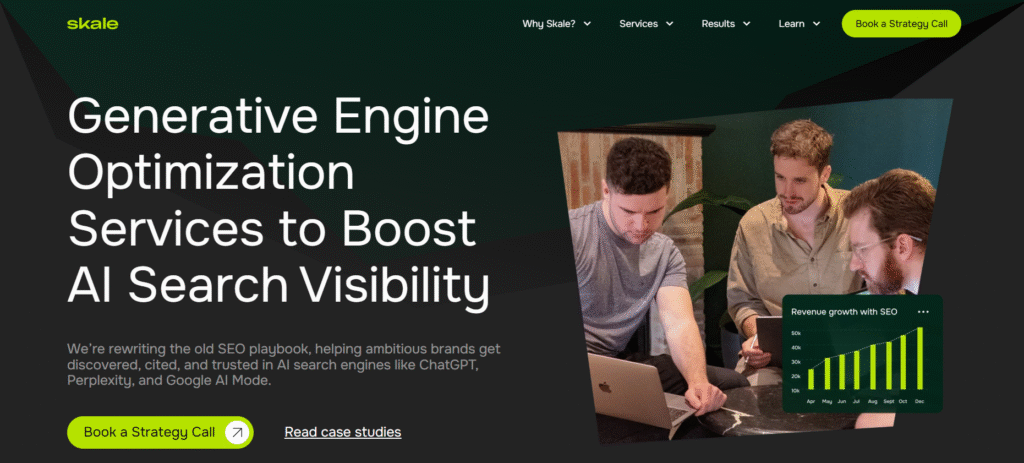
Source – Skale
By integrating AI insights into content planning, keyword mapping, and performance tracking, Skale helps clients gain a competitive edge in emerging search ecosystems. Their services cover content strategy, technical SEO, and link acquisition, all tailored to the SaaS buyer journey.
Trusted by companies like Hubspot, Attest, and Maze, Skale focuses on generating measurable pipeline impact rather than vanity metrics, making them a go-to partner for SaaS brands aiming to win visibility in both search and AI environments.
PipeRocket
PipeRocket Digital is a B2B SaaS-focused marketing agency that pairs SaaS SEO with a growing GEO/AI-search optimization practice, helping brands get cited by ChatGPT, Gemini, and Perplexity alongside classic organic rankings.
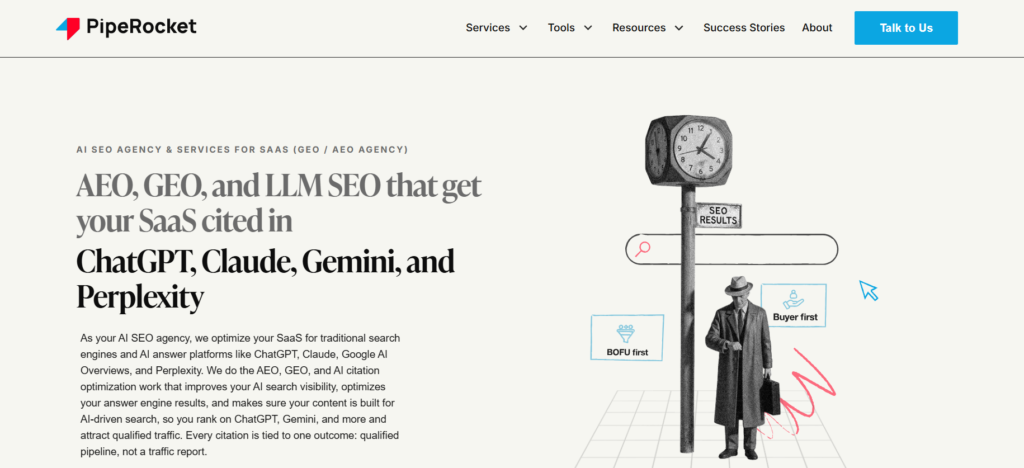
Source – PipeRocket
They treat AI search as a separate discipline with its own workflow, and not just relabelled SaaS SEO. They use LLM-assisted briefs, AI-powered entity mapping with a human-in-the-loop QA.
Founded in 2023, the senior-led team (strategist, SEO/AEO lead, content strategist, no junior handoff) has worked with 70+ B2B SaaS companies, including Spendflo, GreytHR, and LatentView, reporting pipeline metrics like MQLs and SQLs from week 4.
They are rated 4.7/5 on Clutch.
Epic Slope Partners
Epic Slope Partners is a boutique agency focused on B2B SaaS and AI-native companies. Their services include SEO, content strategy, CRO, paid marketing, and demand generation.
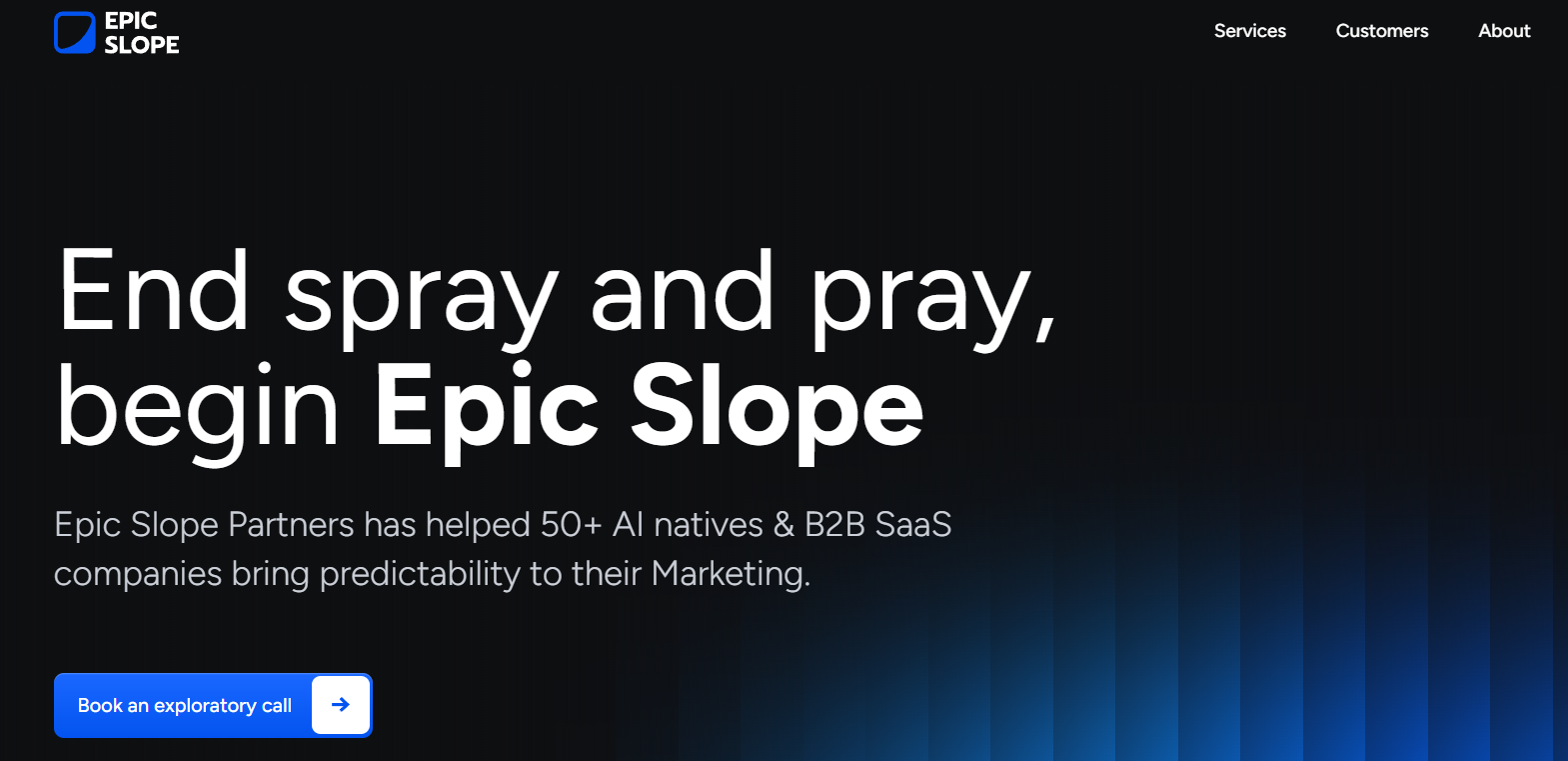
Source – Epic Slope
Epic also provides generative engine optimization to help brands appear in AI-driven tools like ChatGPT and Perplexity. The team has experience across SaaS, IT services, fintech, and healthcare.
Epic Slope mentions on their website that they work with early-to-growth stage SaaS brands that want senior-led support without large agency overheads.
Their pricing begins around $5,000/month.
Avenue Z
Avenue Z is an AI-forward marketing and communications agency focused on brand visibility and reputation. The agency combines digital PR, content strategy, and AI optimization to influence how brands appear across platforms like ChatGPT, Perplexity, Gemini, and Google AI Overviews.
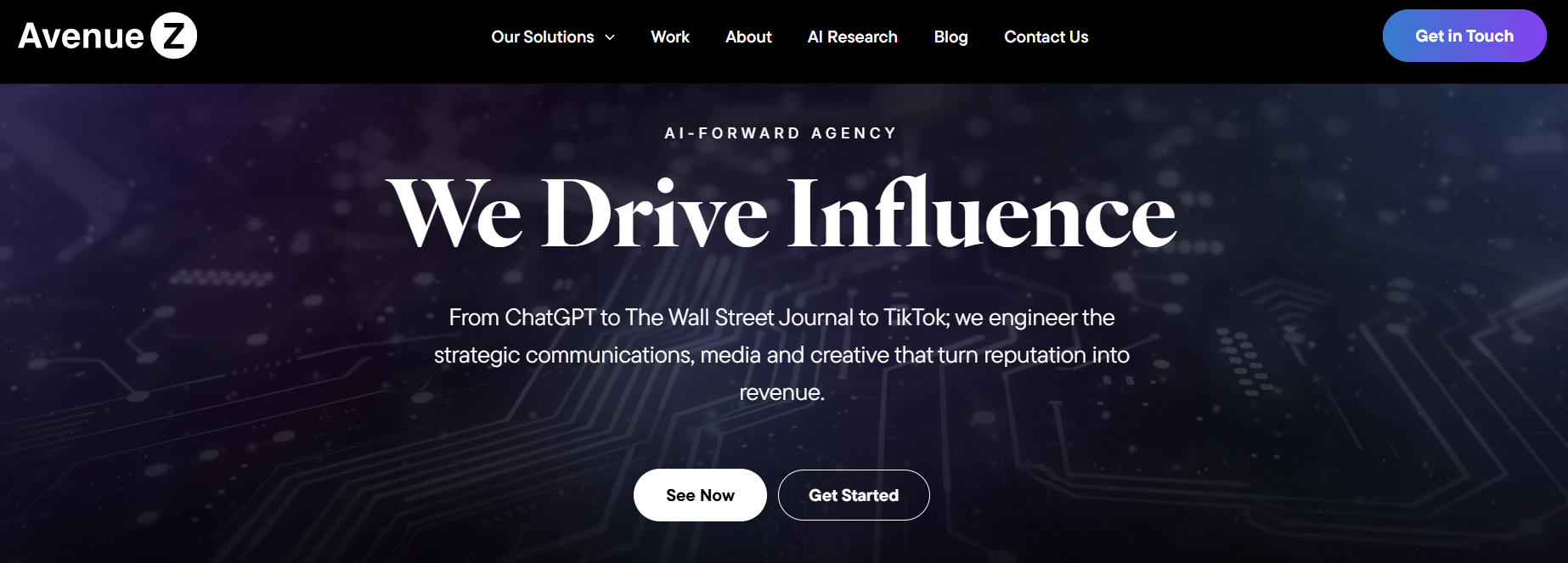
Source – Avenue Z
Their AI optimization services include visibility audits, AI-friendly content development, conversational content, and brand monitoring across AI-driven search platforms. They also secure high-authority media placements to strengthen brand authority in knowledge graphs and AI citations.
Avenue Z works with enterprise clients across fintech, healthcare, supply chain, consumer brands, and venture capital. The agency emphasizes influence, reputation, and measurable visibility in AI-driven discovery.
Their pricing is engagement-based and not publicly listed.
Omniscient Digital
Omniscient Digital is an organic growth agency that works with B2B software companies. Their services include SEO strategy, content production, technical SEO, digital PR, and analytics.
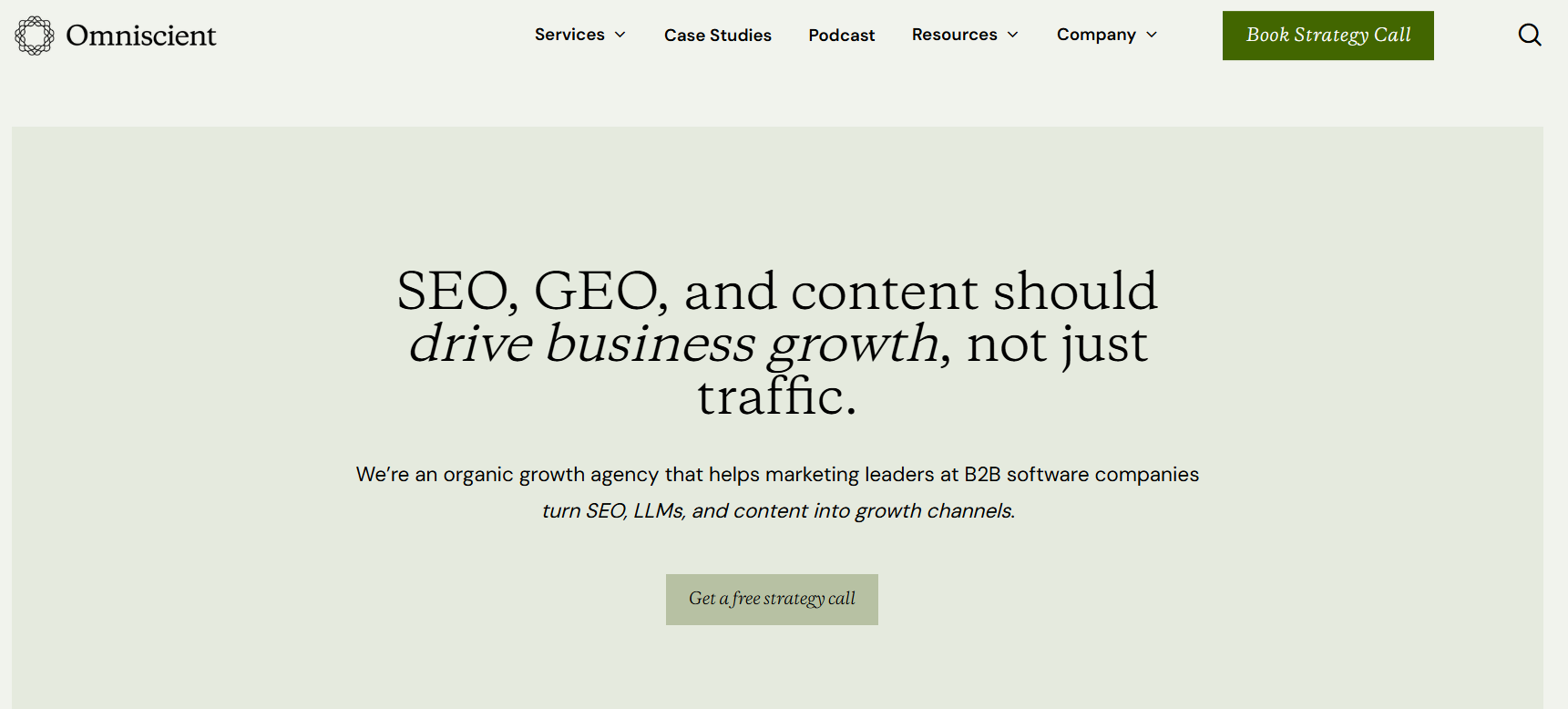
Source – Omniscient
They also provide GEO services to help brands appear in AI-driven results. Their approach combines content creation, structured data, and entity-focused optimization to increase brand visibility across both traditional search and generative engines.
Omniscient positions itself as a full-service growth partner for marketing leaders who want SEO and content programs that drive business outcomes, not just traffic.
Their engagements start at around $10,000 per month.
iPullRank
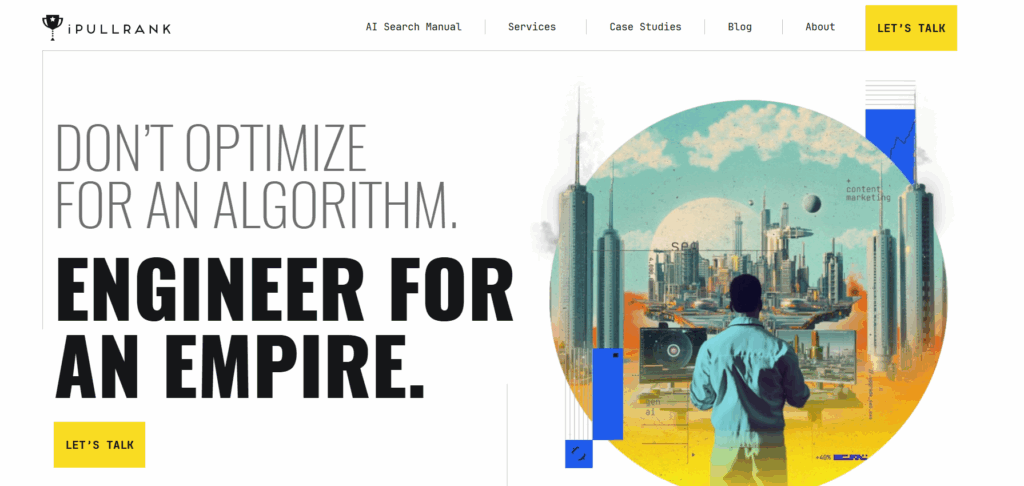
iPullRank is an enterprise SEO and content marketing agency that positions itself as a leader in Relevance Engineering. Their services cover technical SEO, content strategy, digital PR, and content engineering.
Source – iPullRank
The agency also offers generative AI services, including GEO support to help brands surface in AI-driven results such as ChatGPT and Google AI Overviews. Their approach blends technical optimization, structured content, prompt engineering, and AI governance programs for enterprises.
iPullRank focuses on creating strategies that combine human expertise with AI efficiency. Their goal is to help large organizations adapt their SEO and content operations for the era of generative search.
First Page Sage
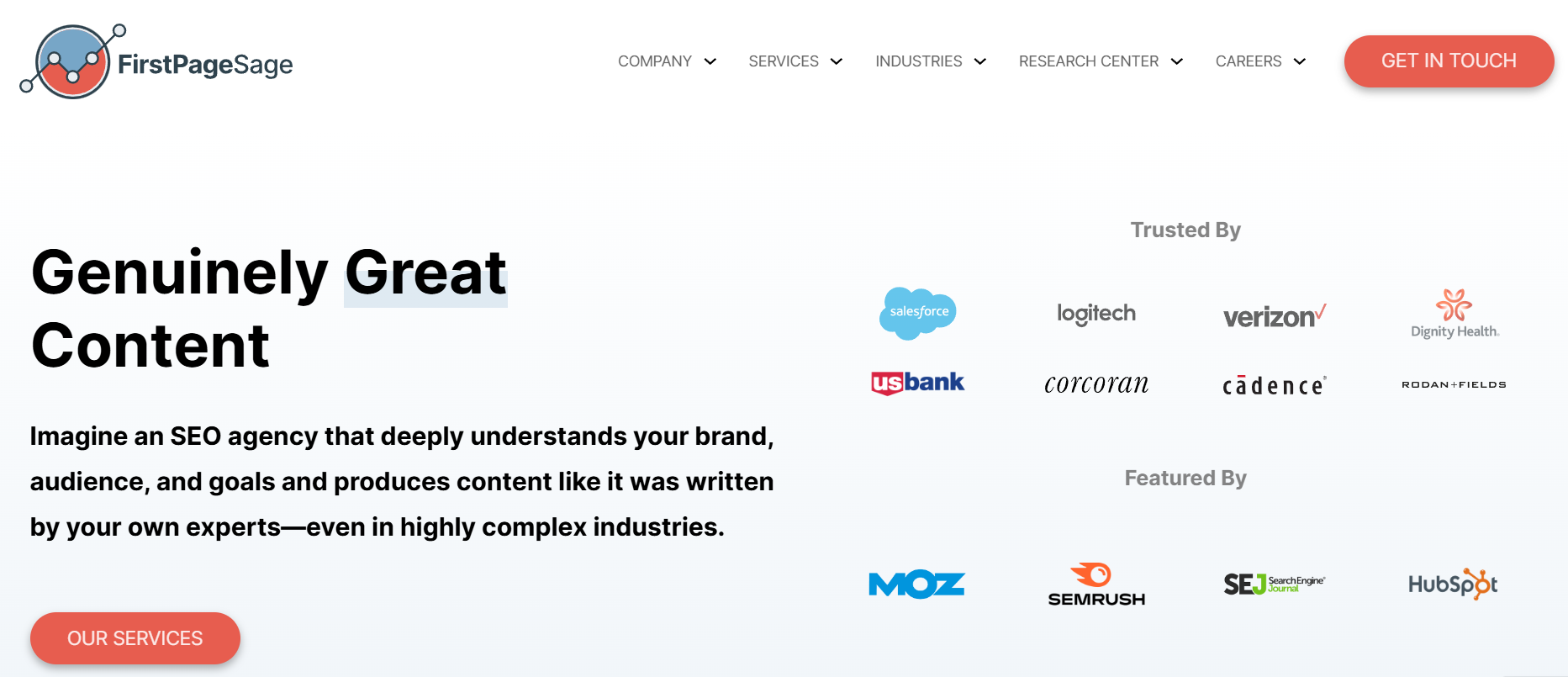
First Page Sage is a long-standing SEO agency that has expanded its offerings into generative engine optimization. They majorly focus on B2B companies across industries such as SaaS, fintech, proptech, healthcare, and professional services.
Source – First Page Sage
Their GEO services cover list optimization, database inclusion, authority building, online review management, and sentiment monitoring.
Additionally, the agency offers traditional SEO, content marketing, and lead generation services. With over 15 years of experience, First Page Sage positions itself as a partner that combines SEO fundamentals with geo-strategies to help businesses improve visibility across both search engines and generative AI platforms.
Victorious SEO
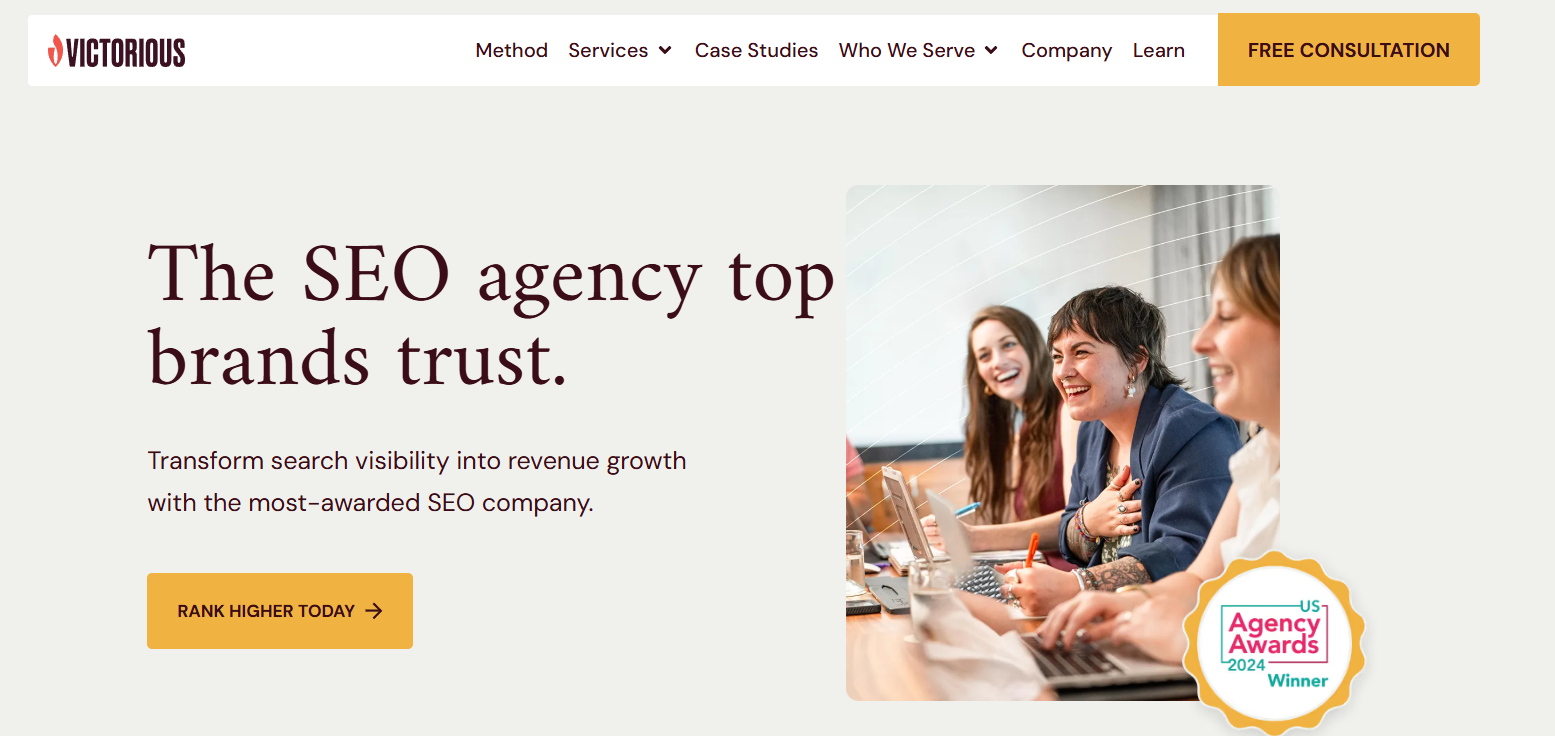
Victorious is an SEO agency that has expanded into Answer Engine Optimization (AEO) to help brands adapt to AI-driven search. Their services combine traditional SEO with strategies designed for AI Overviews and generative engines like ChatGPT, Claude, and Perplexity.
Source – Victorious
Victorious positions AEO as the natural evolution of SEO, focusing on structuring content to directly answer user queries and capture citations in AI-generated responses. Alongside this, they offer technical SEO, content optimization, and link-building services.
With multiple industry awards, Victorious emphasizes being a strategic partner that helps businesses maintain visibility as search behavior shifts from blue links to AI-powered answers.
WebFX
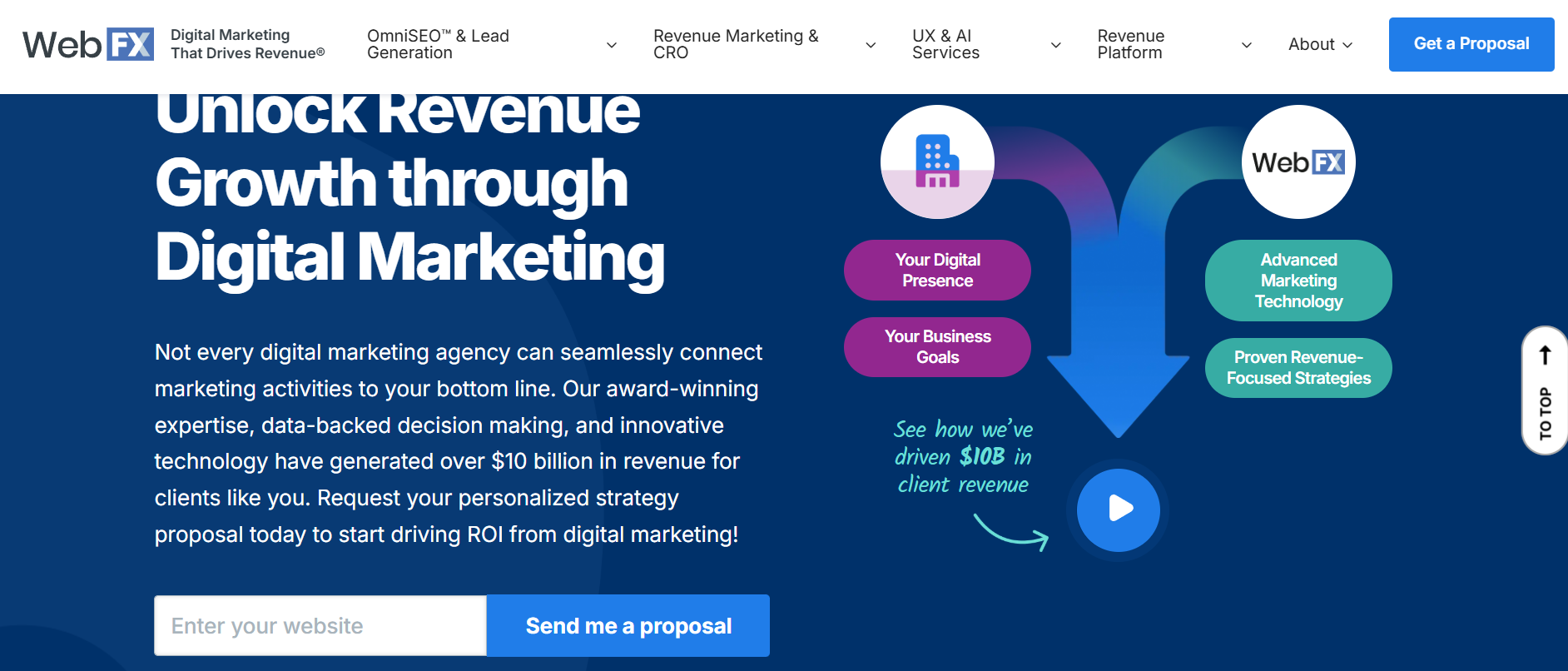
WebFX is a full-service digital marketing agency with a strong focus on SEO, GEO, and AI-driven visibility. Their “OmniSEO™” framework blends traditional search optimization with generative engine optimization for platforms like ChatGPT, Gemini, and Perplexity.
Source – WebFX
The agency offers a wide range of services, including SEO, content marketing, CRO, PPC, and AI consulting.
WebFX also provides proprietary tools such as RevenueCloudFX, which helps clients track performance and connect marketing activity to revenue impact.
With custom packages starting around $3,000/month (and enterprise GEO services higher), they position themselves as a scalable partner for businesses across industries looking to future-proof their search visibility.
Siege Media
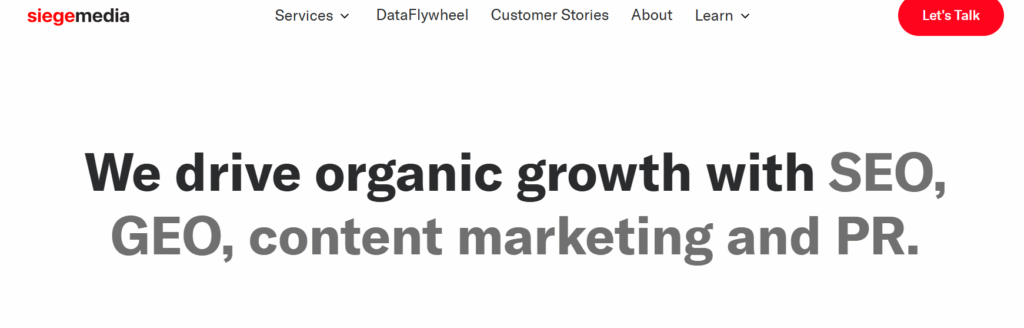
Siege Media positions itself as an organic growth agency specializing in SEO, content marketing, GEO, and digital PR.
Their approach combines data-driven search insights with creative execution, aiming to build both visibility and ROI-driven impact for clients in SaaS, fintech, e-commerce, and related sectors.
Source – Siege media
Alongside SEO and content services, Siege also offers design support, link building, and localization.
They operate with a “traffic-to-revenue” philosophy, marketing themselves as the partner brands turn to when content performance must tie back to measurable growth.
Their pricing is customized to engagement scope, but Siege generally positions itself as a premium partner, with retainers starting at mid–four figures per month.
Ignite Visibility
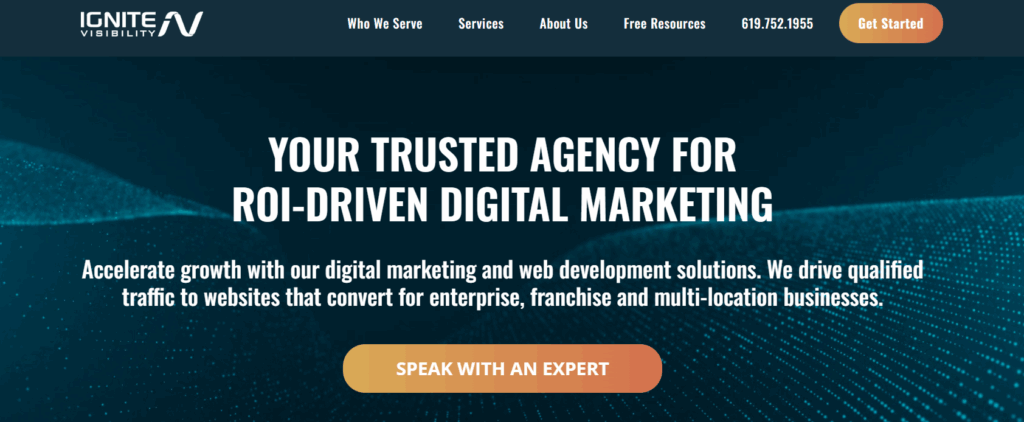
Ignite Visibility is an ROI-focused digital marketing agency that works with enterprise, franchise, and multi-location businesses. The agency delivers full-funnel growth strategies across earned, paid, and owned media.
Source – Ignite
Ignite Visibility emphasizes transparency, flexibility, and high-touch client support with over 340 team members. The agency partners with brands across industries like healthcare, financial services, B2B, e-commerce, and home services.
Their GEO services include AI-optimized content, structured data/schema enhancements, voice search optimization, FAQ-based content, and monitoring performance in AI-driven search experiences like Google’s AI Overviews and ChatGPT responses.
Their pricing is customized to engagement and scope.
Spicy Margarita
Spicy Margarita is a B2B-focused SEO and AI SEO agency that positions itself as a growth partner rather than a traditional vendor. The agency emphasizes a “revenue-first” approach, helping brands secure visibility with in-market buyers across search and AI-driven platforms.

Source – Spicy Margarita
Their core services span revenue-led SEO, AI SEO/GEO, content strategy, authoritative link-building, and continuous technical SEO improvements. The team develops AI SEO playbooks to secure mentions in ChatGPT, Perplexity, Google’s AI Overviews, and other generative search engines.
Spicy Margarita works primarily with B2B SaaS and enterprise firms, focusing on bottom-of-funnel queries, trusted citations, and content designed to be surfaced in AI answers.
Pricing is structured by packages, with AI SEO engagements starting around £3,000 per month and broader SEO retainers offered at higher tiers.
Intero Digital
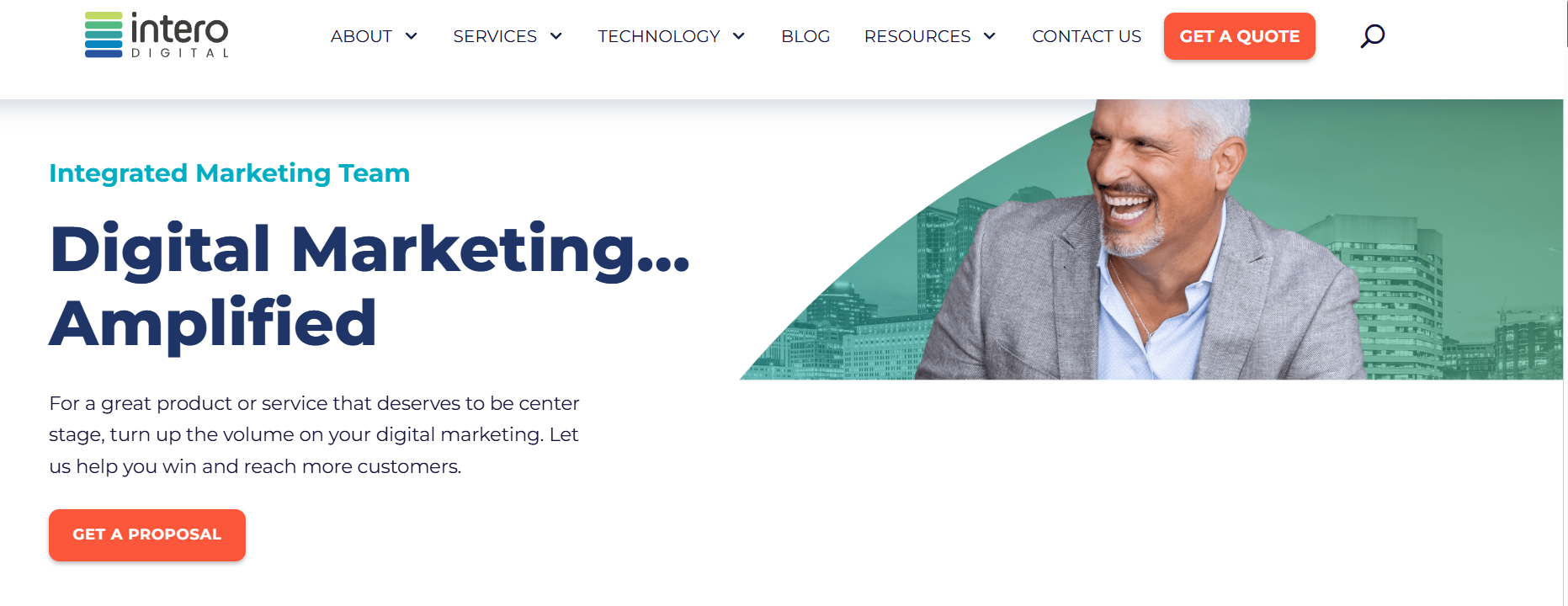
Intero Digital is a full-service digital marketing agency that blends SEO, paid media, content, PR, and web development under one integrated model.
The agency emphasizes ROI-driven strategies backed by proprietary AI-powered tools.
Source – Intero Digital
Their flagship offering, Intero GRO™ (Generative Response Optimization®), is the agency’s proprietary take on generative engine optimization. GRO combines entity-based content strategy, schema optimization, technical SEO, digital PR, and multimedia development to influence how LLMs surface brands in platforms like ChatGPT, Gemini, Perplexity, and Google AI Overviews.
Intero also leverages InteroBOT®, an AI crawler that mimics how search engines and AI systems interpret websites, enabling more accurate testing and optimization. The agency works with enterprise, franchise, and e-commerce clients seeking measurable visibility across both traditional search and AI-driven experiences.
Pricing is custom and engagement-specific, with no baseline published.
Single Grain
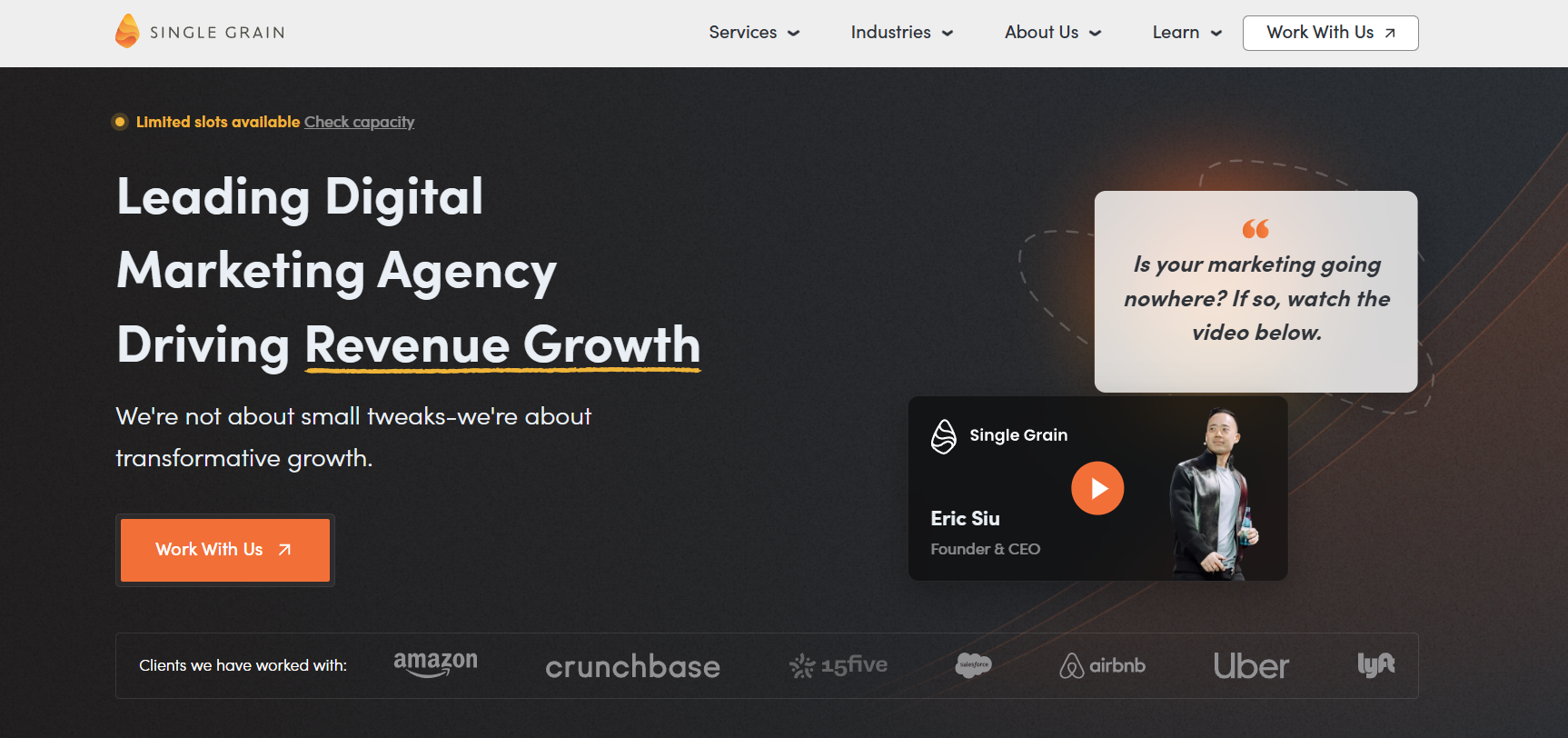
Single Grain is a full-service digital marketing agency, with a strong focus on AI-driven visibility. The agency also offers SEO, paid advertising, CRO, and content marketing.
Source – Single Grain
Their “Search Everywhere Optimization (SEVO)” framework extends beyond traditional SEO to cover discoverability across AI platforms like ChatGPT, Gemini, and Perplexity, as well as search engines, social platforms, and community forums. Single Grain emphasizes cross-channel integration, AI-powered CRO, and programmatic SEO to help brands dominate in-market visibility.
The agency positions itself as a partner for companies looking not just for rankings, but for transformative revenue growth. Pricing is customized to scope, with strategies tailored to client goals and industry dynamics.
Seer Interactive
Seer Interactive is a digital marketing agency known for its focus on experimentation and innovation in SEO, paid media, analytics, and creative services. The agency positions itself as a forward-thinking partner helping brands adapt to the rise of AI-driven discovery.
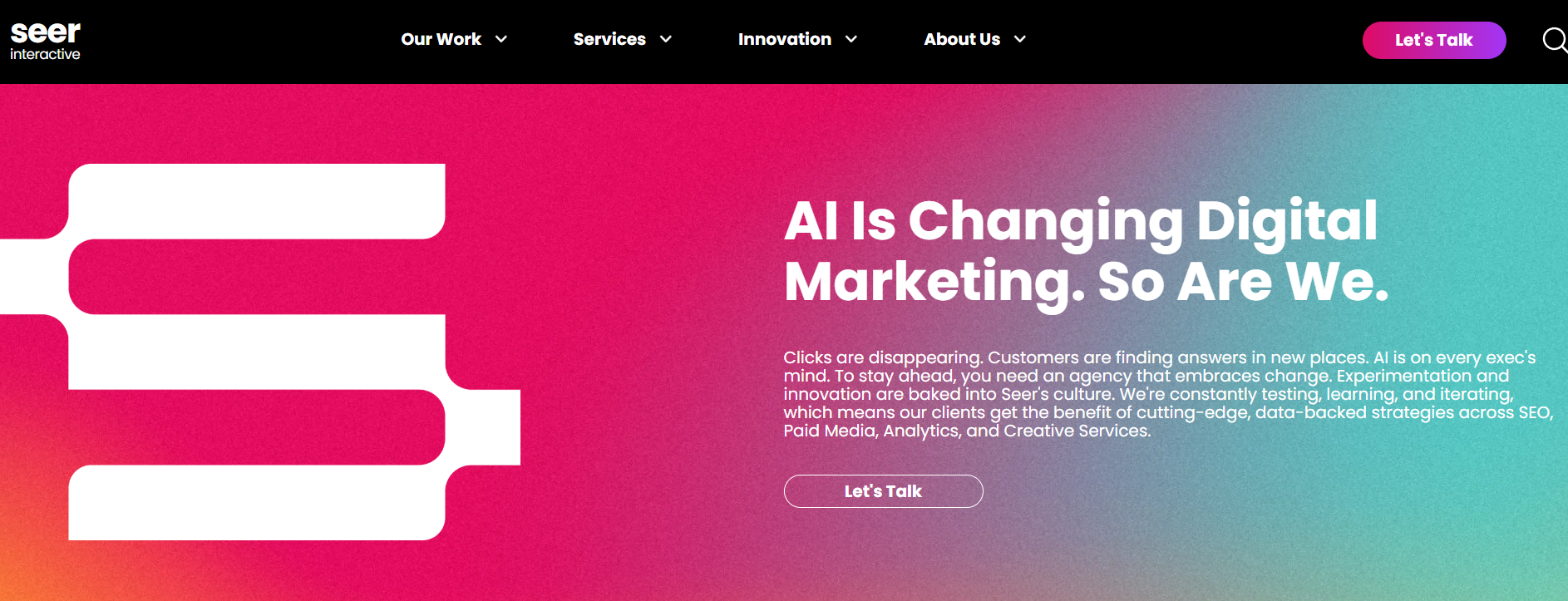
Source – Seer Interactive
Seer’s Generative Engine Optimization services include AI visibility audits, technical optimization, structured data and schema, and content strategies mapped to LLM priorities.
The agency emphasizes continuous testing and data-driven insights to help brands secure citations in AI platforms such as ChatGPT, Gemini, Perplexity, and Google AI Overviews.
Seer highlights transparency and long-term partnership, working primarily with enterprise clients that need to future-proof their search and visibility strategies.
Their pricing is tailored to the engagement scope.
How to Choose the Right Generative Engine Optimization Agency
By now, you could see that most GEO agencies offer some mix of SEO, content strategy, technical optimization, digital PR, and AI visibility tracking.
The right choice for you depends on what your brand is missing today.
If your website already has strong technical SEO but your brand does not appear in AI recommendations, you need an agency that can build decision-stage content, third-party visibility, and stronger category associations.
If your brand appears for broad category searches but not for specific buyer scenarios, you need an agency that can map content around buyer pain points, industries, geographies, and context from real sales conversations.
For B2B and SaaS companies, GEO cannot stop at schema, FAQs, or technical fixes. The real work is building a content ecosystem that tells AI platforms where your brand fits, who it serves, what problems it solves, and why it should be recommended.
And that is the kind of work we do at Concurate.
Want to Work With Us?
If you want your brand to show up in AI recommendations, not just traditional search results, we can help.
Our GEO Service: If you want us to build AI search visibility for your company, we can help you identify the conversations where your brand is missing, create the right content, strengthen your authority signals, and improve your chances of being recommended. You can learn more about our generative engine optimization service here.
Our Content Marketing Service: If your company also needs help with SaaS content marketing, Programmatic SEO, or LinkedIn ghostwriting, you can learn more about working with us here.
Frequently Asked Questions
The priority platforms today include Google Overviews, ChatGPT, Gemini, Perplexity, and Claude. These are where buyers now get discovery, context, and recommendations when making a purchase decision.
You can track traffic from AI referrals using GA4. We created a detailed guide that shows how to set up a custom exploration report to filter referrers from ChatGPT, Perplexity, Gemini, and more, so you can see exactly which AI tools are sending traffic to your site. You can view the guide here.
Disclaimer: The information presented in this article is compiled from publicly available sources, including company websites, industry reports, and social media. All trademarks, brand names, and logos mentioned are the property of their respective owners. We do not claim any ownership of third-party marks, nor do we imply endorsement or affiliation. This article is intended for informational purposes only.