


| TL;DR – ChatGPT now hides its fan-out queries, increasingly runs searches within specific websites, pulls in more sources, and searches in multiple rounds. Meanwhile, Reddit’s share of ChatGPT citations has fallen sharply. This post brings together what recent third-party studies have found and what these shifts could mean for marketers. |
Query fan-out is the set of searches ChatGPT writes and runs behind your prompt before it answers. Marketers are increasingly building content around these hidden searches. That work is worth doing, but there is another part of the story: the fan-out itself keeps changing.
Not long ago, we were running experiments just to understand which sources ChatGPT leans on for SaaS recommendations. Today, researchers can trace far more of the searches behind an answer, using specialised tools. OpenAI, meanwhile, has shared little publicly about how those searches work.
Recent third-party studies point to five notable shifts. Here is what they show, and what marketers should take from it.
1. The Fan-Out Queries Are Hidden Now
ChatGPT used to show the searches it wrote for itself, like mini prompts, before answering. Now it mostly shows the sources it relied on.
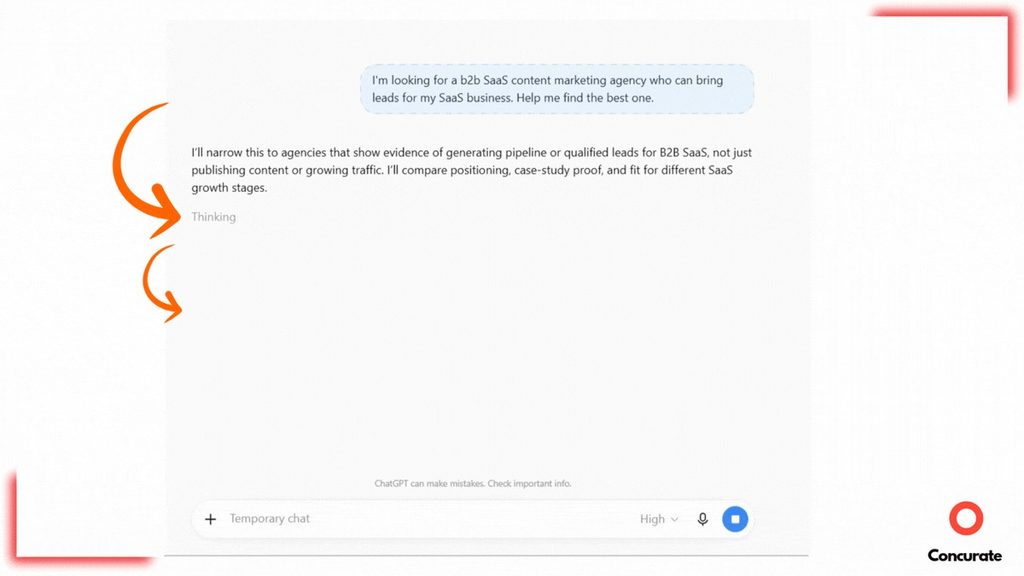
But the fan-out queries have not gone anywhere. They still run in the background, just out of sight.
Marketer’s takeaway: Use the tools that still show them. Paid tools like Peec AI and Profound track fan-out queries. There are Free ones too, like the Resoneo Chrome plugin and FanoutFox show them as they happen.
I tried both, and they are quite good, actually:
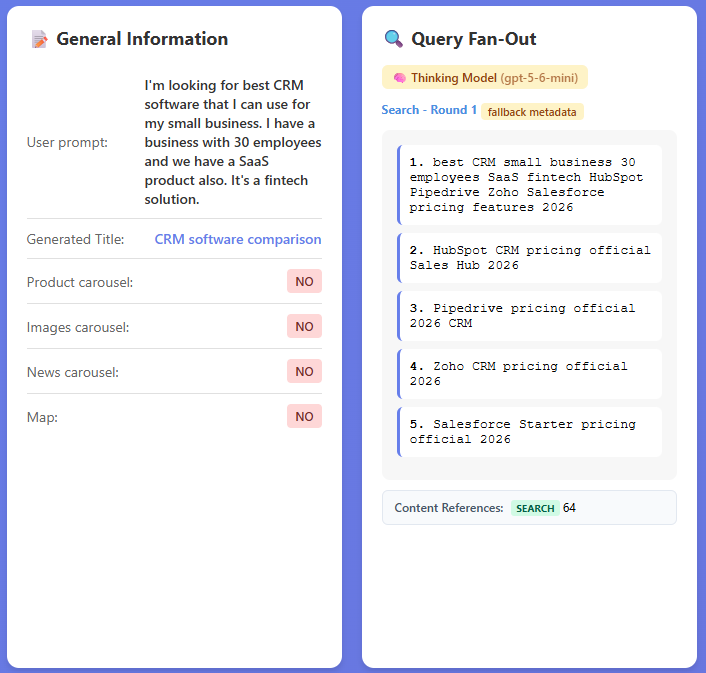
Source: Resoneo Chrome plugin
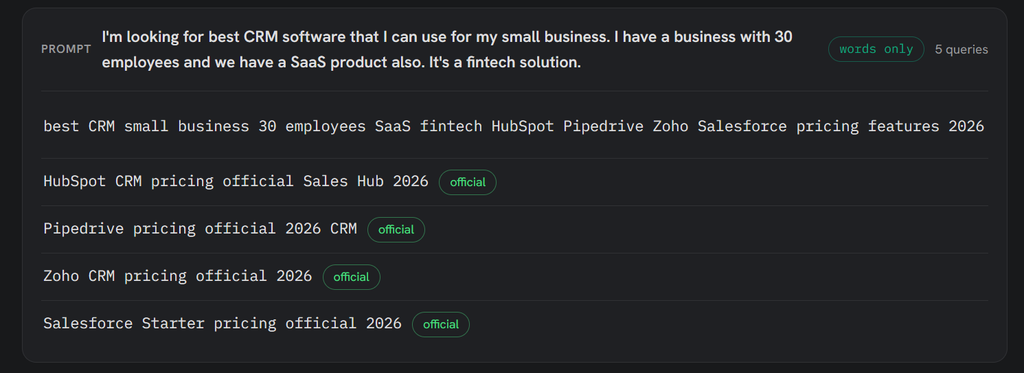
Source: FanoutFox
2. ChatGPT Now Goes Straight To Websites
ChatGPT used to search the whole web. Now it often picks a website first and searches only inside it, using a command called site:.
Promptwatch spotted the jump on August 8, the day a newer ChatGPT version became the default. Single-website searches went from under 1 in 200 to about 1 in 6.
Marketer’s takeaway: Make your website one ChatGPT trusts. Lily Ray compares its preference for high-authority sites to Google’s E-E-A-T standard:
- Experience: Show first-hand proof, like case studies.
- Expertise: Name credible authors.
- Authoritativeness: Earn mentions from respected publications.
- Trustworthiness: Keep facts like pricing accurate and in plain text.
3. It Pulls In More Sources, Not Fewer
Going straight to one website sounds like it should mean reading fewer pages. The opposite happened. The pages ChatGPT reads for each answer roughly doubled, from about 12 to 24. The single-website searches were added on top of its usual ones, not swapped in.
Marketer’s takeaway: Be present where ChatGPT looks for proof, not just on your own site. It now reads more pages but cites fewer websites, so being read is not the same as being cited. For facts, it leans on official brand pages and references like Wikipedia. For opinions, it turns to review platforms like G2 and Capterra, so build real reviews there.
4. It Goes Back For A Second Search
ChatGPT now searches in rounds. If the first set of search does not fully answer your question, it writes new searches and goes again. That second round used to happen for about one question in twenty. Now it happens for about one in three.
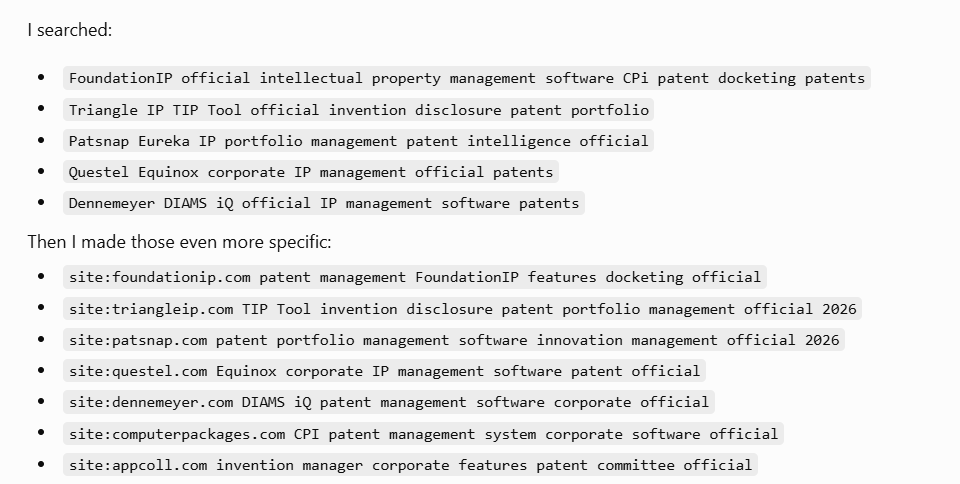
Footnote: ChatGPT’s own account of its searches when we asked, so treat it as a summary, not a raw log. Plus it added “official” and “2026” by itself. No such term was given in the prompt.
Marketer’s takeaway: Cover the details. The second round hunts for whatever the first round missed. So a page can lose round one and still get picked in round two. Pages that answer specific follow-up questions, like pricing tiers or integration limits, are the most likely to fill that gap.
5. Reddit Lost Ground
Reddit used to be one of ChatGPT’s most cited websites. Between August 8 and 17, its share of ChatGPT’s citations fell from about 1 in 25 to 1 in 200.
Google’s AI Overviews showed only a gradual dip over the same period, so this looks specific to ChatGPT. The likely cause is the shift to single-website searches, since factual questions now go straight to official sites. That link is not proven, though.
Marketer’s takeaway: Do not write Reddit off. For opinion questions, ChatGPT still searches Reddit, sometimes down to specific subreddits. So real discussions about your brand still shape how ChatGPT sees your category. Keep Reddit as one part of your plan, not the whole of it.
A Note On Our Sources
ChatGPT’s search behaviour will keep shifting, so treat these findings as a snapshot from September 2026. Every insight here comes from third-party studies, credited where they appear. We have not run our own test on these changes yet.
If you want to see what we have tested ourselves, start here:
- Where ChatGPT Gets Its Information From For SaaS Recommendations by Aditi Syal
- What Is an llms.txt File and Does It Boost AI Visibility? by Akanksha Bhadoria
- Does Technical SEO Actually Matter For AI Visibility? by Chithra Kochelvan