

| TL; DR: If your travel tech content exists but isn’t visible across search, comparisons, or buyer journeys, that’s the real problem. This guide helps you find content marketing agencies built to fix discoverability, not just produce content. |
When someone searches for a flight, a hotel, or a travel plan, chances are the top three platforms that show up across search engines get the booking.
The rest are out of the picture. That is why marketing for travel companies is unforgiving.
However, when you look beneath the hood for software/platforms making travel possible, the reality is similar. Lack of visibility would result in your product(platform/software/application) missing out as a viable option.
Here Visibility is not about brand building. It is about being present at the exact moment intent exists and making the choice feel obvious. Your content has to support fast discovery, quick comparison, and immediate trust.
Most agencies still treat travel like generic digital marketing. They publish content without understanding how travel agencies search, decide, and make the buy decision.
The right content marketing agency helps travel companies show up on time, explain fast, and convert intent into bookings.
Top 9 Content Marketing Agencies for Travel Tech Companies in 2026
Most marketing agencies look good on paper. Very few actually work once travel tech complexity enters the picture.
The agencies listed below have proven they can handle multiple buyer personas, and products that cannot be explained with surface-level messaging.
This list focuses on teams that know how to turn complex travel technology into content that supports real buying decisions, not just page views.
Here’s the lineup:
- Concurate
- VERB Interactive
- Wanderlust Social
- Mediabloom
- MMGY Global
- SeoProfy
- Madden Media
- AAMP Agency
- Propellic
Let’s explore each one by one.
1. Concurate
Most travel tech teams don’t have a content problem. They have a visibility problem.
You’re publishing blogs, running SEO. You might even be ranking for a few keywords. But when buyers actually start researching, or asking AI-led search engines for recommendations, what if your brand doesn’t show up.
That’s the gap Concurate is built to fix.
At Concurate, we don’t start by asking how much content you want to produce. We start by asking a harder question: Where exactly are your buyers dropping you from their consideration list?
For travel tech companies, that usually shows up in a few familiar ways:
- You rank for broad travel keywords, but not for platform comparisons or alternatives.
- Your product pages don’t surface when buyers search for best tools, software lists, or category breakdowns.
- AI search engines summarize your category, but cite your competitors instead.

Source – Concurate
Our work sits right in that middle zone, where travel tech marketing usually breaks down.
We focus on content that shows up everywhere buyers look, not just traditional search.
That means:
- Structuring pages so they rank on Google and get picked up by AI summaries
- Building comparison, category, and use-case content that mirrors how travel tech buyers actually evaluate tools
- Creating BOFU content that answers late-stage questions before sales ever gets involved
Our services for travel tech teams typically include:
- High-intent SEO and category content
- Comparison and alternatives pages built for real buyer behavior
- Programmatic SEO where scale actually makes sense
- AI search visibility optimization so your brand shows up beyond blue links
- Content frameworks that support sales, not fight it
- Short video content across YouTube
And importantly, we don’t operate like a volume factory. We work closely with teams who want clarity on what not to write as much as what to publish next.
If your travel tech product is solid but still feels invisible during real buying moments, that’s usually not a traffic issue. It’s a positioning and discoverability issue.
That’s the problem Concurate exists to solve.
If you want to see what that could look like for your platform, the next step is simple. Book a call and let’s map where your content is leaking buyers today.
Notable Clients: Datacipher, Scanwriter, Ratio Tech, Inspire IP, and Triangle IP.
Pricing: Partnerships typically range from USD 5,000 to USD 7,500 per month, with project engagements starting at USD 3,500.
2. VERB Interactive
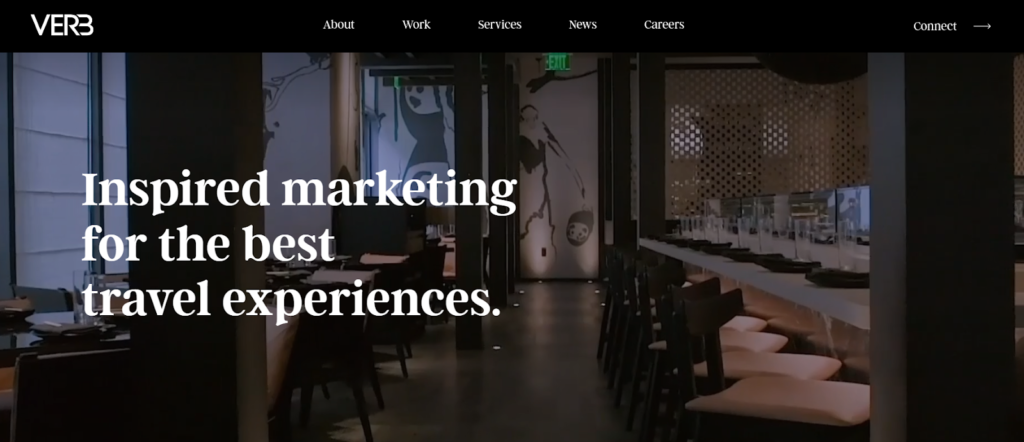
VERB takes a blended approach that sits at the intersection of technology, creative, and marketing, which makes it particularly relevant for complex digital-first brands. Their work spans strategy, content, SEO, social, creative, and performance media, but what stands out is how tightly these pieces are connected rather than operating in silos.
Source – VERB Interactive
Beyond marketing execution, VERB brings strong technical depth. From CMS-agnostic website builds to booking integrations and platform-level solutions for hotels, resorts, ferries, and cruise lines, they operate comfortably in environments where marketing and product infrastructure overlap.
Notable clients: The Venetian Las Vegas, Hotel Bardo Savannah, Bermuda
Pricing: Pricing is not publicly listed; teams typically need to contact VERB directly for engagement details.
3. Wanderlust Social
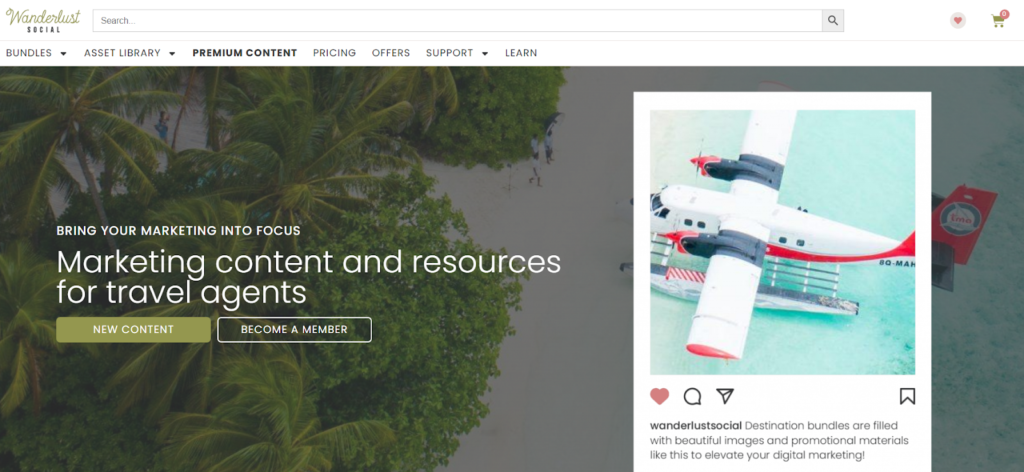
Wanderlust Social operates as a subscription-based marketing content platform focused on travel agents and travel agencies. The company provides pre-created marketing assets that can be used across social media, email, blogs, and promotional materials, with content organized by destination, travel theme, or niche.
Source – Wanderlust Social
The offering is structured around content bundles that include images, captions, videos, itineraries, maps, packing lists, and email templates. These assets are designed to be reused and customized through tools like Canva, allowing travel professionals to plan and publish marketing content without producing it internally.
Notable clients: Travelwhirled, Experience the Dream Travel, Dream Travel By Design, Erotas Travel, Turquoise Temptations Travel
Pricing: Pricing is publicly listed. Individual content bundles are priced at $99, and annual subscription plans start at approximately $570 per year.
4. Mediaboom
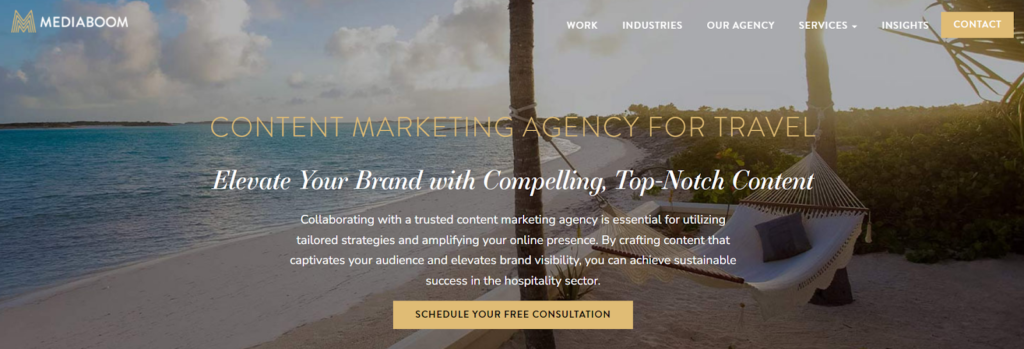
Mediaboom is a digital marketing agency with a focus on travel and hospitality brands, offering services across content marketing, SEO, website design and development, paid advertising, and email marketing. The agency positions its work around building and maintaining online visibility for hospitality businesses through structured content strategies and search optimization.
Source – Mediabloom
Their content marketing offering is closely tied to SEO, with defined service tiers that include keyword research, on-site and off-site optimization, link building, and ongoing reporting. Mediaboom also supports broader digital needs such as website builds and performance media, making it a full-service option for travel and hospitality brands.
Notable clients: JW Marriott, Crowne Plaza, Hampton Inn & Suites, Musha Cay, Marina Inn at Grande Dunes
Pricing: Pricing is partially listed, with content and SEO packages starting at $1,950 per month; higher tiers and enterprise engagements require a custom quote.
5. MMGY Global
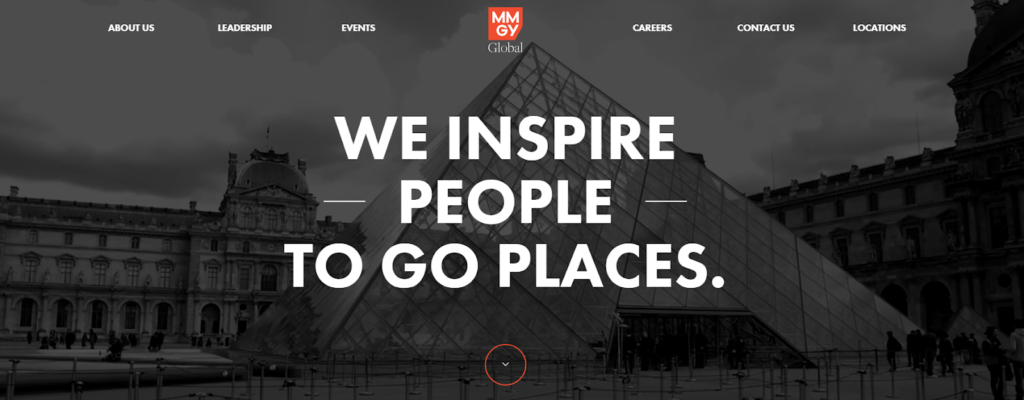
MMGY Global is an integrated marketing company focused exclusively on the travel, tourism, and hospitality industry. The company operates through a group of specialized agency brands, covering areas such as advertising, branding, content creation, research, media, public relations, social media, and marketing technology.
Source – MMGY Global
Its model brings together strategy, creative, data, and execution under one umbrella, allowing travel and tourism organizations to work across multiple disciplines through a single partner network. MMGY Global’s services span the full marketing lifecycle, from research and strategic planning to campaign execution, measurement, and analytics, with a strong emphasis on destination and hospitality marketing.
Notable clients: Client names are not individually listed on the landing page; MMGY Global works with travel, tourism, and hospitality brands worldwide.
Pricing: Pricing is not publicly listed and typically requires contacting the MMGY Global team for engagement details.
6. SeoProfy
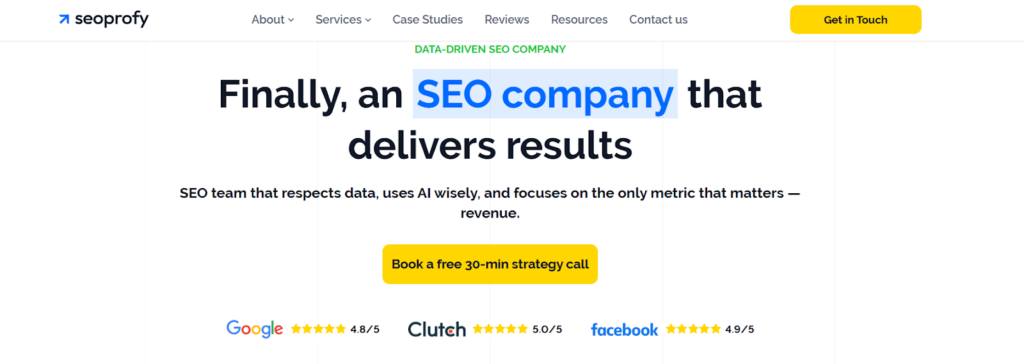
SeoProfy is an SEO-focused digital marketing agency that works across multiple industries, including SaaS, ecommerce, B2B, healthcare, and travel-related businesses. Its services cover technical SEO, content writing, link building, audits, site recovery, international SEO, and AI-focused search optimization.
Source – SeoProfy
The agency positions its work around structured audits, competitor analysis, and ongoing optimization, supported by in-house tools and a large specialist team. SeoProfy also offers consulting and strategy services alongside execution, with content creation typically integrated into broader SEO and search visibility.
Notable clients: Jooble, FXTM, Preply, VistaCreate, TemplateMonster
Pricing: Pricing is not publicly listed and varies by scope; prospective clients need to contact the team for a custom quote.
7. Madden Media
Madden Media is a destination-focused marketing agency that works primarily with travel, tourism, and community-based organizations. Its services span strategic planning, data analytics, creative, web, media, public relations, email marketing, and SEO, with an emphasis on destination branding and integrated campaigns.
Source – Madden Media
The agency’s work centers on helping destinations and communities articulate their identity through storytelling, research, and multi-channel execution.
Madden Media combines creative development with media strategy and destination intelligence to support tourism growth initiatives. This includes brand campaigns, visitor engagement, and market activation programs.
Notable clients: Visit Idaho, Visit Port Aransas, Visit Jacksonville, Puerto Rico, Brevard
Pricing: Engagement pricing is not disclosed publicly and is shared upon direct consultation.
8. AAMP Agency
AAMP Agency is a tourism-focused digital agency that works primarily with tour operators, attractions, and experience-based travel businesses. Its services combine website design and development with marketing execution, covering areas such as SEO, content creation, social media, paid advertising, email marketing, and influencer management.
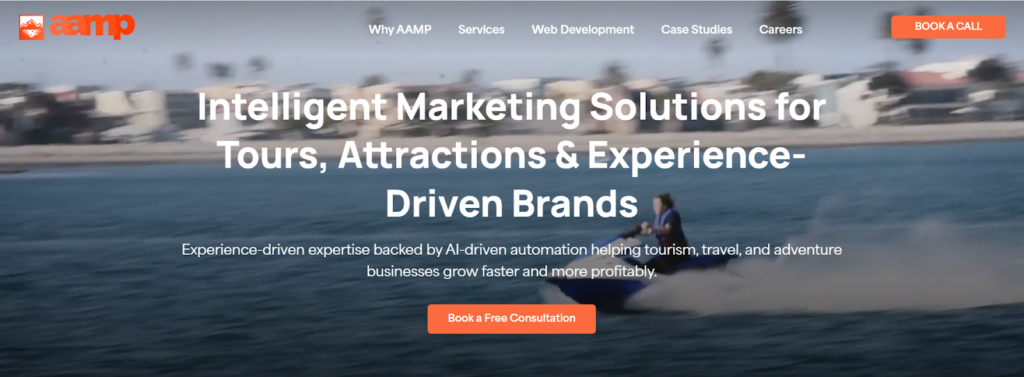
Source – AAMP Agency
A key part of AAMP’s offering is booking-oriented web development. The agency builds mobile-first websites with integrated booking engines, conversion-focused layouts, and performance optimization. It also focuses the broader growth initiatives such as search visibility, multi-channel campaigns, and content production designed for travel discovery and booking behavior.
Notable clients: Go Car Tours, Nation Park express, Nightly Spirits
Pricing: Pricing information is not publicly available and is shared through direct consultation based on project scope and service requirements.
9. Propellic
Propellic is a travel and tourism-focused digital marketing agency that works with tour operators, attractions, and travel brands to improve discoverability across search and paid media channels. Its services center on SEO, content strategy, link building, technical SEO, and paid advertising, with increasing emphasis on AI-driven search behavior and optimization.

Source – Propellic
The agency positions its work around data analysis and ongoing experimentation, using proprietary research and performance tracking to adapt strategies as traveler search patterns evolve. Propellic manages both organic and paid programs, supporting clients across the full journey from search discovery to booking conversion.
Notable clients: Captain Experiences, Unexpected Tours & Training
Pricing: Pricing is not publicly listed; packages and retainers are discussed directly based on goals and scope.
| How We Picked These Travel Tech Marketing AgenciesThis list came from looking at how travel tech companies are actually marketed today, not from awards or directories.Live travel tech work on their site: We only considered agencies that show clear travel tech or platform-led travel work, not just hospitality or destination marketing.Content that handles complexity: We reviewed how each agency explains integrations, AI features, booking flows, or data layers, because that’s where travel tech marketing usually breaks.Support for comparison and evaluation: Agencies had to show experience with SEO, paid media, or content that helps buyers shortlist tools, not just discover them.Evidence of repeatable process: Clear service structure, defined deliverables, and realistic timelines mattered more than big promises.Our goal was simple: surface agencies that can reduce buyer confusion and support real travel tech buying decisions, not just make things look good online. |
5 Common Mistakes Travel Tech Teams Make When Choosing a Marketing Agency
Most hiring mistakes don’t come from picking a bad agency. They come from picking the wrong type of agency for travel tech.
Here are some common mistakes:
- Assuming travel experience automatically means travel tech experience. Selling destinations and selling platforms are very different problems.
- Hiring based on how polished the agency’s website or decks look, then struggling to explain the product better after content goes live.
- Handing everything over and hoping the agency will figure out positioning, even when sales and product teams aren’t aligned internally.
- Expecting quick pipeline impact from blog content, while ignoring comparison pages, integrations content, and evaluation-stage assets.
- Optimizing for more traffic when the real issue is that the right buyers don’t understand the product well enough to move forward.
So, it isn’t about finding the most visible agency. It’s about finding one that understands how travel tech is actually evaluated and bought.
What Travel Tech Teams Can Fix Themselves Before Hiring an Agency
Before bringing in an external agency, there are a few things travel tech teams can realistically tighten up on their own. Doing this first often makes any future agency partnership far more effective.
- Get your core story straight: Make sure sales, product, and marketing all explain the product the same way. If internal explanations vary, external content will too.
- Map how buyers actually evaluate you: List the questions prospects ask before demos. Integration concerns, comparisons, pricing logic, and implementation fears usually come up early.
- Audit what buyers see first: Look at your homepage, product pages, and top-ranking blogs. Ask whether a first-time visitor truly understands what problem you solve.
- Identify where deals slow down: If prospects stall after the first call, the gap is usually education, not awareness.
- Clean up obvious gaps: Missing comparison pages, unclear use cases, or outdated messaging are things teams can address without outside help.
These steps can take you far. But scaling clarity, visibility, and consistency across channels usually requires deeper expertise. That’s where a travel tech-focused agency like Concurate becomes a growth partner, not just a content vendor.
Why Travel Tech Teams Ultimately Choose Concurate
Most travel tech teams already publish content. Blogs, pages, comparisons, guides. It’s all there.
The real problem is where it shows up. Or rather, where it doesn’t.
Buyers now discover travel tech through Google, peer review websites, integrations searches, and increasingly through AI answers. If your content isn’t structured to surface across all of these, it quietly disappears, even if it’s well written.
That’s where Concurate works differently.
We don’t create content in isolation. We design it to rank on search, get picked up by AI systems, and answer the exact questions travel operators ask when evaluating platforms.
Our work with travel and hospitality tech brands has focused on fixing visibility gaps, strengthening comparison narratives, and making sure the right pages show up at the right moment.
If your content exists but doesn’t travel far enough, that’s the gap we help close.
Book our calendar and let’s take a closer look.
Frequently Asked Questions
1. What is a travel tech content marketing agency?
A travel tech content marketing agency helps software platforms in travel and hospitality attract the right buyers through search-driven content. This includes SEO pages, comparison content, use-case guides, and industry-specific narratives that help travel operators, hotels, and experience providers understand, evaluate, and choose the product.
2. Why do travel tech companies need specialized content marketing?
Travel tech buyers research differently. They compare tools, read reviews, look for integrations, and evaluate real-world use cases. Generic SaaS content rarely works here. Specialized content marketing helps translate complex features into clear outcomes for travel operators, improving visibility, trust, and conversion across long buying cycles.
3. What type of content works best for travel tech companies?
High-performing travel tech content usually includes comparison pages, alternatives, integration explainers, pricing breakdowns, and industry-specific landing pages. Buyers want clarity, not fluff. Content that answers “Is this right for my property or operation?” tends to outperform broad thought leadership or generic blog posts.
4. How long does it take to see results from content marketing in travel tech?
Most travel tech companies start seeing meaningful visibility improvements within three to six months. Results depend on competition, existing content quality, and how well pages are aligned with buyer intent. Content built around high-intent searches tends to compound faster than awareness-focused publishing alone.
5. How is content marketing different from paid marketing for travel tech?
Paid marketing can drive short-term traffic, but content marketing builds long-term discoverability. Travel tech buyers research over time, across multiple channels. Strong content ensures your platform shows up consistently during evaluation, comparison, and decision stages, even when ad budgets fluctuate or seasonal demand shifts.
6. What should travel tech companies look for when choosing a content marketing agency?
They should look for agencies that understand travel industry buyers, not just content production. Experience with SEO-led content, comparison frameworks, and industry-specific positioning matters more than volume. The right agency focuses on visibility, intent, and how content supports real buying decisions.
Disclaimer: The information presented in this article is compiled from publicly available sources, including company websites, industry reports, and social media. All trademarks, brand names, and logos mentioned are the property of their respective owners. We do not claim any ownership of third-party marks, nor do we imply endorsement or affiliation. This article is intended for informational purposes only.