

| TL;DR: Most B2B SaaS founders do not fire a content agency because something dramatic happened. The warning signs build slowly: traffic grows without leads, articles sound generic, older content gets ignored, and nobody can clearly explain the strategy. This article covers seven signs your content marketing agency is not working and how to decide whether the relationship can be fixed or it is time to move on. |
Nobody hires a content marketing agency expecting it to fail.
You sign the contract, the onboarding call goes well, the first content calendar arrives, and it looks organized. Two quarters later, you are staring at a report showing traffic is up, and rankings are improving, yet you cannot point to a single lead that came from any of it.
The uncomfortable part is that the problem rarely becomes obvious. There is no dramatic failure. The reports keep arriving, the posts keep publishing, and the whole thing quietly stops making a difference.
As a B2B SaaS content marketing agency, we often speak with founders whose content is generating activity but not meaningful business results. Their concerns usually point to the same warning signs.
Here are seven of the most common ones and what you can do about them.
How to Tell if Your Content Marketing Agency Is Not Working
A content marketing agency does not have to get everything right immediately to deliver results. But after a few months, you should have a clear sense of whether it is moving your business in the right direction.
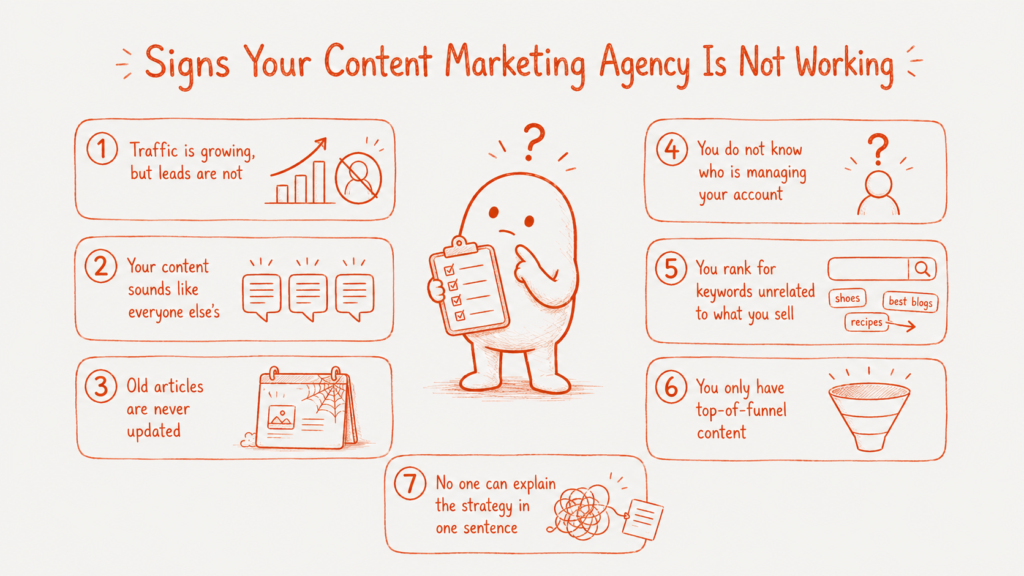
Here are seven signs your content marketing agency is not working.
Sign 1: Your Content Is Driving Traffic But Not Pipeline
This is the most common sign, and the hardest to argue with, because the numbers really are going up.
Impressions are up, keywords are ranking, average positions are improving, and everything on the dashboard looks fine. And then you ask sales whether any of it turned into a lead, and the answer is silence.
Nine times out of ten, the problem started with the keyword list. It was built around easy-to-rank keywords instead of the searches buyers make when they are ready to evaluate or buy. The content attracts visitors, but not the people who are likely to become customers.
For instance, take the keyword SecOps automation. Ahrefs shows it has a global search volume of around 250 and is very easy to rank.
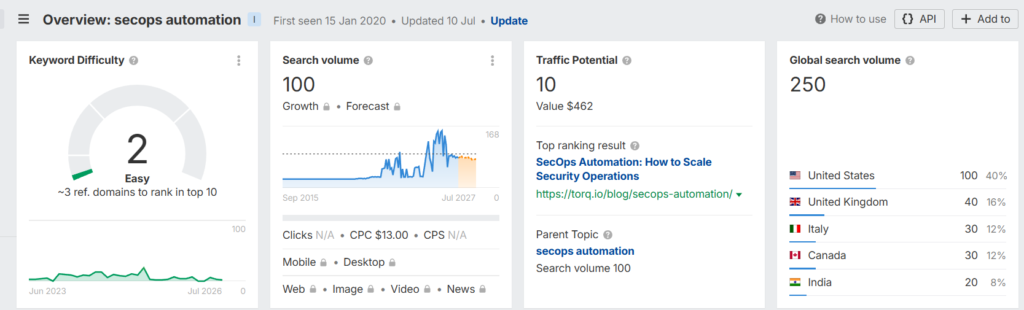
Source – Ahrefs
An agency may use it to create a top-of-funnel article such as: “What Is SecOps Automation?”, “Benefits of SecOps Automation,” or “How SecOps Automation Works.”
These topics may bring search traffic without generating many leads because most readers are still learning about the concept. They are not necessarily evaluating tools or looking for a vendor. Moreover, in the AI era, people can simply ask ChatGPT or Claude these same questions, thus reducing your chances of attracting any visitors, let alone leads.
An experienced agency will avoid such practices altogether. They will create content for buyers comparing solutions, evaluating vendors, and getting closer to a decision. Most importantly, it will show you the difference between traffic growth and content that is actually influencing leads.
| Question to ask your agency: Can you show us which content is influencing leads, not just traffic? |
Sign 2: Your Content Sounds Like Everyone Else’s
Try this. Read your last three published posts and ask a simple question: Could a competitor add its logo and publish the same article without changing anything?
If yes, your content is adding very little that buyers cannot find elsewhere.
This has become a bigger problem in the AI era. Anyone can now generate a reasonably accurate informational article in minutes. As more companies publish content built from the same search results, the internet fills up with slightly different versions of the same ideas.
Our co-founder, Nitesh, explains why continuing to compete on content volume is becoming less effective:
AI can help teams research, organize ideas, and produce drafts faster. The problem begins when the final article contains nothing beyond what AI could already find online.
Say there are no customer examples, product screenshots, original data, lessons from sales calls, or clear points of view. In that case, the content may still rank, but Google and AI platforms already have hundreds of similar sources to reference, and no way to differentiate your offering.
Your agency should be bringing those original inputs into the content, so every article reflects what your company knows that others do not. Publishing fewer articles may be the better decision when each one gives buyers something useful and gives Google and AI platforms a reason to reference your company.
| Question to ask your agency: What does this content include that buyers, competitors, and AI platforms cannot find anywhere else? |
Sign 3: Nothing Ever Gets Updated
Look at the publish dates on your blog. If everything is either from last month or from two years ago with nothing in between, the content already on your site is probably being ignored.
There’s a structural reason this happens. Most agency contracts are priced per new piece. Four articles a month, six, whatever the number is. Nothing in that arrangement requires the agency to review older posts, so the library keeps growing while existing content slowly loses relevance and visibility.
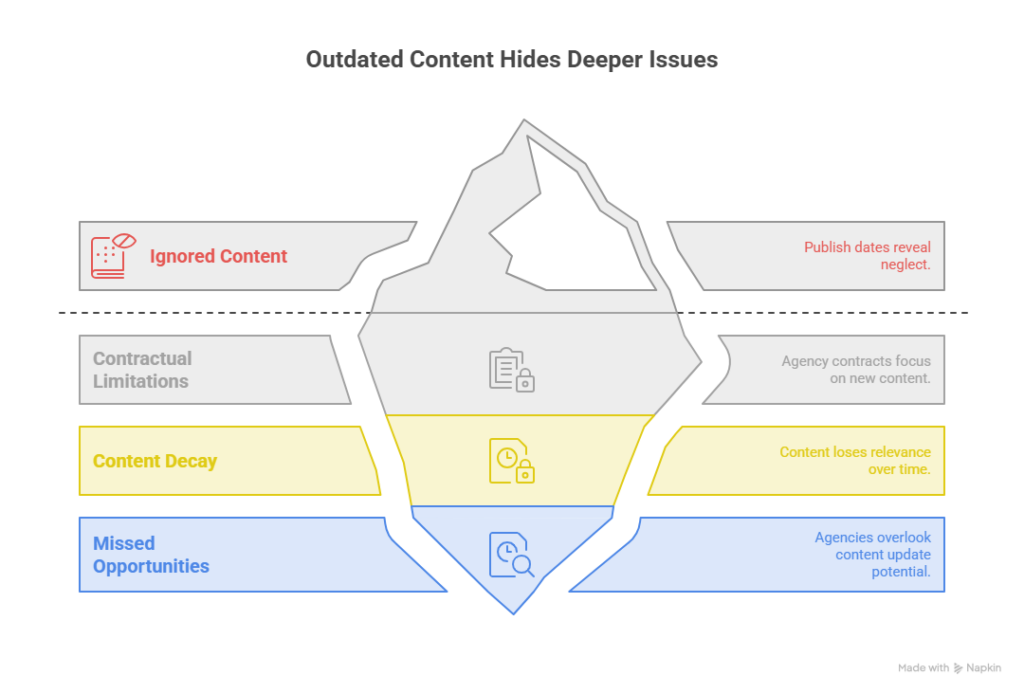
Content does not stay useful forever. A competitor publishes something more detailed and your post drops a few positions.
The reason could be any of these. Say, the statistic that you quoted is from 2023. Or the screenshots no longer match the product.
A piece that brought in leads a year ago may now be sitting on page four, but nobody notices because the monthly report only covers newly published content.
A good agency would look for these opportunities before adding more content to the calendar. Updating an article that already ranks can often improve results faster because it already has search history and authority. A new article has to build both from the beginning.
| Question to ask your agency: Does your plan include article updating, and how frequently will you update articles? |
Sign 4: You Do Not Know Who’s Managing Your Account
Your content keeps getting published, but you rarely speak to the person managing your account.
They may attend the onboarding call and then disappear. There are no weekly or biweekly conversations to discuss the questions buyers are asking, the objections coming up in sales conversations, or whether business priorities have changed.
The articles still go live, but the agency is working from old briefs and limited context. Over time, the content starts moving in one direction while your business moves in another.
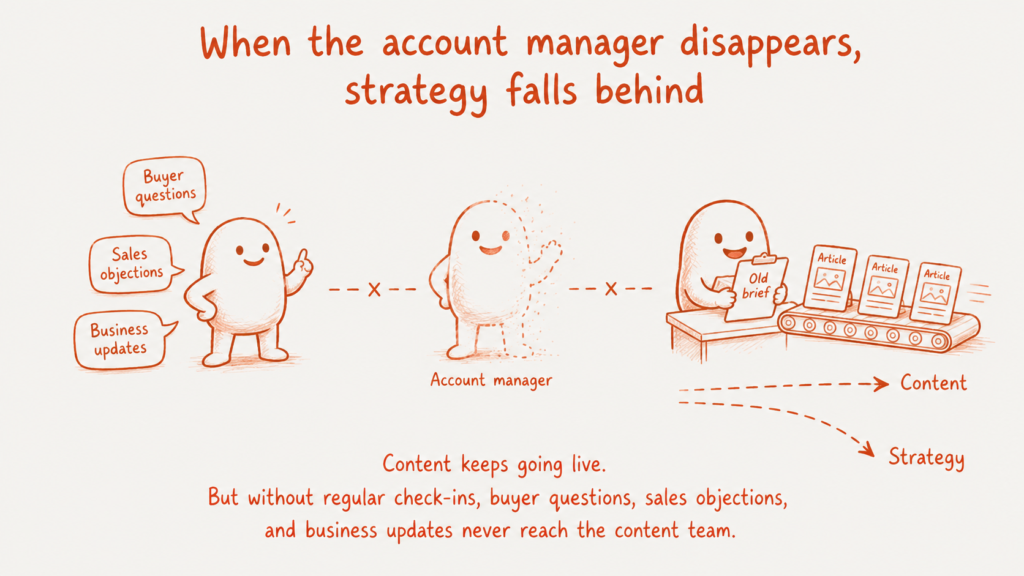
A good account manager should keep both sides aligned. They should understand the strategy, know what your buyers are asking, and make sure those insights reach the writers and researchers working on your content.
Without that connection, the problem is bigger than communication. The agency and your internal team are no longer working on the same strategy.
| Question to ask your agency: How often does our account manager review strategy with us? |
Sign 5: You Rank For Keywords That Have Nothing To Do With What You Sell
Ranking for more keywords is not always a win. If your SaaS blog attracts people who will never evaluate or buy your product, you are generating traffic without creating business value.
HubSpot is a well-known example. For years, its blog ranked for topics like famous quotes, resignation letters, and cover letter examples; content that had little connection to buying CRM software. After Google’s late-2024 core and spam updates, the blog lost 80% in organic traffic.
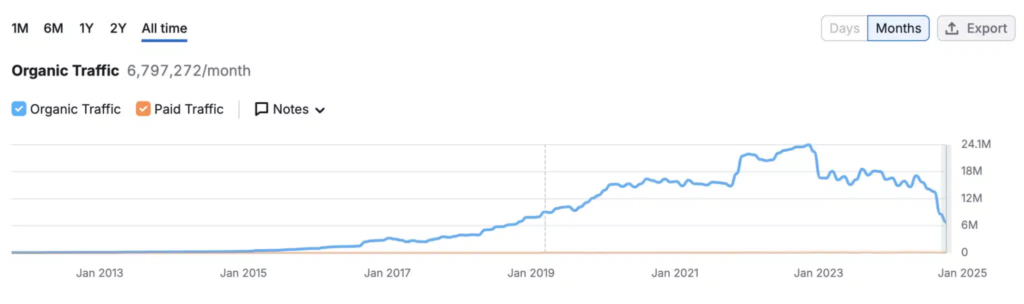
Source – Search Engine Land
During a content audit, HubSpot removed 3,000 outdated or low-value pieces of content from its blog. It did not delete everything blindly. Content with useful information or backlinks was updated, redirected, or reused. Resultantly, the traffic increased after the cleanup, though other SEO efforts also contributed to the growth.
The lesson is not that high-traffic content is always bad. It is that traffic has limited value when the people arriving have no reason to evaluate your product. Your agency should be helping you build authority around topics connected to what you sell, not simply increasing the number of keywords your website ranks for.
| Question to ask your agency: How do you decide which keywords are worth targeting? |
Sign 6: Everything Is Top Of Funnel, And The Content That Converts Does Not Exist
A content calendar can look full and still leave major gaps in your buyer journey. The result is a content strategy that answers early questions but never helps buyers make a decision. You may have twelve months of “what is” and “how to” posts, and no comparison content, alternatives pages, pricing explainers, integration pages, or use-case articles.
This usually happens because top-of-funnel content is easier to produce, easier to scale, and easier to report on. The problem is that it no longer delivers the same value it once did.
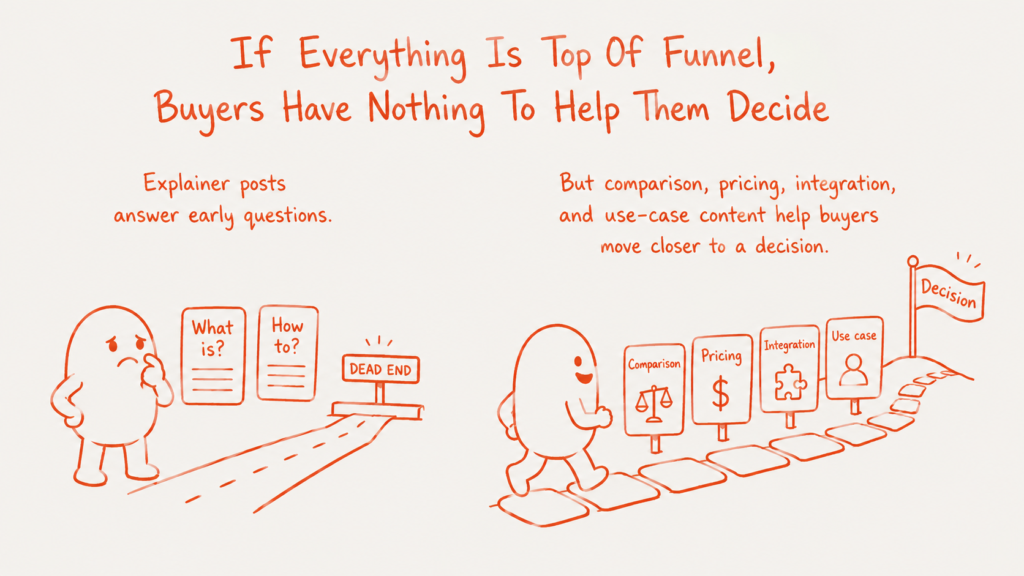
The rise of AI search makes this even more important. AI summaries can now answer many basic informational questions without a click. Comparison and evaluation queries are still more likely to drive clicks because buyers want to compare products and verify the details before making a decision.
| Question to ask your agency: What content do we have for buyers who are actively comparing vendors? |
Sign 7: You Cannot Say What The Strategy Is In One Sentence
This is the sign that brings everything together.
Here’s a simple test. Finish this sentence: “Our content strategy is to reach [these buyers] through [these topics] because [reason].”
If you cannot, and neither can your agency, then there is no strategy. There is a content calendar. Those are different things, and only one of them is worth paying for.
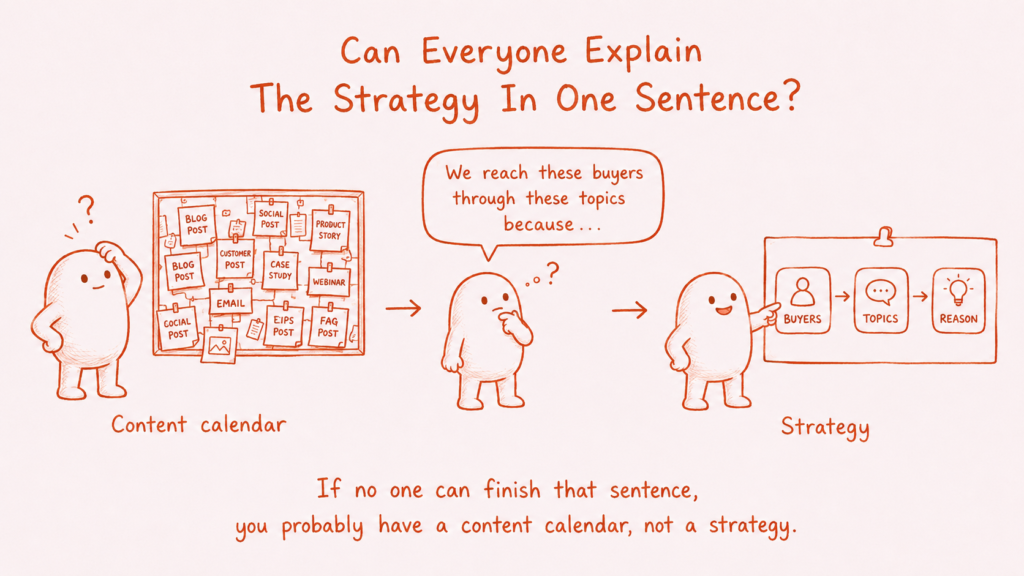
A content calendar tells you what is being published. A strategy tells you what you want to become known for, who you are trying to reach, what you are deliberately not doing, and how you will know if it worked. Without clear goals, there is nothing to measure against.
| Question to ask your agency: Can everyone working on our account explain the strategy in the same way? |
Not every warning sign means the relationship is beyond repair. The next step is deciding whether the problem can be fixed or whether it is time to move on.
How to Decide Whether to Fix the Relationship or Replace the Agency
That decision becomes easier once you know what is causing the problem. Some issues come from weak execution and can be fixed. Others point to a deeper problem with the strategy.
If important work was missed, raise the gaps and give the agency 30 days to respond with a clear plan and better work.
However, strategy problems are harder to fix. If the agency cannot explain who the content is for, why the topics were chosen, or how they support the business, it may be time to move on.
The same applies when weak results are blamed on the algorithm, reasonable questions are treated as complaints, or you find yourself defining the strategy the agency was hired to build.
At that point, another reporting call is unlikely to change much.
Whether you stay with your current agency or choose a new one, your goal must remain on building content that helps buyers make decisions, earns trust, and contributes to revenue, not just rankings.
Choose an Agency That Understands What Your Buyers Are Looking For
If the same problems continue with your existing agency, another content calendar will not solve them.
At this point, the easiest way forward is to work with an agency that understands your B2B SaaS category well, helps you rank for the right keywords, and brings in leads that are relevant to your business.
That is how we approach content at Concurate.
We do not start by deciding how many articles to publish. We first take the time to understand:
- how your product fits into the category
- who your buyers are and how they research solutions
- which questions and objections come up during sales conversations
- which keywords are closely connected to your product and a buying decision
- what your existing content is already doing well
Those insights guide what we create next. Depending on what your buyers need, this may include listicles, comparison content, use-case-based articles, industry guides, or updates to articles that already have potential.
We also stay in regular touch with your sales, product, and marketing teams. That is where the most useful ideas usually come from. Customer questions, product details, sales insights, and real examples help us create content that reflects what your company actually knows.
Our goal is simple. We want to help you rank for the right searches, appear across Google and AI platforms, and attract buyers who are more likely to need your product.
If you are looking for a SaaS content marketing agency that understands your category and brings in relevant leads, book a call with us to get started. We will review your current content, identify the gaps, and discuss how we can help.
Discover the growth tactics behind today’s fastest-growing SaaS companies. Learn how to adapt them to your own business, one email at a time.
Frequently Asked Questions
1. How do you measure the ROI of a B2B SaaS content marketing agency?
You can start with the outcomes that matter to the business. A good B2B SaaS content marketing agency should be able to show its impact through qualified leads, influenced opportunities, pipeline value, sales usage, and closed revenue. Then compare those results with the full cost of the engagement, including agency fees and internal review time. Attribution isn’t always perfect, but the numbers should still show whether content is contributing to meaningful business results.
2. Should you stop publishing content while changing agencies?
Usually, no. A complete pause can slow momentum and leave your sales team without useful content. Instead, you can reduce the publishing volume. Focus on high-performing articles, product content, comparison content, and anything linked to an upcoming campaign. You can ask the outgoing agency to document active projects, research, briefs, and performance data so the next agency can take over.
3. What should you collect before ending a content agency contract?
You should definitely collect every asset connected to the engagement before the contract ends. This handover document ideally includes briefs, drafts, keyword research, content calendars, interview recordings, tool access, design files, and publishing access. Ask for the status of unfinished work and a summary of previous tests as well.
Disclaimer: The information presented in this article is compiled from publicly available sources, including company websites, industry reports, and social media. All trademarks, brand names, and logos mentioned are the property of their respective owners. We do not claim any ownership of third-party marks, nor do we imply endorsement or affiliation. This article is intended for informational purposes only.