

| TL;DR: We analyzed how AI platforms like ChatGPT, Gemini, Claude, and Perplexity recommend sales tech tools and found that a small group of vendors, like Apollo, Outreach, and Gong, appear far more frequently than others. It’s because they’ve built content that clearly connects their product to real use cases, comparison queries, and decision-stage moments. As a result, AI can easily understand and recommend them, even in broader queries. If your tool isn’t showing up in these answers, you’re likely missing from buyer shortlists. This article breaks down what these companies are doing differently and outlines practical strategies to improve your sales tech SaaS AI visibility. |
Sales tech is one of the most dense SaaS markets in the world, spanning over a dozen categories, each with hundreds of options. Yet, when a revenue leader asks ChatGPT or Gemini for one, they see the same 3-4 names appear on their screen for any category. Your product, despite its strong USP and your vigorous marketing, mostly stays invisible.
This isn’t just a pattern you’re a victim of. This is the story of all those genuinely good tools that don’t know how LLM visibility works.
You see, AI systems don’t follow the same playbook that Google does for ranking. They don’t care about keyword density. They don’t care about backlinks. If your content makes it easy for them to understand what you do, who you serve, and why you fit specific buyer contexts, they recommend you. Simple.
However, this is just the foundation. Consistently winning AI visibility takes a more deliberate approach. So, we dug deeper to uncover the playbook. To do so, we analyzed the AI visibility pattern of the top three tools: Apollo.io, Outreach, and Gong and reverse-engineered their strategies. This blog breaks down our findings.
How We Found the Sales Tech SaaS Tools Dominating AI Search
We didn’t pick Apollo, Outreach, and Gong out of the blue. To understand sales tech SaaS AI visibility, we approached it like a real buyer would.
Firstly, we asked AI a small but sharp set of questions that covers both broad discovery and specific decision-making moments. For example:
- Best sales tools for revenue teams
- Best tools for outbound sales and prospecting
- Software to analyze sales calls and demos
- Best platform for RevOps to manage pipeline data
Then, we ran these queries on ChatGPT, Gemini, Claude, and Perplexity and compared the answers. The goal was simple: to see which tools show up the most.
However, the results were nothing like we imagined. Even though a total of 20+ tools appeared across all queries, the difference in their consistency was stark. While some names instantly disappeared when we entered a different query, others kept repeating on all platforms despite the change.
After all permutations and combinations, the three most consistent names we found were Apollo.io, Outreach, and Gong.
3 Reasons Apollo, Outreach, and Gong Keep Showing Up in Sales Tech AI Searches
Now, we started the second phase of our research. That is, finding why Apollo, Outreach, and Gong dominate sales tech SaaS AI visibility the way they do. But before we went deeper, we noticed something interesting that helped us pinpoint our research.
Clearly, AI wasn’t rewarding visibility simply based on brand name or marketing budget. If that were the case, industry giants like HubSpot and Salesforce would’ve been on the list too.
So, we were sure of one thing: Apollo, Outreach, and Gong were doing something different, smarter, and more practical to win AI visibility that their competitors weren’t. In fact, that made them so reliable for AI that they showed up even in broader queries where they weren’t an exact fit.
We then looked at the sources AI tools were using to recommend these tools, and that’s where things started to make sense.
These companies weren’t just showing up. They were showing up with clear, focused content that bridged the gap between what they offered and what users want. Here are a few examples:
#1. They Turned Their Websites Into Educational Libraries That AI Keeps Coming Back To
Most sales tech vendors have a website with a product page, a pricing page, and maybe a blog. That’s about it. But Apollo, Outreach, and Gong have done something noticeably different.
Each of them has built their website into something that looks more like a knowledge base than a marketing site. They have libraries of educational resources, research, guides, and reference material that a revenue professional could spend hours inside.
And you know what’s the smartest move? None of it is wrapped in a “why choose us” narrative. It exists simply to teach, explain, and answer questions that buyers are actively searching for.
This is exactly what AI systems reward. When a buyer asks an AI platform a question about sales prospecting or conversation intelligence, the AI doesn’t just pull from the biggest brand name. It pulls from the source that most clearly and completely explains the answer. So, vendors with large, well-organized content libraries are the ones whose pages keep showing up.
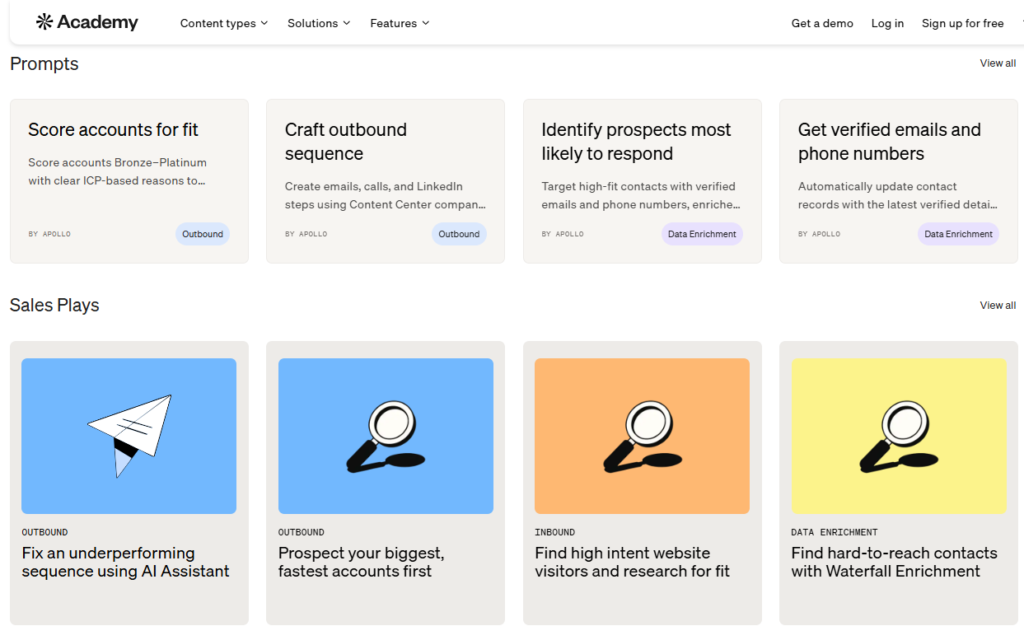
Apollo is probably the finest example of this.
Source – Apollo.io
Their Apollo Academy is pretty much like a learning hub, with courses, playbooks, certifications, and a complete Outbound Sales book. It covers everything, from cold emailing to building ICP frameworks to running multi-channel sequences. In fact, each topic has its own clearly structured page, which makes it easy for AI to find, read, and cite a specific resource for a specific query.
Recommended Read: Why Apollo Shows Up When Sales Teams Are Ready to Buy
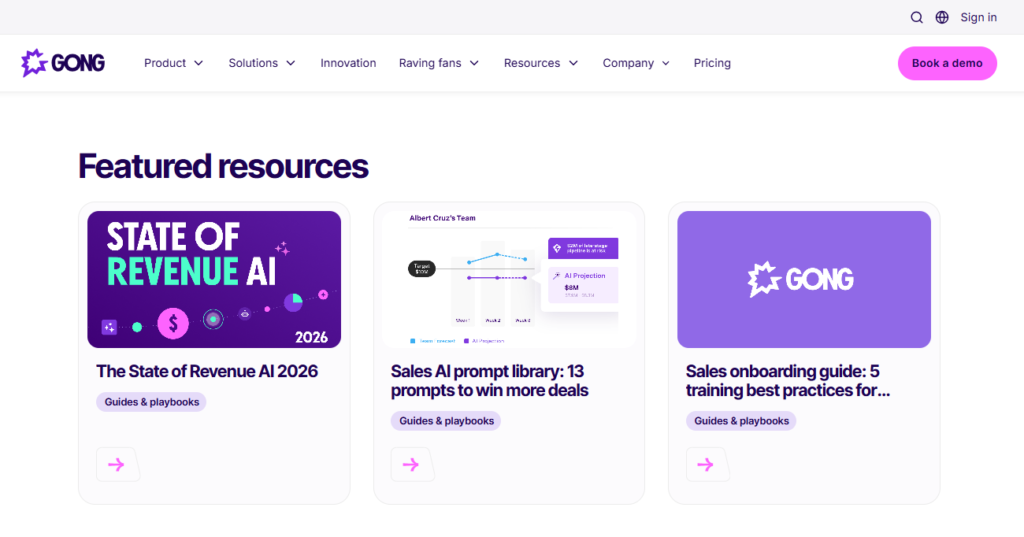
Gong takes a similar approach. Their resources section includes webinars, research reports, guides, and, of course, their well-known State of Revenue AI report.
Source – Gong.io
What makes this useful for AI visibility is that the content is updated regularly and covers topics that revenue leaders are actively searching for. So, when a buyer asks an AI platform about trends in revenue intelligence, Gong’s research content is exactly the kind of source that gets pulled in.
#2. They Built Comparison Pages That Show Up When Buyers Are Ready to Choose
Once a buyer reaches the shortlisting stage, their search changes. They stop asking “what are the best sales engagement platforms” and start asking things like “Outreach vs Salesloft” or “best alternative to Gong.” These are high-intent queries, and they’re exactly the kinds of questions buyers now direct at AI assistants before they ever talk to a salesperson.
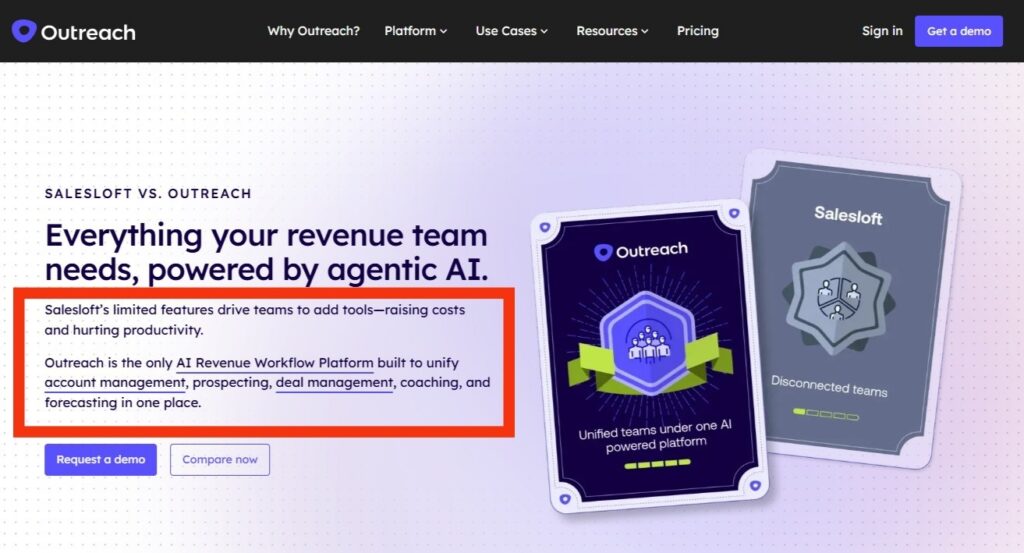
Outreach has a dedicated page built for exactly this moment.
Source – Outreach.ai
For example, look at their Salesloft vs. Outreach page. It makes a direct case for why Outreach wins in specific aspects, like AI agents, forecasting, and platform depth, while naming where it believes Salesloft falls short.
The page is also structured deliberately for AI tools. It’s so clean and specific that when a revenue leader asks, “Is Outreach better than Salesloft?” there’s a clear answer AI can actually cite.
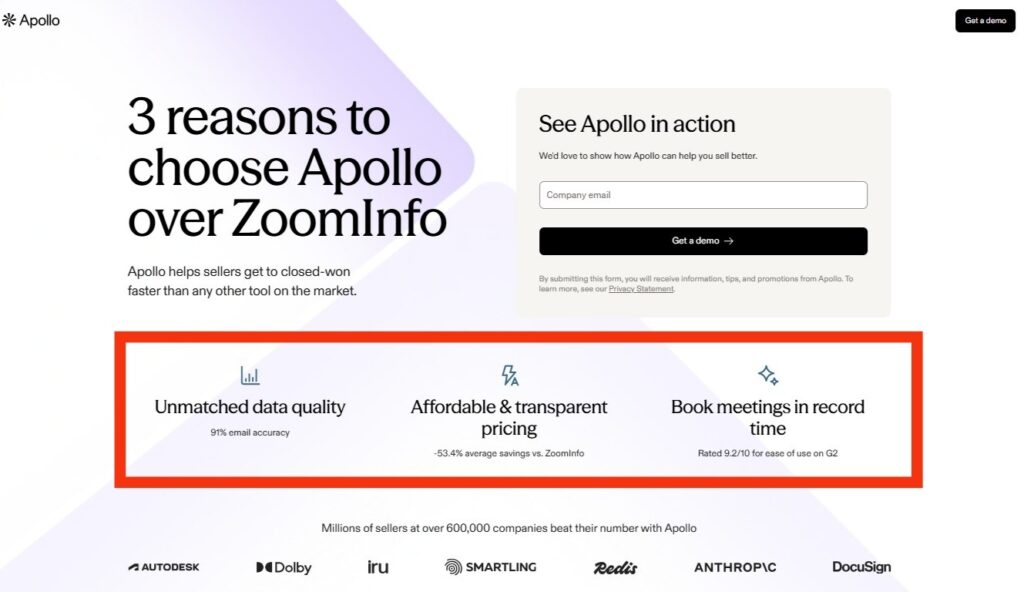
Apollo has taken this a step further.
Source – Apollo.io
On its Apollo vs ZoomInfo page, it doesn’t list pros and cons like most vendors would. Rather, it uses clear data points and side-by-side comparisons to show where it performs better than ZoomInfo. Everything is broken down into simple, easy-to-scan sections, which makes it very easy for AI to understand and reuse the information when answering comparison queries.
#3. Their Free Tools and Template Libraries Quietly Do the Work of Hundreds of Landing Pages
Buyers don’t only search for tools. They search for tactics, too.
A VP of Sales who eventually buys a sales engagement platform probably started by searching for “cold email templates that get replies” or “discovery call script for SaaS.” The vendors who show up at those moments build recognition that adds up quietly over time.
Apollo and Gong have both built template libraries that capture these searches at scale, and each individual template page is a potential citation point for AI.
For instance, Apollo’s template hub covers cold email templates, follow-up sequences, AI research prompts, LinkedIn outreach playbooks, and more. Each template is its own page built around a specific scenario that a sales rep might search for.
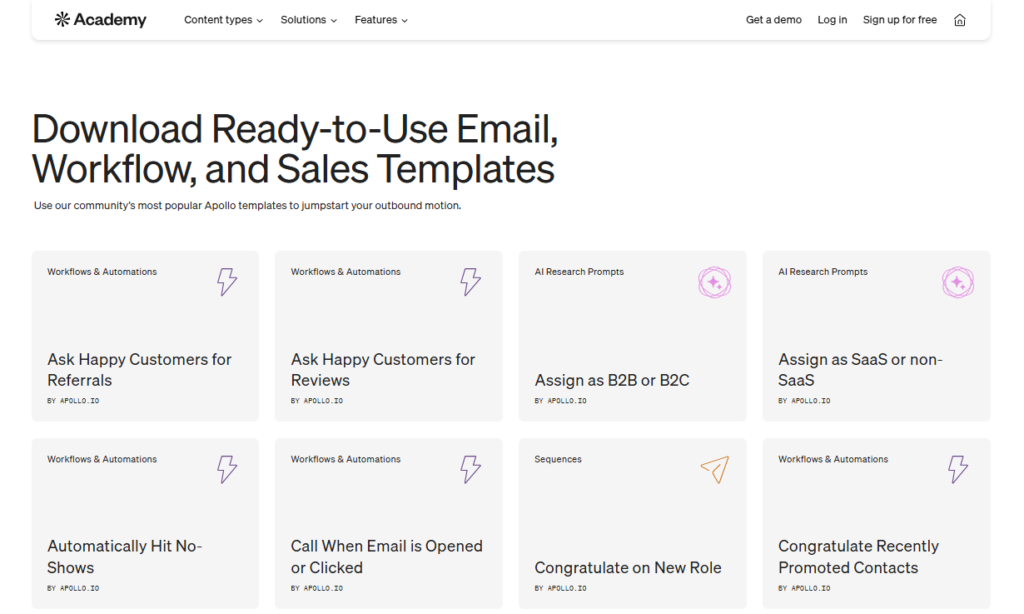
Source – Apollo.io
That’s not all. The library is backed by real send data from billions of outreach emails across Apollo’s user base, which gives the templates a credibility that generic collections simply don’t have. This explains why, when a rep asks an AI assistant what a good cold email sequence looks like, Apollo’s pages frequently surface. That’s because they’re specific, plentiful, and backed by real performance data.
Outreach has taken this strategy further with a suite of free interactive tools.
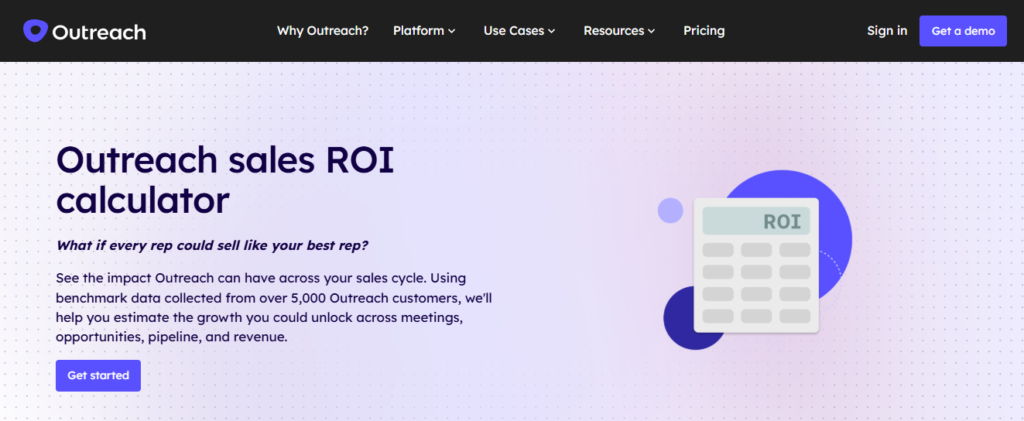
Source – Outreach.ai
For instance, their Sales ROI Calculator lets revenue leaders input their current metrics and see projected improvements based on data from over 5,000 Outreach customers.
They also offer other free resources, like a Pipeline Generation Calculator, a Sales Deal Health Quiz, a Customer Churn Risk Quiz, and an AI Agent Quiz. Each of these is built around a specific question a revenue leader might search for. This means, these tools don’t just attract traffic. They pull in buyers at the exact moment they’re trying to make a business case or diagnose a problem, which is a high-trust, high-intent interaction that AI systems recognize as useful and reference accordingly.
In short, what both companies have done is build a large network of specific, useful pages that each answer a different buyer question. The more of these pages they have, the more queries they show up in, and the more often AI treats them as a reliable source worth citing.
While many other tech SaaS industries like API-First also adopt pretty much the same methodologies, they still struggle to gain AI visibility. If that sounds like you, read our blog Top 8 Generative Engine Optimization Agencies for API-First Companies.
4 Strategies You Can Adopt to Make Your Sales Tech Tool Appear in AI Results
Your company might not be at the top of AI recommendations right now. But there’s a lot you can learn and implement from players like Apollo and Outreach, who don’t just dominate sales tech SaaS AI visibility but have successfully proven how to maintain that supremacy.
Below, we have listed four concrete strategies inspired by the top vendors in your industry that you can immediately start applying to improve your visibility in AI results:
Strategy #1: Break Down Broad Categories into Targeted Use-Case Pages
Think about how your buyers actually search.
Do they type “sales engagement platform” into an AI tool? Probably not. But do they ask things like “how do SDRs manage outreach sequences” or “best tool for AEs to track deal health”? Maybe. Why? Because these queries are tied to a role or a specific problem. If your content doesn’t match that, AI has no reason to bring you up.
So, break your broad category pages into targeted use cases and role-based pages. Each piece of content should focus on one persona, one workflow, or one specific job your product helps with. For example:
- Sales engagement software for SDRs
- Pipeline management tool for account executives
- Sales forecasting tool for revenue operations teams
- Conversation intelligence software for sales managers
- Outbound sequencing tool for enterprise sales teams
Outreach has done this well.
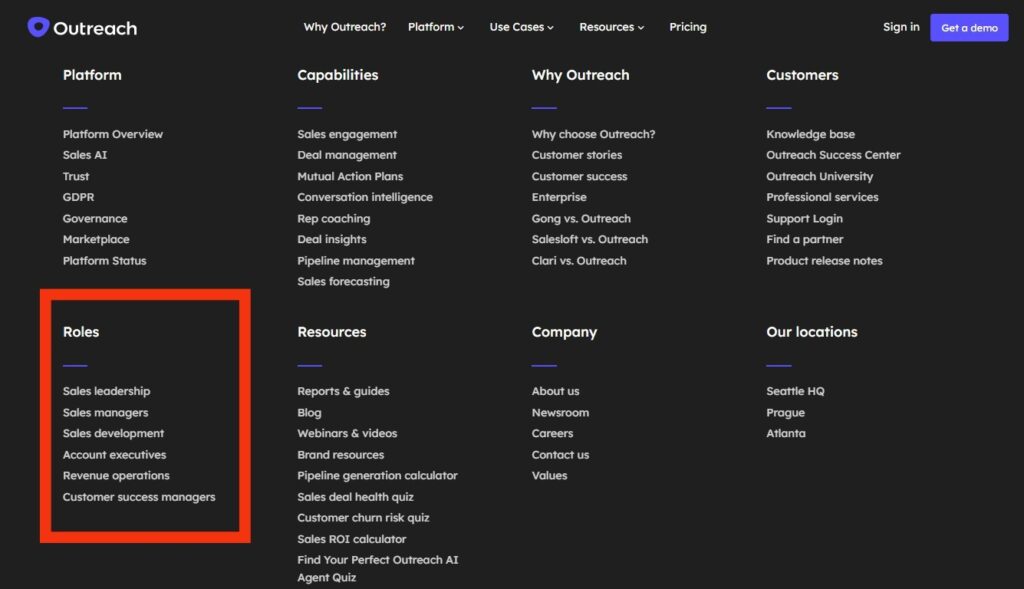
Source – Outreach.ai
Instead of one generic product page, they’ve built dedicated pages for each role: Sales Development, Account Executives, Revenue Operations, Sales Managers, and more. Each page speaks directly to that role’s challenges, even though all of them are describing the same product.
Start with the three or four use cases your best customers actually use your product for, write those pages clearly, and expand from there.
Strategy #2: Cover Comparison and Alternative Intent Properly
At some point in every buying journey, the buyer starts comparing. They search “Apollo vs ZoomInfo,” “best Outreach alternative,” or “tools similar to Gong.” These are the highest-intent queries in the entire funnel.
But most sales tech vendors don’t create content for this stage. They leave it to review sites and competitor blogs. So when AI answers these questions, it uses those sources. Because your content isn’t there, others define how your product is seen.
So, build dedicated comparison pages on your own website. For a sales engagement tool, that might look like:
- [Your product] vs. Salesloft
- [Your product] vs. Outreach
- Best Salesloft alternatives
- Best Outreach alternatives for mid-market teams
- [Your product] vs. HubSpot Sales Hub for outbound teams
Each page should explain the real differences, name the scenarios where your product is the better fit, and even acknowledge where a competitor might be stronger. Buyers trust honest content more than polished spin.
Additionally, keep these pages updated. A comparison page that hasn’t been touched in two years loses credibility with both buyers and AI. So, review and refresh this content at least twice a year.
Strategy #3: Build a Knowledge Base Out of Your Users’ Real Queries
Instead of hard-selling your tool at every opportunity, focus on publishing content that genuinely answers your users’ questions.
Ask your sales team what objections they hear. Ask customer success what new users ask in their first 30 days. Look at your support tickets and product documentation searches. Then turn those questions into content. Not long-form brand pieces. Short, specific, well-structured answers. For a sales engagement tool, that might look like:
- What is a sales sequence, and how do you build one?
- What is a good cold email reply rate?
- How many follow-ups should a sales rep send?
- What is the pipeline coverage ratio, and how do you calculate it?
- What is a mutual action plan in B2B sales?
- What does sequence deliverability mean?
Also, make sure each one answers the question clearly and directly. When you do this, your brand shows up right when a buyer is trying to solve a problem. Over time, this builds topical authority across your category and puts your brand in a buyer’s awareness before they’ve even formed a shortlist.
Strategy #4: Make Your Core Product Pages Do More Than Just Describe Features
Most product pages follow the same formula. A headline. A list of features. A few logos. A CTA to book a demo.
The problem is that this format is built for conversion. But AI isn’t trying to do that. It’s trying to understand what your product does, who it’s for, and why it matters. A page full of feature bullets gives it very little to work with.
So, build product pages that combine education, context, and conversion in one place. Here’s what the difference looks like in practice:
Instead of writing: “AI-powered email sequencing”
Write something like: “Most sales teams lose deals not because their product is weak, but because their follow-up is inconsistent. Our AI sequencing tool automatically adjusts send timing based on prospect engagement, so reps always follow up at the right moment without having to think about it.”
Instead of writing: “Pipeline visibility for sales leaders”
Write something like: “Sales leaders using our platform can see, in one view, which deals are at risk, which reps are behind on activity, and where the pipeline is likely to fall short before the quarter ends. No more end-of-quarter surprises.”
The reason is pretty straightforward. When someone asks, “What is the best tool for outbound prospecting?” AI doesn’t just want to know that your tool has a contact database and email sequencing. It wants to understand how the workflow works, where teams usually struggle, and how your product helps.
So, ask yourself: if a buyer landed on this page with no prior knowledge of our product, would they understand what problem we solve and why we’re worth trying? If the answer is no, your page is doing too little work.
Apollo’s main product page does this well.
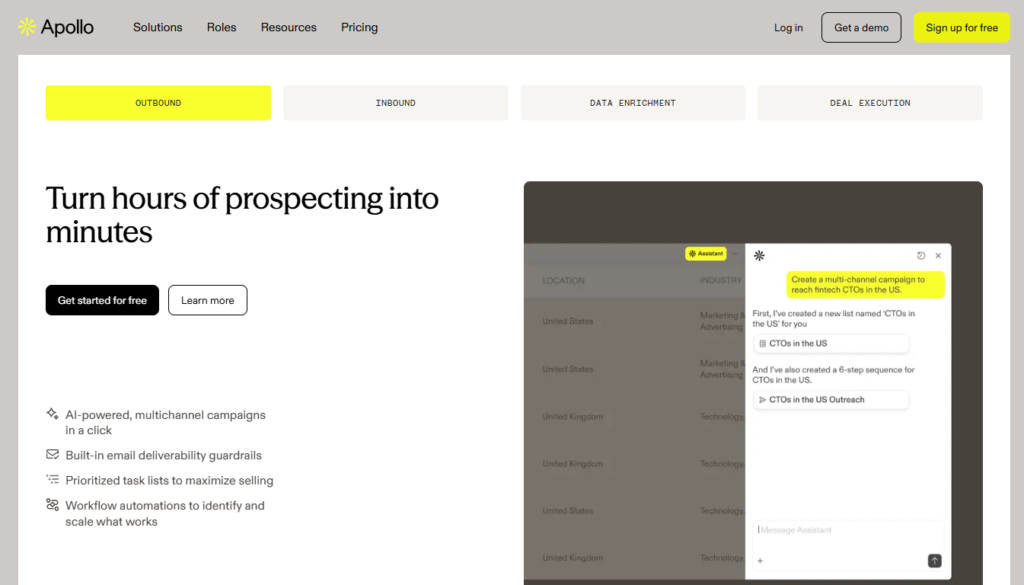
Source – Apollo.io
It walks through the entire outbound workflow, explains what each part of the product helps with in context, and uses customer quotes tied to specific outcomes. The result? A buyer with a question gets it answered, and AI gets a clear picture of who the product is for.
Want to Improve Your AI Visibility in the Sales Tech SaaS Space? We’re Here for You
The sales tech SaaS space is crowded. Most tools offer similar features, workflows, and promises. But when buyers turn to AI tools to decide what to use, only a few names show up again and again.
That gap isn’t about product quality. It’s about sales tech SaaS AI visibility.
As we saw in this blog, the companies that show up aren’t just building products. They’re building content that clearly explains what they do, who they serve, and when they should be used. They cover use cases, comparisons, and real workflows in a way that AI can understand and reuse.
The challenge is that this doesn’t happen by accident. It requires a clear strategy, the right structure, and consistent execution over time.
At Concurate, that’s exactly what we focus on. We help sales tech companies build content systems that don’t just rank. They get cited, referenced, and used by AI platforms when buyers are making decisions.
You might already have a strong product. The real question is, when a buyer asks AI for tools in your category, does your product show up? If the answer isn’t what you want it to be, we can help you fix that.
Book a call with us. We’ll help you map what your buyers are asking, where your gaps are, and what kind of content will actually move you into the shortlist.
Frequently Asked Questions:
1. If AI relies on patterns, how do I break into them as a newer or less visible player?
You can’t break the pattern all at once. You need to first insert yourself into it through specific entry points. Start with one clear use case where your product fits strongly and go deep on it. Make that connection obvious across multiple pieces of content. Once AI starts associating you with that use case, you can expand outward. This creates a foothold instead of trying to compete everywhere.
2. Should I focus on category-level content or specific use cases?
You need both, but use cases matter more for AI. Category pages help define where you sit, but they’re often too broad. AI is more interested in specific situations, like solving a certain problem for a certain team. So, when you cover these use cases clearly, it becomes easier to match with real queries. This also reduces competition because fewer companies go deep into specifics.
3. What kind of content actually builds long-term AI visibility instead of short-term spikes?
Content that consistently explains real use cases tends to last longer. It doesn’t rely on trends or temporary keywords. Instead, it focuses on problems that buyers keep facing over time. This makes it reusable for AI tools across many queries. Consistency in publishing also matters because it reinforces the trust signal.
Disclaimer: The information presented in this article is compiled from publicly available sources, including company websites, industry reports, and social media. All trademarks, brand names, and logos mentioned are the property of their respective owners. We do not claim any ownership of third-party marks, nor do we imply endorsement or affiliation. This article is intended for informational purposes only.