

| TL; DR: If your retail tech brand gets attention but struggles to close, the problem is not awareness. This guide walks through the best agencies and the criteria that matter when decisions are on the line. |
You build technology that makes life easier for consumers. It reduces friction and saves time. It even quietly fixes problems most people don’t even notice until they’re gone.
But how do you translate the power of your product into words that travel across websites, content, social posts, and conversations.
Retailtech is messy, context-heavy, and full of trade-offs. So users don’t always fully feel the value.
This article is for brands building real solutions for real retail problems and trying to make sure that the story lands clearly, consistently, and with the weight it deserves.
Top 10 B2B Marketing Agencies for Retail Tech Companies
Good retail tech marketing isn’t about louder campaigns or more content. It’s about knowing what to say, who to say it to, and when it actually matters.
The agencies in this list understand how retail software is bought, evaluated, and justified inside real organizations. They don’t just make things look good, but help retail tech companies show up clearly at the exact moment buyers are trying to make sense of their options.
Now let’s get into the list.
- Concurate
- Optimist
- Bounteous
- Wpromote
- Creative Stream Marketing
- Walker Sands
- 5WPR
- The Munro Agency
- Theory House
- Retail Marketing Group
Let’s explore each agency one by one.
1. Concurate
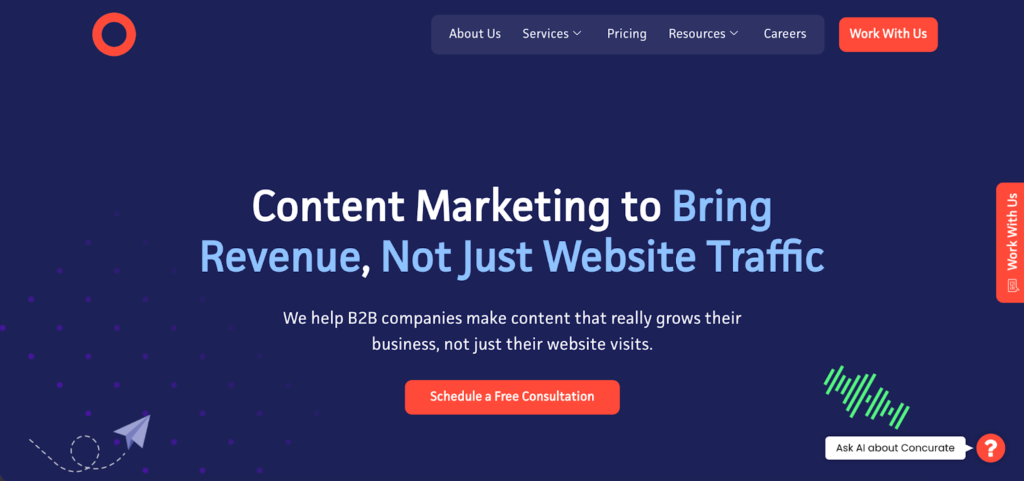
At Concurate, the problem we hear most from retail tech teams is simple i.e., the product works, but it’s hard to be seen.
You know buyers are searching, comparing options, and shortlisting tools before they ever talk to sales. When that happens, your product often shows up next to solutions that solve very different problems, or sometimes doesn’t show up at all.
Not because you’re doing nothing. But because your message gets diluted once it leaves the room.
What makes your product valuable in a real retail environment? The context, the trade-offs, and the specific situations it was built for. That rarely comes through clearly when buyers are scanning pages, reading summaries, or trying to make sense of options on their own.
So visibility isn’t just about being present. It’s about being understood before the conversation even starts.
Source – Concurate
That’s where we come in.
Here’s what we see again and again when we start working with retail tech teams:
- Comparison keywords ranking for competitors or review sites, not the brand itself.
- Great product depth, but messaging feels generic once buyers start evaluating.
- Content exists, but it doesn’t reduce objections or speed up decisions.
Our work is designed to fix those gaps.
How we actually support retail tech teams
We don’t just write blogs. We help you show up where buyers are already looking and comparing.
- Website and decision-stage content: Comparison pages, alternatives, use-case breakdowns, and objection-handling content that mirrors real buyer conversations, not marketing theory.
- SEO built around buyer intent: We prioritise keywords that signal evaluation and readiness, not just search volume. The kind of queries sales teams care about.
- LinkedIn content that builds category authority: Founder-led and brand-led content that explains your point of view, educates the market, and keeps you visible while deals are warming up.
- YouTube and video-led content: Breakdown videos, explainers, and comparison-style content that buyers can actually watch, share internally, and revisit during evaluation.
- Sales-aligned content systems: We work backwards from how your sales team pitches, demos, and handles objections, then build content that supports those exact moments.
- Distribution that doesn’t rely on hope: Content is shaped to travel across search, LinkedIn, YouTube, and internal sales workflows, not just sit on a blog.
How this plays out in practice
When a retail tech buyer is evaluating options, they don’t want another thought leadership article. They want clarity and proof.
So we help brands show:
- Who the product is actually for.
- How it compares to alternatives buyers are already shortlisting.
- What problems does it solve better than anyone else?
- What trade-offs exist, without hiding behind marketing fluff?
This is the difference between content that gets read and content that gets forwarded internally.
Concurate isn’t built for brands chasing impressions. We’re built for retail tech teams that want their content to help close deals, reduce friction, and make choosing them feel obvious.
Notable Clients: Datacipher, Scanwriter, Ratio Tech, Inspire IP, and Triangle IP.
Pricing:Partnerships typically range from USD 5,000 to USD 7,500 per month, with project engagements starting at USD 3,500.
2. Optimist
Optimist is a content marketing agency focused on helping B2B technology companies build authority through research-led and strategy-driven content. Their work centers on turning content into a long-term growth asset rather than a short-term traffic play, with a strong emphasis on proprietary frameworks, benchmark reports, and narrative positioning.
Source – Optimist
The agency offers end-to-end content support, covering strategy, production, design, and distribution. Their approach is well suited to businesses selling complex software into operational and multi-stakeholder environments, where education, credibility, and internal buy-in play a major role in the buying process. Optimist positions content as a way to shape RFP conversations, support sales teams, and establish category leadership over time.
Notable Clients: Plytix, Popmenu, Contentstack, andSubmittable
Pricing: Pricing is not listed on their website. You can contact the Optimist team directly for details.
3. Bounteous
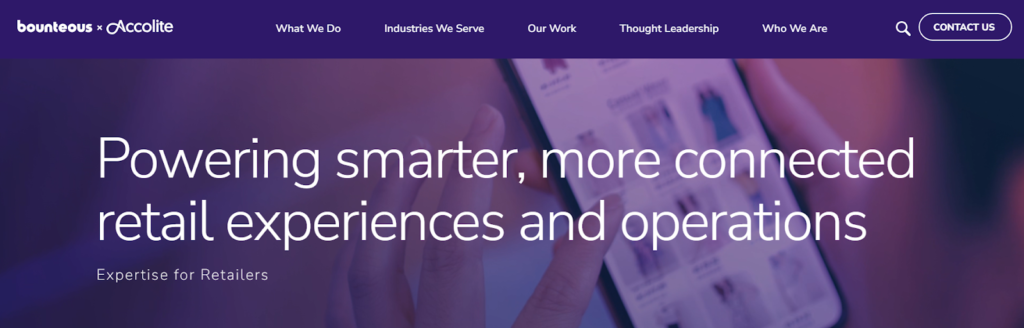
Bounteous works with large organizations that run complex digital and commerce ecosystems. Their focus is less on campaigns and more on fixing what sits underneath them. Data that lives in silos, platforms that don’t integrate cleanly, and customer journeys that feel disconnected across channels.
Source – Bounteous
Their teams combine technology, experience design, and marketing activation to help businesses modernize how systems work together. Much of their work revolves around commerce platforms, cloud and AI enablement, analytics, and personalization. This makes them a fit for companies operating at scale, where improving efficiency, consistency, and decision-making matters more than short-term growth tactics.
Notable Clients: Aubuchon Hardware, Chatters, Staples Canada, Wilson
Pricing: Pricing is not publicly listed. You can contact the Bounteous team directly for details.
4. Wpromote
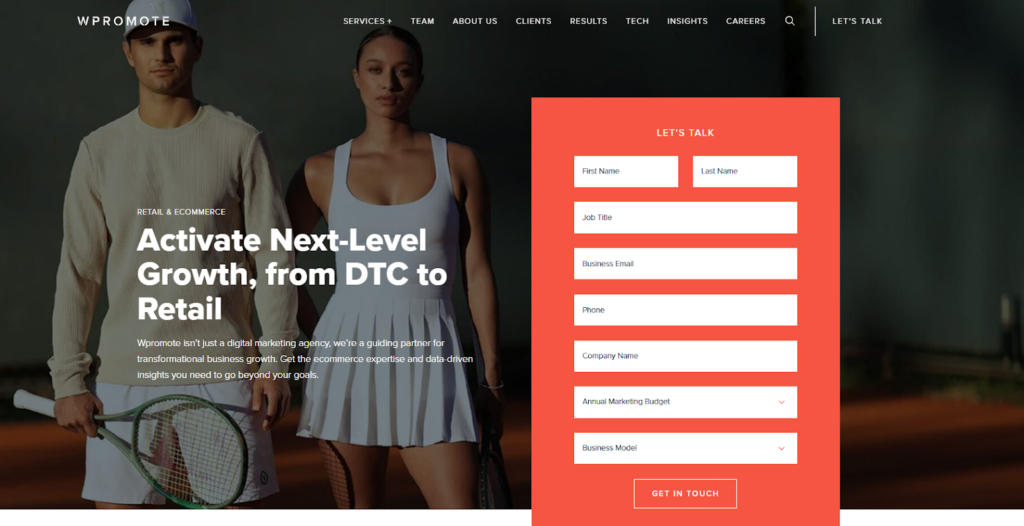
Wpromote is a performance-focused digital marketing agency that works closely with consumer-facing and commerce-led brands to drive measurable growth across paid, owned, and earned channels. Their work is heavily centered around media execution, experimentation, and profitability, with a strong emphasis on understanding how customers move across online and offline touchpoints before making a purchase.
Source – Wpromote
The agency combines paid media, SEO, content, lifecycle marketing, and analytics to help brands scale acquisition while keeping efficiency in check. A large part of their approach is rooted in data, attribution, and channel-level optimization.
Notable Clients: Helzberg Diamonds, Vuori, Whirlpool, Hibbett Sports, Aritzia, POLYWOOD
Pricing: Wpromote does not publish pricing publicly. Engagement details are typically discussed directly with their team.
5. Creative Stream Marketing
Creative Stream Marketing is a B2B marketing agency that works closely with software and technology companies that need hands-on execution support alongside strategy. Their positioning is built around partnering with lean internal teams and helping them plan, create, distribute, and track marketing efforts without adding operational complexity.
Source – Creative Stream
The agency’s work spans branding, messaging, content, web, and digital campaigns, with a strong emphasis on clarity and consistency across channels. Much of their value comes from acting as an extension of an in-house team, supporting companies that know what they want to improve but don’t have the time or bandwidth to do everything internally.
Notable Clients: Coffee Bean Tea Leaf, Loreal, Swarovski, Walmart, and Urban Outfitters
Pricing: Pricing details are not shared publicly and are discussed after an initial discovery call.
6. Walker Sands
Walker Sands is a B2B marketing and communications agency that blends strategy, content, digital marketing, and public relations. Their work is rooted in research and audience insight, helping technology companies sharpen positioning, shape narratives, and stay visible in competitive categories where credibility and media presence matter.
Source – Walker Sands
A large part of their offering sits at the intersection of brand, PR, and demand. They support companies looking to influence industry conversations through thought leadership, media relations, creative campaigns, and digital channels.
Notable Clients: commercetools, Loop, ebbo, Elastic Path, VTEX
Pricing: Walker Sands does not disclose pricing publicly and structures engagements based on scope and objectives.
7. 5WPR
5WPR is a full-service public relations and communications agency that helps brands manage visibility, reputation, and perception across media, digital channels, and public-facing narratives. Their core strength lies in earned media, strategic storytelling, and reputation-led campaigns that keep brands consistently present in high-impact conversations.
Source – 5WPR
The agency works across corporate communications, digital PR, influencer marketing, crisis communications, and integrated marketing programs. Much of their work involves shaping how companies are covered in the press, how executives are positioned publicly, and how brand narratives hold up during moments of growth, change, or scrutiny.
Alongside traditional PR, they also offer digital marketing support including SEO, content, social media, and performance-driven campaigns.
Notable Clients: VIZIO, Webull, e.l.f. Beauty, Thomson Reuters, Foxwoods Resort Casino
Pricing: Pricing is not publicly available and is defined based on scope, services, and campaign complexity.
8. The Munro Agency
The Munro Agency is a B2B-focused digital marketing agency with a strong emphasis on lead generation and performance-led growth. Their work is centered around helping companies turn their websites, paid media, and content into predictable sources of qualified leads rather than just traffic. A recurring theme across their services is ROI visibility, with a focus on showing how marketing activity translates into real business outcomes.
Source – The Munro Agency
The agency combines PPC, SEO, content, marketing automation, and AI-driven initiatives to support demand generation across the funnel. Much of their approach is execution-heavy, covering everything from paid search and remarketing to SEO content, automation workflows, CRM integrations, and conversion-focused website builds.
Notable Clients: Samsung, DELL, C2, mentorcliq
Pricing: Pricing is not published and is typically discussed based on scope and lead generation requirements.
9. Theory House
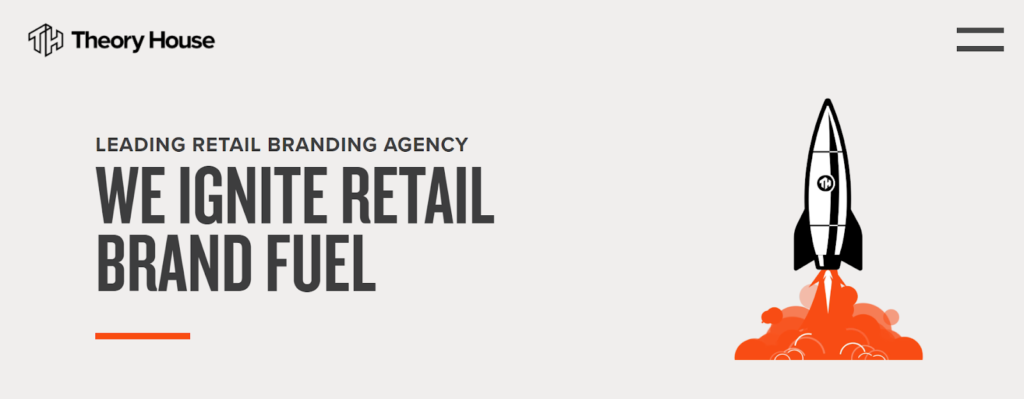
Theory House is a retail-focused marketing and activation agency that works on the ground where brand interest turns into purchase decisions. Their work is centered on how products show up in real retail environments and how brands earn attention, consideration, and trust at the moment someone is deciding what to buy.
Source – Theory House
The agency supports brands and service providers with retail activation, shopper marketing, product launches, and category-level design. Their services span everything from pitch decks and retail sell-in materials to signage, POP, departmental design, and marketing collateral. Much of their value lies in helping brands navigate complex retail ecosystems, align with retailer expectations, and activate campaigns that connect consumer interest with shelf-level execution.
Notable Clients: Smirnoff, Starbucks, mtn Dew, Black rifle coffee company
Pricing: Theory House does not publish pricing and scopes engagements based on the type of retail activation and campaign requirements.
10. Retail Marketing Group
Retail Marketing Group focuses on the last and most decisive part of the buying journey: the moment a shopper interacts with a product, a store associate, or a live demonstration. Their work is built around people-powered retail, using trained field teams, brand ambassadors, and in-store specialists to turn conversations into purchases and brand advocacy.
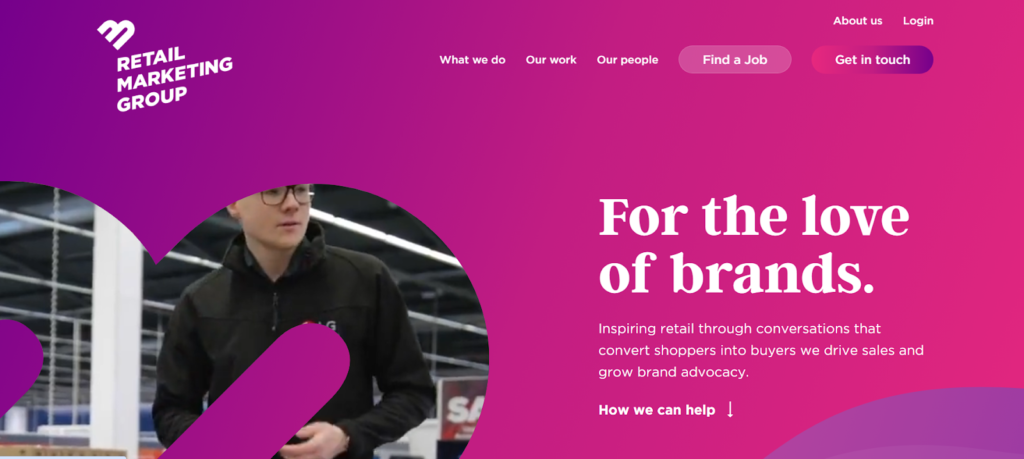
Source – Retail Marketing Group
The agency delivers field marketing programs, brand experience initiatives, live video shopping, and data services that help brands understand what is actually happening in stores. Their teams handle recruitment, training, deployment, and performance tracking of retail staff, supported by reporting and insight from real-time field data.
Notable Clients: BT, LG, GoPro, Garmin, Bosch, Huawei, Epson
Pricing: Engagements are custom-scoped based on field coverage, staffing needs, and activation complexity.
| How We Chose These AgenciesThis list is based on how these agencies operate in the real world, not how often their names show up online.We looked at what problems they actually solve, not just the services they list on their websiteWe evaluated where their work shows up in the buying journey, from early influence to execution and adoptionWe prioritised agencies with evidence of working with complex products and multi-stakeholder teamsWe filtered for depth and consistency, not one-off campaigns or surface-level positioningThe goal was to surface agencies that understand nuance, execution, and decision-making, not just visibility or volume. |
How to Choose the Right Marketing Agency for Your Retail Tech Business
By the time teams start shortlisting agencies, the challenge usually isn’t finding options. It’s figuring out which one actually fits how your business sells, grows, and makes decisions.
- It helps to notice where the agency does its best work. Some are strongest at shaping early conversations, others at driving demand, and some at execution closer to purchase. The right fit depends on where you feel the most friction today.
- Pay attention to how they talk about outcomes. If everything revolves around impressions and clicks, that may not map well to complex buying journeys with multiple stakeholders.
- Look at how deeply they explain their work. Agencies that understand nuance usually describe trade-offs, not just wins.
- It’s also worth asking how they plug into your team. The best partnerships feel additive, not disruptive.
These signals won’t give you a final answer, but they’ll help you narrow the field. Next, let’s pull out a few key takeaways you can apply right away.
4 Things You Can Fix Before Bringing in an Agency
Before looping in outside help, there’s a lot you can tighten internally with a bit of focused effort.
- Clarity without a deck: If your product only makes sense when someone walks a prospect through slides, your website and content are probably over-explaining features and under-explaining value.
- Repeated sales questions: Pay attention to the same objections or clarifications that come up on calls. Those questions are signals of what your content isn’t answering today.
- Decision-making support: Educational content is useful, but buyers also need help choosing. If nothing helps them compare options or feel confident moving forward, that’s a fixable gap.
- Hidden internal insight: Some of your strongest messaging already exists in sales calls, demos, and product discussions. Pull that insight out and turn it into usable content.
These are all steps you can take on your own. But doing them well, consistently, and at scale is where Concurate helps teams go further.
Why teams choose Concurate when retail growth actually matters
At Concurate, we don’t come in with a fixed playbook or a long list of deliverables. We start by understanding how your buyers actually behave, where they hesitate, and what finally pushes them to act. Retail is messy, fast-moving, and deeply human, and your marketing should reflect that.
What sets us apart is how deliberately we work. We do not flood the funnel. We focus on high-intent moments, content that sales teams can actually use, and visibility that holds up when buyers start comparing options side by side.
That approach is how we helped Triangle IP double their inbound leads in just 16 months, without increasing ad spend or chasing low-quality traffic.
If you are tired of marketing that looks good on reports but stalls in real buying conversations, this is where Concurate helps you move differently.
Book our calendar today and let’s map what retail-driven growth should actually look like for your business.
hbspt.forms.create({ portalId: “6897012”, formId: “3bff4b28-825c-4422-806c-ee65993ef7a0”, region: “na1” });Frequently Asked Questions
1. What is retail tech marketing?
Retail tech marketing is about explaining complex technology in a way retailers instantly recognise as relevant to their day-to-day operations. It goes beyond promotion. It focuses on clarity, use cases, and trade-offs so buyers understand where a product fits, how it compares to alternatives, and whether it solves their specific retail problems before talking to sales.
2. Why is retail tech marketing different from SaaS marketing?
Retail tech buyers think in workflows, margins, and real-world constraints, not feature lists. Generic SaaS messaging often misses that context. Retail tech marketing needs to reflect how decisions are made across operations, IT, and leadership, and how a tool impacts stores, teams, and customers, not just dashboards or demos.
3. How do retail tech companies increase visibility during buyer research?
Visibility improves when content matches how buyers actually search and compare. That means showing up for comparison queries, alternatives, and use-case searches, not just broad thought leadership. Clear positioning, decision-stage pages, and content that mirrors real evaluation questions help brands stay visible while buyers are shortlisting options.
4. What content works best for retail tech companies?
Content that explains fit works best. Comparison pages, alternatives, use-case breakdowns, and objection-handling content tend to outperform generic blogs. Buyers want to know who the product is for, who it’s not for, and how it performs in real retail environments before they ever book a call.
5. Why do retail tech buyers compare products before talking to sales?
Retail buyers are risk-aware and time-constrained. They prefer to self-educate before engaging sales to avoid misalignment later. By the time they talk to a vendor, they often have a shortlist. Brands that don’t guide this comparison phase lose visibility and control over how their product is perceived.
Disclaimer: The information presented in this article is compiled from publicly available sources, including company websites, industry reports, and social media. All trademarks, brand names, and logos mentioned are the property of their respective owners. This article is intended for informational purposes only.