

| TL;DR: An India-based staffing provider had recently launched its website but had almost no digital presence. Our challenge was to build brand visibility and create early opportunities for leads. We ran two strategies in parallel: search-led content to build long-term Google and AI visibility, and consistent LinkedIn activity to place the brand inside relevant hiring conversations. Within six months, the company had built a measurable presence across all three channels. |
A lot of clients ask us the same question: How long does it typically take to start showing up on Google and in AI recommendations?
The honest answer is that it depends on the niche, competition, and the strength of the website. But in many cases, we begin seeing early movement within three months.
For B2B companies, that speed matters. They often operate in crowded markets where visibility can influence which brands make it to the shortlist.
In fact, this was the situation one staffing and recruitment provider faced when it came to us. They had launched a new website but had almost zero digital presence. They wanted to build a name in niche IT hiring, despite the category being crowded with dozens of major players who dominated the category.
The client had come to us through a referral from one of our long-standing enterprise technology clients. Their USP was niche and technical hiring across healthcare, cybersecurity, telecom, and various other categories.
However, the brand had no established market presence. And because it was new, very few buyers were searching for it by name.
So, how do you build demand for a staffing provider that the market does not yet know exists?
That is the challenge at the heart of this staffing agency content marketing case study.
We Had to Make the Brand Discoverable Before It Could Generate Demand
Most staffing companies begin marketing in a predictable way. They talk about themselves, explain their recruitment process, and highlight how quickly they can fill a position.
But this strategy works only when people are already paying attention or actively searching for the brand.
Our client did not have that advantage. The company had limited brand visibility and very little public information available online. Publishing promotional content alone would not help.
Our first goal was to build enough relevant market presence among companies looking for staffing support.
One of the client’s core strengths was their structured headhunting approach for niche and technical roles. Candidates looking for job opportunities were an important audience, but they were not the primary target for us in the first few months.
We wanted the brand to become recognizable among companies searching for staffing partners. The larger goal was to build enough visibility for Google and AI platforms to surface the company when buyers researched staffing and recruitment agencies in India.
So, we decided to work on two strategies at the same time:
- Blog content to build a long-term search footprint around relevant staffing categories
- LinkedIn content and engagement to start conversations with the target audience and improve brand recall
Let’s delve more into the strategy.
We Targeted the Searches Buyers Use to Build Staffing Shortlists
Generic content can get you traffic, but it may not help buyers discover your brand when they are actively comparing providers.
Blogs on the future of work, employee engagement, or how artificial intelligence is transforming recruitment could attract readers. But they would not place our client in front of companies looking for a staffing partner.
So, we focused on the actual searches their target audience was likely to make on Google.
We believe anyone looking for a staffing partner in a niche category may not search for a company by name. They are more likely to search for the category and compare the agencies offering that service.
And that is the strategy we started with.
We built content around searches such as:
- Top IT staffing companies in India
- Data science recruitment agencies
- Recruitment agencies for GCC companies in India
- Healthcare and pharmaceutical IT recruitment firms
Being discoverable is the first step. These listicle-style articles also gave us enough space to position our client properly.
We could explain the services they offered, the industries they supported, and their approach to niche hiring. This could also help AI engines understand where the company fits, increasing its chances of appearing in relevant recommendations.
We Used LinkedIn to Build Brand Recall and Start Buyer Conversations
We knew SEO and GEO take time. So, while the blog strategy was gaining momentum, we started working on LinkedIn in parallel.
The idea was to build brand recall and strengthen the company’s public presence for AI-led discovery. Studies have shown LinkedIn to be an important source for AI citations; we have also witnessed this in our own AI benchmarking studies.
Publishing regularly was our first step. We maintained a frequency of four to five posts every week.
However, we avoided generic company updates. We discussed the challenges buyers faced while hiring for niche roles, the difficulties of recruiting within particular industries, and the way our client approached those requirements.
Someone visiting the LinkedIn page needed to see that the staffing provider understood the industries and roles it claimed to support.
The content focused on relatable hiring problems and showed how the client could help solve them. We believed this relevance would help us gain engagement and build recall among decision-makers.
But publishing consistently was only the first step.
A page with a small audience could not depend entirely on organic reach to reach potential buyers. We had to open conversations that would make it easier for the sales team to follow up.
So, we started locating job posts where people were searching for IT professionals and candidates with niche skills supported by our client.
And we did not simply pass the list to the sales team. We commented on how we, as the client, could support that particular role or requirement in the region and mentioned that someone from the team would reach out.
We also maintained a shared sheet with the sales team. If someone engaged with the comment, the sales team could follow up with the right context.
We located and commented on a minimum of 60 highly relevant posts every month. This saved the sales team time and placed our client in front of companies that were already searching for staffing support.
We commented on posts where:
- A company had shared an active hiring requirement
- A professional had posted about multiple vacancies
- Someone needed help finding candidates
- The requirement matched the staffing provider’s capabilities
That changed the role of the LinkedIn page. We were no longer simply publishing into an empty feed. The brand was participating in conversations where demand already existed.
LinkedIn became a route to brand discovery and relevant conversations, rather than simply a place to post for the sake of brand building.
The Strategy Paid Off: Candidates and Companies Started Discovering the Brand
This strategy changed the trajectory of the brand within a couple of months. People began responding. They were not only discovering the company but also taking the conversations forward, sometimes sharing the right contact person and, at other times, their email addresses.
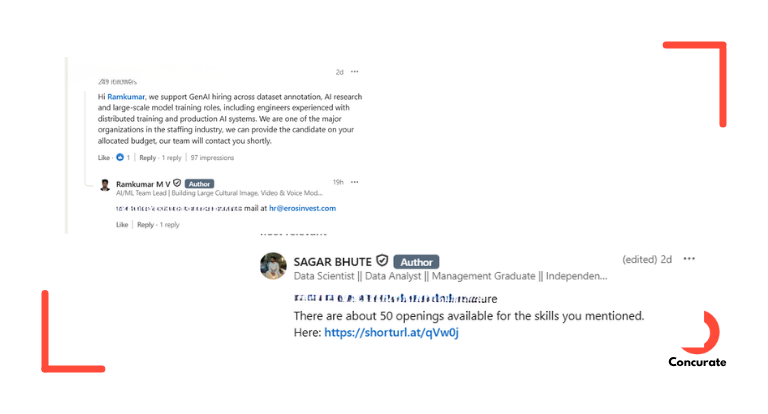
Much of this early movement came from our LinkedIn engagement and follow-up strategy.
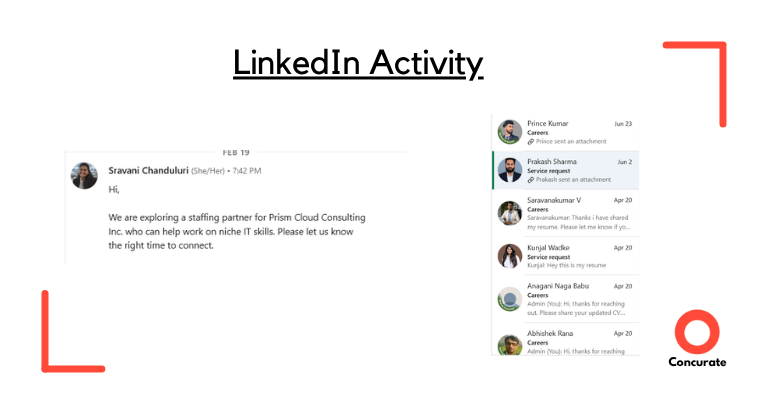
Moreover, candidates contacted the company through the LinkedIn page and shared their CVs. Businesses also approached the client with staffing requirements on LinkedIn.
In fact, other than LinkedIn, the website received 18 Contact Us submissions during the period. Most were candidate-related inquiries, while one was a staffing-related inquiry. These were clear signs that people were discovering the brand and taking action.
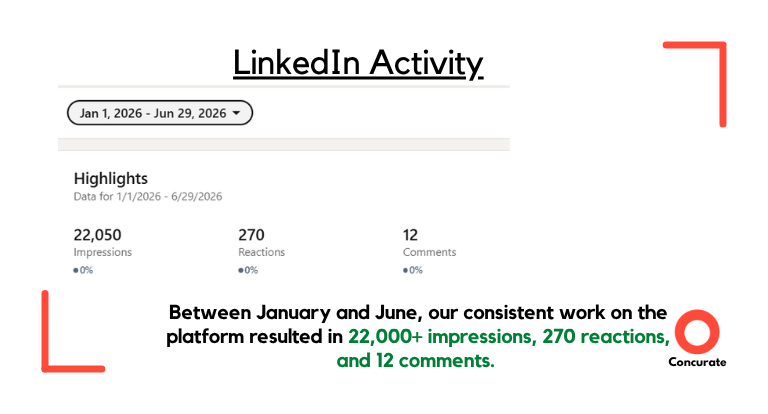
But that was not the only result. Our pain-point-led LinkedIn content also resonated with the right audience, attracting reactions, comments, and page visits.
During the six-month period, the LinkedIn page generated 22,050 impressions and 270 reactions.
In fact, the LinkedIn activity also brought in 1,237 page views and 208 organic followers.
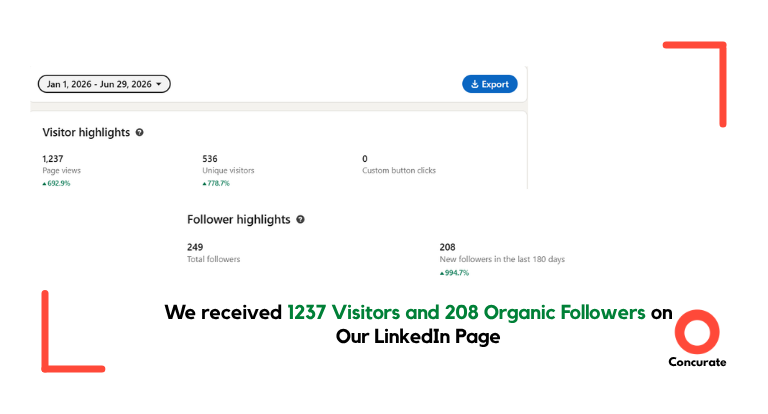
This is really impressive for a brand page that had seen negligible activity in the past.
The Blog Strategy Put the Brand on Google’s First Page
We were also working on the blog strategy in parallel, publishing list-based content to help the brand get discovered. During the six-month period, we published 14 list-based articles and one case study.
Those articles helped companies across India discover the client as a staffing provider. Someone could find the client while looking for a telecom recruitment agency. Another buyer could discover it through an IT staffing shortlist.
The content earned visibility in AI-led results and secured top positions on Google. As of July 2026, here are the Google rankings and AI Overview appearances:
| URL | Google Ranking | AI Overview |
| it-staffing-companies-in-india/ | 12 | No |
| contingent-staffing-companies-in-india/ | 2 | Yes |
| hire-train-deploy-companies/ | 12 | Yes |
| it-staff-augmentation-companies-india/ | 28 | No |
| top-ai-powered-recruitment-platforms-for-it-hiring/ | 30 | No |
| hire-skilled-developers-india/ | 1 | Yes |
| cybersecurity-staffing-agencies-in-india/ | 2 | Yes |
| recruitment-agencies-for-gcc-companies-in-india/ | 4 | Yes |
| bfsi-recruitment-agencies-in-india/ | 3 | Yes |
| data-science-recruitment-agencies/ | 1 | No |
| manufacturing-recruitment-agencies-india/ | 7 | Yes |
| automotive-recruitment-agencies-in-india/ | 2 | No |
| top-healthcare-and-pharma-it-recruitment-agencies-in-india/ | 1 | No |
| telecom-recruitment-agencies-india/ | 4 | Yes |
| coupa-recruitment-case-study/ | 1 | No |
Of the 15 articles published:
- 73% ranked on page one
- 67% ranked within the top five positions
- 53% appeared in AI Overviews
In fact, the newly launched website did well in terms of impressions too, bringing in 134K Google search impressions in a six-month period, with an average position of 12.5.
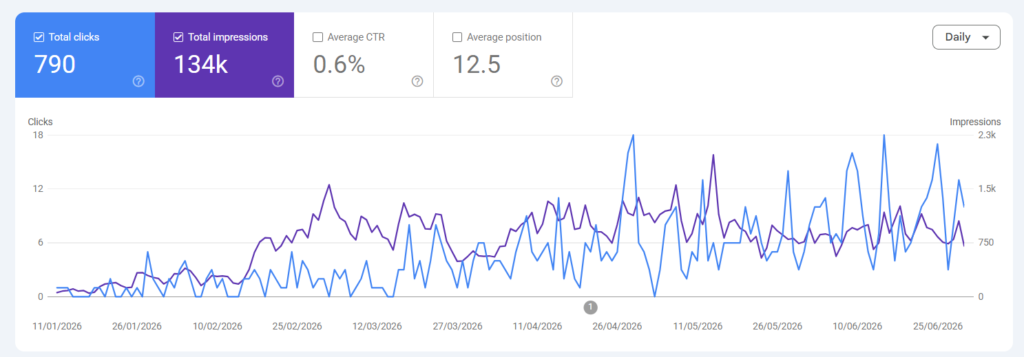
For a relatively new website in a highly competitive domain, these results were possible because of a calculated content strategy that helped the brand appear for the right keywords.
But the story does not end here.
Search Visibility Began Carrying Into AI-Led Discovery
Ranking on Google was only one part of the picture. But buyers today are increasingly asking ChatGPT, Gemini, Claude, Copilot, and other AI tools to suggest recruitment service providers.
They may ask:
- Which staffing agency can help us hire cybersecurity engineers?
- Which IT recruitment firms work with GCCs?
- Who can fulfill urgent contract-to-hire requirements?
- Which recruitment provider understands a particular technical domain?
This meant the client needed to become visible beyond traditional search results. Our detailed articles worked there too.
Our client was repeatedly recommended across different AI tools for various searches.
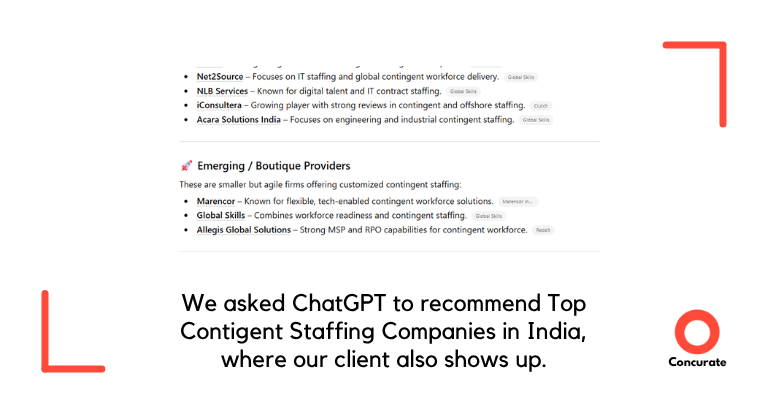
In fact, even when the client was not recommended directly, its articles appeared among the cited sources.
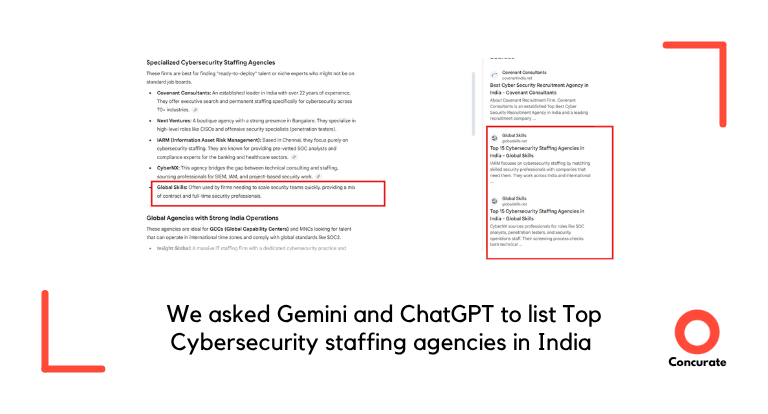
But that was not all.
We Tested Whether AI Tools Would Put the Brand on a Staffing Shortlist
We wanted to test something else: Would an AI tool actually recommend our client in a particular situation? What would happen if we pitted the client against a leading recruitment provider for the same requirement?
We put this to the test by creating detailed buyer-style prompts, which you can view below. These are the responses where the AI tools recommended our client over the competing provider.
| Comparison | Buyer-Style Query | AI Tools That Leaned Toward or Recommended the Client |
| Our client vs Randstad | Which IT staffing agency can deliver contract-to-hire cloud engineers faster than Randstad? We are a 2,500-person IT services company in Bangalore consolidating vendors by the end of Q3. We need someone who can shortlist and deploy, not just maintain a massive bench. How does our client compare for urgent mandates? | ChatGPT, Gemini, Grok |
| Our client vs TeamLease | We are choosing between our client and TeamLease for cybersecurity contract staffing in a healthcare GCC. TeamLease is cheaper, but its placements appear more generalist. We need certified security engineers, not junior hires. Which provider is better suited to the requirement? | Gemini, Grok, Copilot |
| Our client vs Quess | Does our client or Quess move faster on urgent contract-to-hire requirements for fintech? We are a 500–1,000-person BFSI company, and cybersecurity and data engineering roles keep slipping through our current panel. Which provider is more likely to deliver quickly? | ChatGPT, Gemini, Grok, Copilot |
| Our client vs Collabera | We need references from companies that have used either our client or Collabera for automotive semiconductor design contract-to-hire. We are a 3,000-person OEM captive in Tamil Nadu. Both claim to have a bench, but delivery speed matters. Who is more likely to source specialised talent quickly? | Gemini |
| Our client vs Xpheno | How does our client compare with Xpheno for cybersecurity contract staffing? We are a 2,000-person security-focused GCC in Hyderabad looking for incident response and cloud security engineers. Both claim a 48-hour turnaround, but we need to know which provider can actually deliver. | Copilot |
PS: We have replaced the client’s name with “our client” to protect its anonymity.
We ran five head-to-head buyer-style queries, comparing our client with established staffing providers. In every scenario, at least one AI tool leaned toward or recommended our client.
Gemini showed the strongest visibility, favouring the client in four of the five comparisons. Grok and Copilot leaned toward the client in three queries each, while ChatGPT responded positively in two.
The responses were not unanimous. Some tools recommended pilots, references, or further validation before choosing either provider. Above, we have included only the instances where an AI tool clearly leaned toward or recommended our client.
For a newly launched staffing brand, appearing in direct comparisons with Randstad, TeamLease, Quess, Collabera, and Xpheno, and being preferred in at least one response for every query, was a strong signal. The company was no longer absent from the buyer’s shortlist. It had started earning a place within it.
At the beginning of the engagement, the client had a newly launched website and almost no discoverable market presence.
Six months later, the picture looked very different.
| Highlights – Built a discoverable brand presence for a newly launched staffing provider within three months. – Generated 134K Google search impressions, with an average position of 12.5. – Secured first-page rankings for 11 of 15 articles, with 10 articles ranking in the top five positions. – Earned four #1 Google rankings, while eight articles appeared in AI Overviews. – Generated 22,050 LinkedIn impressions, 1,237 page views, and 208 organic followers. – Attracted candidate CVs, staffing requirements, and 18 Contact Us submissions, including one staffing-related inquiry. |
The staffing provider had moved from being difficult to discover to building a measurable presence across the channels where staffing research and conversations begin.
Four Content Marketing Lessons Recruitment Agencies Can Apply
If you run a recruitment agency and want to apply the lessons from this case study, here are four strategies worth taking away:
- Build visibility before expecting demand: A new brand cannot rely on branded searches alone. Create evaluation- and decision-stage content around the queries buyers already search for.
- Use LinkedIn for participation, not just publishing: Look for relevant hiring posts in the regions and skill categories you support. Join those conversations and give your sales team a clear opportunity to follow up.
- Be clear about what your brand stands for: Whether your strength is urgent hiring, niche IT recruitment, or industry-specific expertise, state it clearly in your content. This helps buyers and AI tools understand when your agency should be recommended.
- Prioritize relevance over publishing volume: Fifteen targeted articles generated 134K impressions, 11 page-one rankings, and eight AI Overview appearances. Publishing more would not necessarily have produced better results. The right topics made the difference.
These strategies are straightforward in theory. The real challenge lies in applying them consistently across search, LinkedIn, and AI-led discovery. And that is where the right content marketing partner can make the difference.
Help Buyers Find Your Recruitment Brand Before They Know Its Name
At Concurate, we help staffing and recruitment firms build visibility where buying decisions now begin: Google, LinkedIn, and AI Engines.
We shape your brand’s content and GEO strategy to put your expertise in front of the right audience. And that is not where we stop. We also manage LinkedIn for your brand, helping you build visibility and start relevant conversations.
This case study is proof of what that approach can achieve for a staffing company starting with almost no digital presence. Within six months, our client had built a measurable presence across search results, AI recommendations, and relevant LinkedIn conversations.
If you want to build the same visibility for your staffing or recruitment firm, book a consultation with us today.
Frequently Asked Questions
1. Can a new staffing agency rank on Google?
Yes. New staffing agencies can rank by targeting specific, high-intent searches instead of broad recruitment terms. Content around industries, roles, locations, hiring models, and provider comparisons gives Google clearer relevance signals. Moreover, strong service pages, internal linking, and consistent publishing help turn that relevance into rankings over time.
2. How can staffing agencies improve their AI visibility?
Staffing agencies improve AI visibility by giving search and AI engines enough credible information to understand the brand. Here are a few things they can do:
- Publish content around niche roles, industries, buyer questions, and comparison content.
- Build proof through case studies, LinkedIn activity, and third-party mentions.
Our article on GEO agencies for recruitment firms delves further into this. You can read it here.
3. Does LinkedIn marketing work for staffing agencies?
Yes. LinkedIn works well because both buyers and candidates are already active there. However, strong results come from combining useful content with participation in live hiring conversations. Share insights around niche roles, comment on relevant hiring posts, and follow up when someone responds. This helps build visibility, brand recall, and genuine sales opportunities.