

| TL;DR: SaaS product adoption often breaks down as products grow more complex and founders become the default support team. This SaaS product adoption case study explains how Concurate helped a legal-tech SaaS improve user adoption by building a structured, self-serve helpdesk with step-by-step articles and walkthrough videos. The result was scalable onboarding without hiring a dedicated customer support team. |
As SaaS products get more powerful, adoption usually gets messier. We see this all the time. Users hesitate, get stuck, and look for answers before they ever think about reaching out.
That matters because 61% of users, cited in Salesforce’s 2025 State of Service report, prefer solving problems on their own using self-serve resources. Yet most SaaS teams still rely on founders or live calls to bridge the gap.
So what do you do when your product can’t be simplified? And what if hiring a support team isn’t an option either?
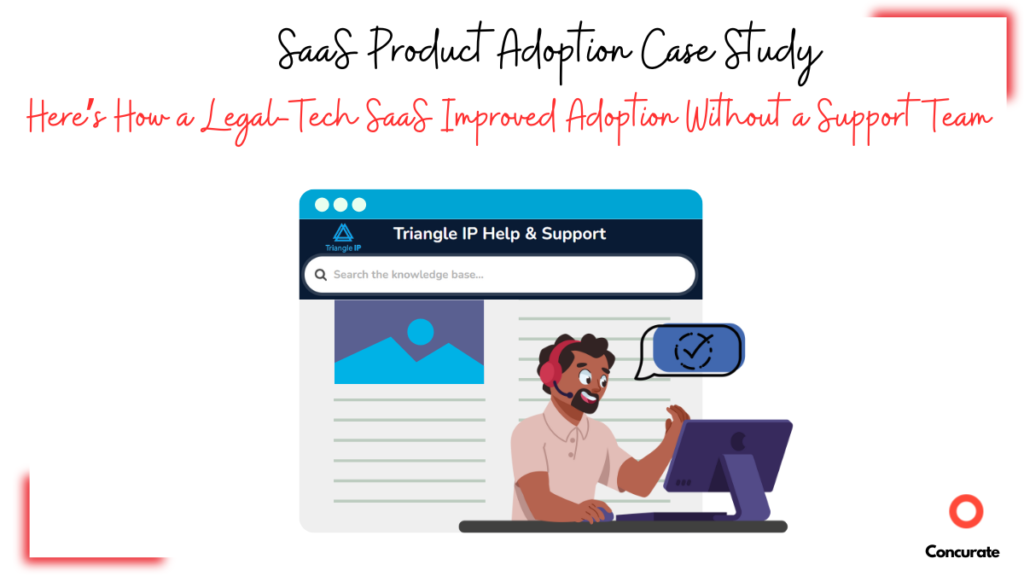
That’s exactly the situation we walked into with a legal-tech SaaS. In this SaaS product adoption case study, we explain how we improved user adoption. We did this by building a structured, self-serve helpdesk that users could rely on without constant hand-holding.
| About the Client Triangle IP is a legal-tech company that provides a patent management solution built specifically for innovation teams. Their flagship product, the TIP Tool™, helps organizations manage the entire patent lifecycle in a single system, from idea capture to portfolio management and filings. The platform is designed for innovation managers, IP teams, and cross-functional stakeholders who need visibility, collaboration, and structure across complex IP workflows. |
The Challenge
When we started working with Triangle IP, we were already managing their website and all content. But one critical area had been left untouched for a long time: product education.
The TIP Tool™ has changed a lot since its early days. Features were updated, workflows were refined, and some parts of the UX and UI were reworked or discontinued altogether. A few tutorial videos from the initial product build still existed, but they no longer matched how the tool actually worked.
There wasn’t a dedicated support team either. Adoption relied heavily on the founder stepping in to explain things when users got stuck. Over time, we also started seeing more questions come in through support emails about how to use a certain feature in the product, which made it clear that users needed clearer, more up-to-date guidance.
The Solution
Once we decided to fix product adoption properly, the focus was on doing it in a way that was realistic for the team and scalable for the future. We didn’t want to over-engineer the solution or pull the founder into endless recordings. Instead, we treated help content like a system that could be built methodically and maintained over time.
Here’s what the execution looked like in practical terms.
Helpdesk Execution Snapshot
| Area | Details |
| Founder Time Investment | 3–4 business hours to walk us through TIP Tool™, its modules, features, and workflows |
| Helpdesk Content Created | 32 helpdesk articles and 32 YouTube walkthrough videos |
| Time per Article | ~4 business hours (writing and review) |
| Time per Video | ~3 business hours (scripting and creation on HeyGen) |
| Total Effort per Content | ~7 business hours (article + video) |
| How Users Access Help Content | ‘i’ buttons within TIP Tool™Header menu on the websiteLinks shared on email responses |
| Tools Used | Google Meet for founder interviewsChatGPT for video scriptingHeyGen for AI video creation |
With the structure in place, the next step was making sure the content actually reflected how users interact with the product. So we created a proper process that goes like:
1. Mapping the Questions Users Actually Ask
We didn’t start by guessing what users needed. We started by observing where they paused, hesitated, or reached out.
Then we listed every cue across the product, especially the “i” buttons, and treated them as signals of confusion.
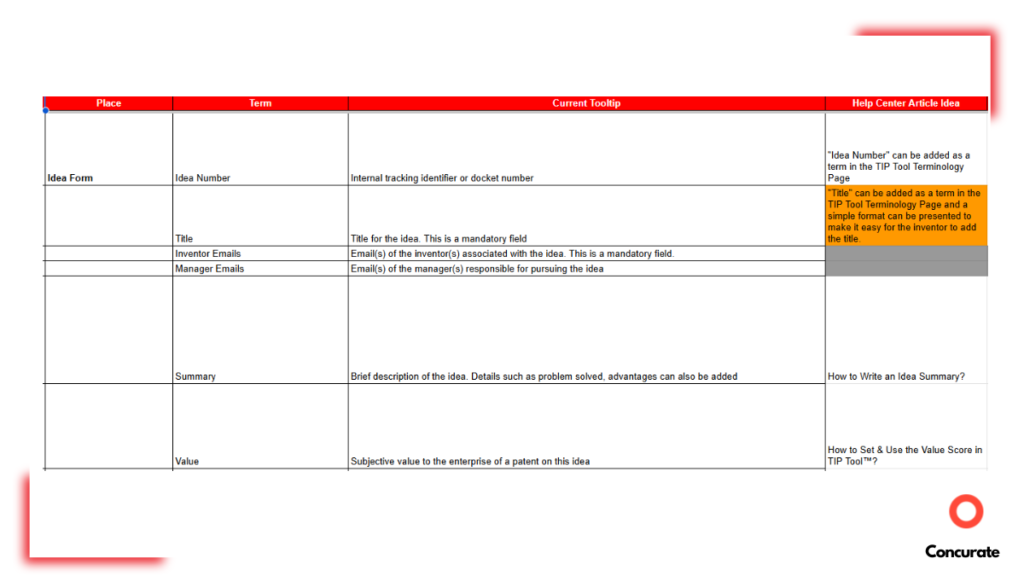
We also asked a non-IP person to review every feature in the TIP Tool™ and note the questions that naturally came up.
Alongside this, we worked with the founder to understand how different user roles approached the tool and which use cases mattered most.
2. Turning Use Cases Into Step-by-Step Guidance
Once we had a list of questions, we focused on outcomes. Every helpdesk entry was tied to one specific task a user wanted to complete.
To get this right, we interviewed the founder over weekly Google Meet calls for around six weeks.
Each call lasted between 40 and 60 minutes. These sessions helped us document workflows accurately, including edge cases that users often run into.
3. Writing Articles Users Can Follow
Each article was written with one goal in mind: remove ambiguity.
We made sure to show users exactly what to do using screenshots and GIFs, and we interlinked related articles so users always knew what to do next.
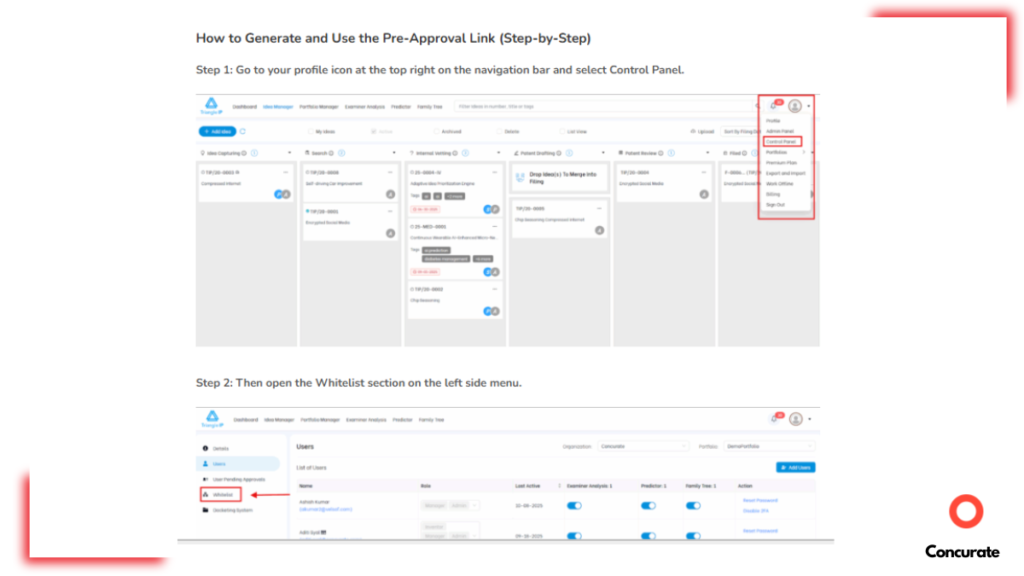
The intent was to guide users forward, not just answer a single question.
4. Creating Videos Without Adding Founder Load
For every article, we created a corresponding walkthrough video.
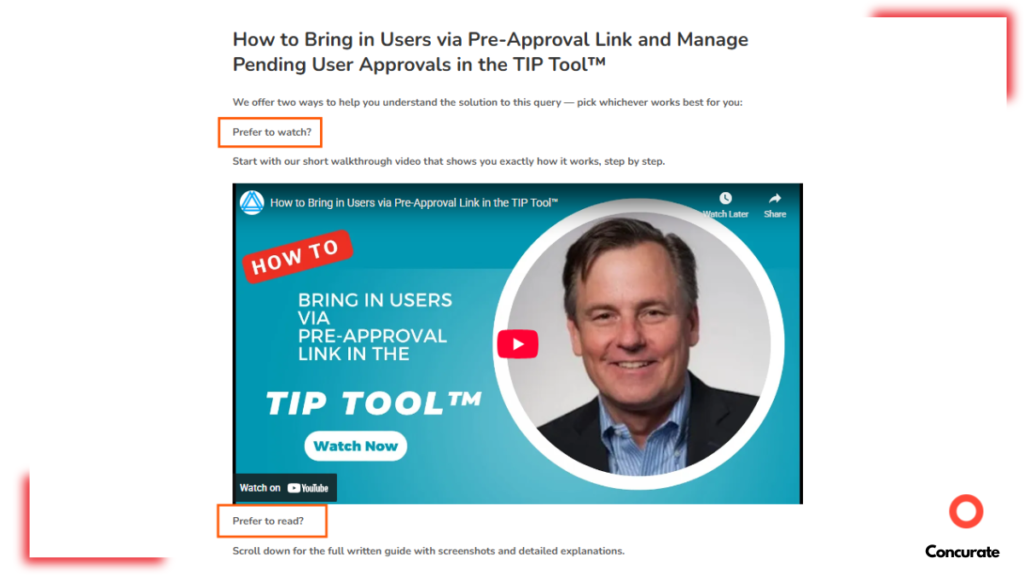
Scripts were drafted using ChatGPT based on the final article content. We chose HeyGen to create AI avatar videos so we could scale video creation without pulling the founder into recording sessions, while still keeping explanations clear and consistent.
Once the helpdesk was live, the next question was simple. Were users actually relying on these resources?
Usage data from Google Analytics gave us a clear answer.
Early Adoption Signals: What Users Actually Looked For
Instead of guessing what mattered, we focused on what users were actively searching for and spending time on. The most-read helpdesk articles gave us a clear picture of where users needed the most clarity and which workflows mattered most for adoption.
Most Read Helpdesk Articles
(As per Google Analytics)
| Helpdesk Article | What This Tells Us |
| How to Add New Users and Assign Roles in the TIP Tool™ | User onboarding and access control were early friction points |
| How to Collaborate in Real-Time Across Patent Lifecycle Stages | Teams needed clarity on collaboration across roles |
| How to Predict the Art Unit Using the TIP Tool™ | Advanced patent analysis features needed guided explanation |
| How to Add a New Idea in the TIP Tool™ | Idea capture was a primary starting point for users |
| How to Bring in Users via Pre-Approval Link and Manage Pending User Approvals | Account setup and approvals required clearer direction |
| How Do You Create Filings – One-to-One, One-to-Many, and Many-to-One | Filing workflows were complex and highly task-driven |
| How to Import and Export Applications in Portfolio Manager | Data movement and portfolio handling were common needs |
| How to Track the Journey of Ideas to Patents Across the Lifecycle | Users wanted visibility across the full innovation flow |
| Why and How to Whitelist a Domain within the TIP Tool™ | Security and access configuration raised recurring questions |
| What Is the Patentability Score and How Is It Set? | Users sought confidence in scoring logic and decision signals |
| How to Use the Portfolio Manager to Guide Patent Strategy | Strategic use of portfolios required deeper guidance |
| What Is the Value Score and How to Set It? | Users needed clarity on evaluating and prioritizing ideas |
These usage patterns confirmed something important. Adoption wasn’t failing because users didn’t care. They were actively trying to understand the product. They just needed clearer, more accessible guidance.
Continuous Updates: Keeping the Helpdesk Aligned With the Product
We never treated the helpdesk as a one-time project.
The TIP Tool™ continued to evolve, and that meant the help content had to evolve alongside it. As new features were released, workflows changed, or users raised new questions over email, we added or updated helpdesk articles and videos to reflect those changes.
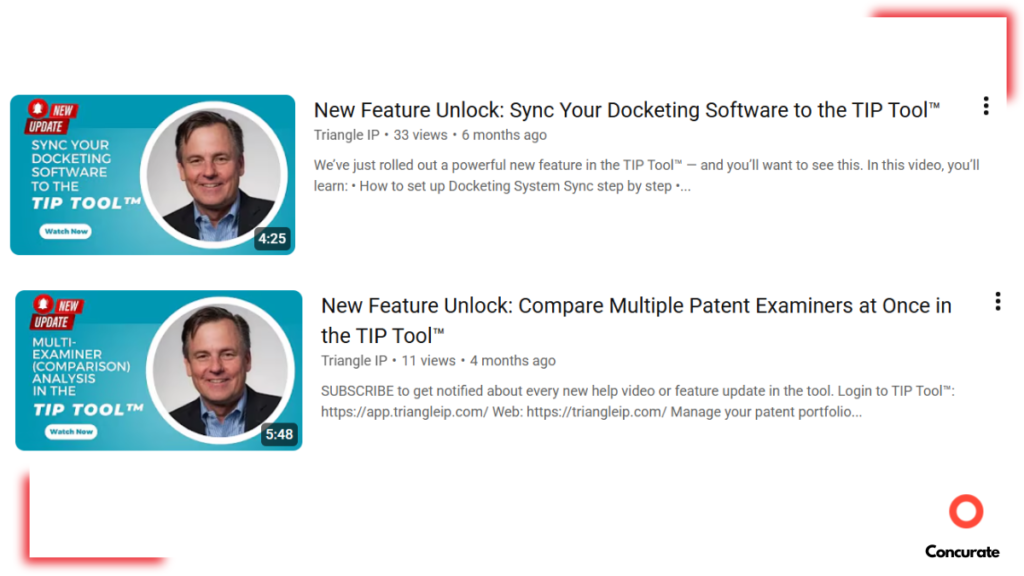
When we first subscribed to HeyGen, the goal wasn’t just to create a fixed set of walkthrough videos. It was to make ongoing updates practical without pulling the founder back into recording sessions. That made it easier to keep guidance accurate as the product matured.
This approach ensured the helpdesk stayed relevant, reliable, and aligned with how users actually experienced the product over time.
With the helpdesk in place and kept up to date, we could finally see what had changed for the team and the product. That’s what the results show next.
Results
Because the TIP Tool™ is used to manage highly confidential intellectual property, we can’t reveal feature-level product usage metrics. However, we could clearly see the impact of the helpdesk through website engagement and user activity trends.
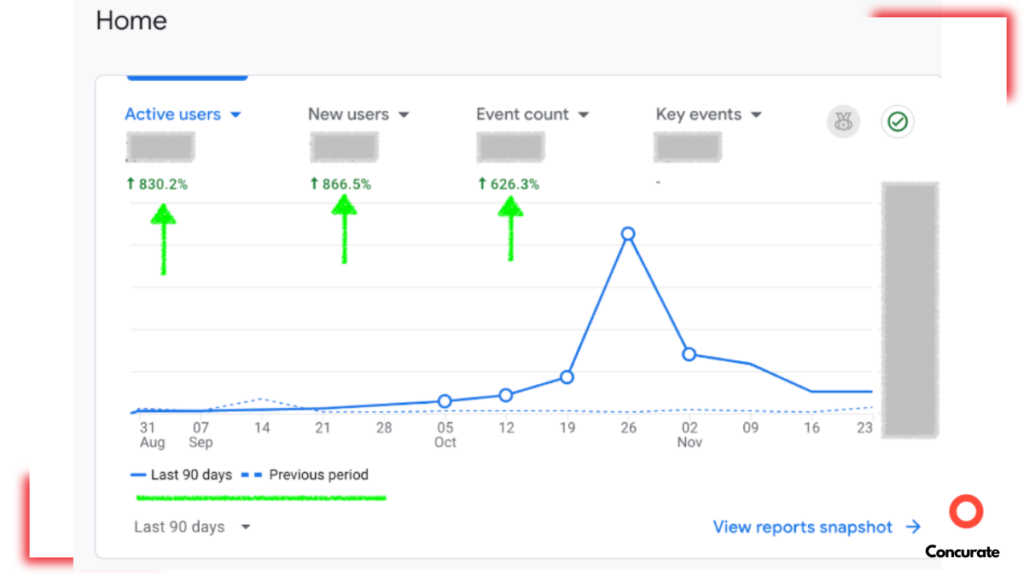
Source: Google Analytics
After the helpdesk articles went live, Google Analytics showed a sharp rise in both active users and new users over the same period:
- Active users increased by over 830%,
- New users grew by more than 860% compared to the previous period.
At the same time, overall event activity on the site rose by over 620%, indicating that users weren’t just visiting; they were actively interacting with help content.
What mattered most wasn’t the spike itself, but what it represented. Users were finding answers on their own, engaging with documentation, and returning without needing repeated founder intervention. Product education shifted from being reactive and founder-led to structured and self-serve.
That change made SaaS product adoption more scalable and far less dependent on live support as the user base grew.
Boost Your SaaS Product Adoption With Concurate
The helpdesk initiative is just one part of the work we’ve done with Triangle IP. We’ve been their content marketing partner since 2020, supporting everything from website content to product-led education and adoption-focused assets.
Over the years, this partnership has helped Triangle IP generate demo requests and user signups, not just website traffic. Our focus has consistently been on building content that supports real business outcomes, whether that’s helping prospects understand the product or helping users adopt it more confidently.
The helpdesk project fit naturally into this broader engagement. It solved a real adoption gap while reinforcing the same principle that guides all our work: making complex SaaS products easier to understand and easier to use.
If you’re building a SaaS product and want content that drives adoption, not just visits, book a discovery call with Concurate to see how we can help.
FAQs
1. What Are Proven Strategies for Legal Tech SaaS Marketing?
Proven legal tech marketing strategies focus on building trust and attracting high-intent users, not just increasing traffic. What consistently works is a mix of bottom-of-funnel comparison content, pain-point–driven blogs that answer what legal professionals actually search for, product-led pages built from real data, practical lead magnets, and strong trust signals like case studies and expert proof. Distribution also matters, especially getting featured where legal buyers already spend time.
To explore these strategies in depth, check this blog on proven legal tech marketing strategies.
2. What Are Some Effective B2B SaaS Growth Hacks?
Effective B2B SaaS growth comes from executing the fundamentals better than competitors, not chasing shortcuts.
What consistently works is focusing on high-intent content such as competitor comparisons and alternatives, fixing SEO blind spots, scaling programmatic SEO with human oversight, leveraging user-generated content for authority, building glossary pages as lead magnets, and targeting repeatable SEO patterns that attract decision-stage buyers.
These approaches are designed to drive signups, demos, and conversions, not just traffic.
To go deeper into these strategies, check our blog on B2B SaaS growth hacks.
Or subscribe to our newsletter to learn some really cool growth hacks to drive business for your SaaS
3. Which all Marketing Services Does Concurate Offer?
Concurate offers content-led marketing services for B2B SaaS and legal-tech companies, including:
- SaaS SEO to drive high-intent organic traffic
- SaaS content marketing focused on demos, signups, and adoption
- Programmatic SEO to scale targeted content without sacrificing quality
- Product-led content that explains real use cases and workflows
- Helpdesk and documentation creation to support onboarding and product adoption
- Generative Engine Optimization (GEO) to improve visibility across AI search platforms
- LinkedIn ghostwriting for founders and brands to build authority
All services are designed to deliver business outcomes, not just website traffic.
4. How Soon Can I Start Getting Leads from B2B SaaS Content Marketing?
Early signals typically start showing within the first 2–3 months, as content begins ranking and attracting the right audience. However, consistent lead flow usually builds over time as high-intent content compounds, internal linking improves, and topical authority strengthens.
For most B2B SaaS companies, meaningful and predictable results come from sustained execution rather than quick wins.