


| TL;DR: Breaking into a crowded SEO space with zero domain authority is tough for SaaS startups. Our programmatic SEO strategy built topical authority for a patent tech company and turned compliance-focused blogs into qualified inbound leads from patent attorneys and innovation teams. |
When you’re a new SaaS product entering a space dominated by established players, there’s no middle ground. You either disrupt, or you disappear.
That was the situation for a patent tech startup we partnered with early in their journey. They had launched a brand new product and website in a space dominated by long-established players with years of search authority and brand recognition.
Their product was built on a powerful idea, but it needed visibility to match its potential.
And content marketing was their best bet.
But the rules of discovery have changed. With generative engines now shaping how buyers find solutions, ranking on Google alone wasn’t enough. Visibility now meant showing up on both search results and AI surfaces.
For an established domain, the process can be tough. But for a new entrant with a relatively new domain and no SEO history, this was going to be a tough hill to climb.
But come hell or high water, it is in our DNA to get results. And this is the story of how we helped our client move from being invisible to lead-generating within four months.
The Challenge
The client was a patent tech company operating in a compliance-heavy domain where accuracy, standards, and jurisdictional rules matter deeply.
Their product was designed to simplify complex compliance workflows, but market awareness had not caught up with product capability.
At the time, the broader market relied on two dominant options:
- Traditional service providers that were expensive, slow to deliver, and required repeated back-and-forth when requirements varied across jurisdictions.
- Generic tools that were never built for patent-specific compliance and routinely fell short of official standards.
The client entered the market with a fundamentally different approach, which enabled speed, consistency, and compliance across geographies.
Despite a strong product, the company had zero visibility. As a new website, they were not ranking for any high-intent queries and had any presence in search or AI-driven discovery.
And most importantly, they weren’t reaching the very people they were built for: patent attorneys, inventors, and innovation teams actively searching for reliable, compliance-aligned solutions.
They had a stellar product, but no content strategy to support it. That gap is what led them to approach us.
The Strategy
How do you outrank decades of dominance with a product the world hasn’t heard of yet?
We knew content was the way to do it. But not just any content would do.
We needed precisely engineered content — the kind that appears where it matters most: across top search results and AI Overviews.
As a content marketing agency that’s worked across industries and formats, we’ve seen this playbook succeed before. But this saas startup needed a strategy tailor-made for how its customers search, compare, and trust.
We took a two-pronged content approach:
1. Building Topical Authority Around the Tool Itself
We started by targeting high-intent, tool-specific keywords. The kind attorneys, innovation teams, and inventors search when they’re actively exploring alternatives to existing manual or non-specialized solutions.
These weren’t vague, top-funnel keywords. These were conversion-ready queries like:
- Best patent drawing software
- Top AI patent drawing tools
- Patent drawing services for inventors
- Common reasons for patent drawing rejections
We created focused blogs around each of these, ensuring every post matched search intent and highlighted how the solution addressed their exact compliance challenges.
We also created a comparison-style pieces targeting alternative keywords for well-known legacy tools in the space, highlighting gaps and sharing several features the client offered.
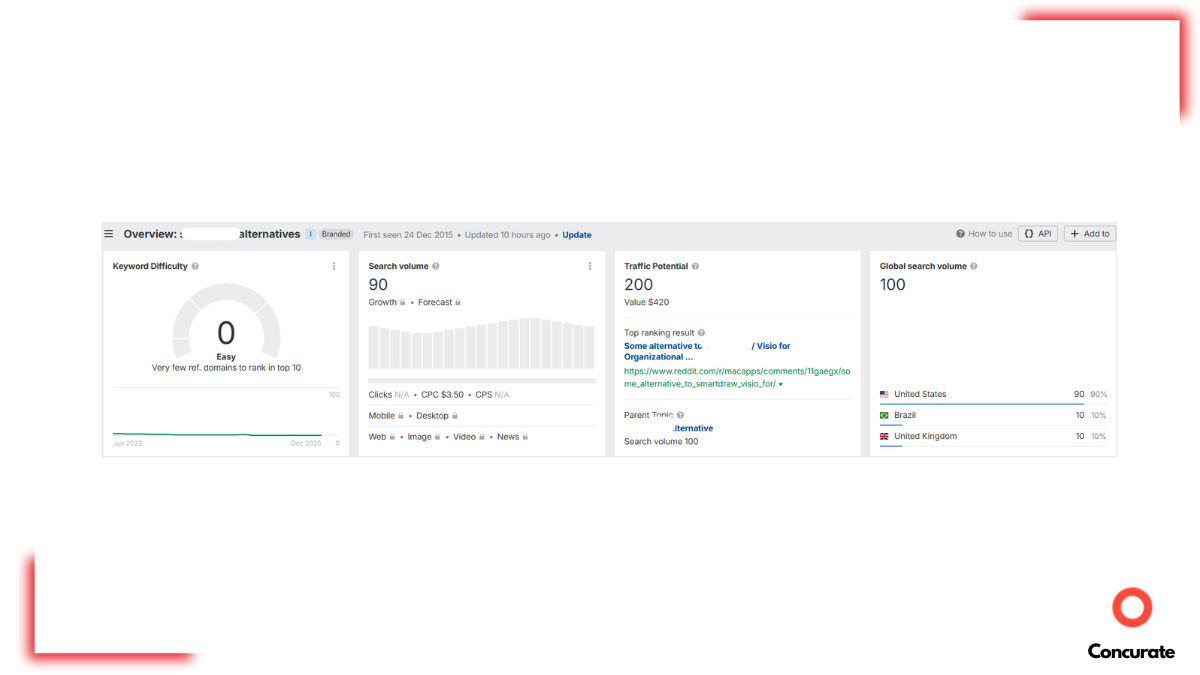
Our goal was to build topical authority with a tight content cluster that would surface across generative engines and AI-powered search.
But we didn’t stop there.
Recommended Read: 17 Best Generative Engine Optimization Companies That Get You Visible on AI Search Results
2. Dominating Programmatic SEO With Patent Office–Specific Content
We knew the real SEO unlock lay in one insight: Patent drawing requirements vary across jurisdictions. Even small errors, like a 1cm margin difference, can trigger objections or delay a grant.
These requirements are actively searched by attorneys and innovation teams looking to avoid compliance mistakes.
So, we designed a programmatic SEO strategy. We planned a series of FAQ-based, jurisdiction-specific posts, all structured the same way, answering the exact questions real filers ask:
- What are the margin rules in the EPO?
- Can I include line shading?
- What paper size is accepted in Australia?
And we didn’t write these casually.
Each article was thoroughly researched in accordance with official patent office guidelines, ensuring compliance, credibility, and rich content.
Here are a few keywords from that series:
- US Patent Drawing Requirements
- EPO Patent Drawing Requirements
- GCC Patent Drawing Requirements
We repeated the same with India, Singapore, South Africa, Malaysia, and more.
With this structured, jurisdiction-based format, we were able to create scale with precision. We covered every major filing region while reinforcing the platform’s core positioning around built-in compliance.
Together, these two content systems – tool-focused blogs + jurisdiction-focused guides, became the engine behind the client’s SEO momentum.
Recommended Read: Programmatic SEO Case Study: Helping a Network Training Provider Dominate 60+ Markets and Attract a Major Enterprise Lead
The Results
The client had zero SEO history when we started. But with a tight, search-intent-aligned content strategy, everything changed.
Within a period of three months, the content began ranking for both competitive tool keywords and jurisdiction-specific content. Not just in classic search, but in AI Mode and AI Overviews, the very surfaces shaping how people discover software today.
1. Tool-Focused Content Results
Even in a niche with established players, the client’s tool-focused blogs started surfacing across AI Mode and classic search early into execution.
The most competitive query, i.e., Best Patent Drawing Software, reached the top five positions. For keywords like Top SmartDraw Alternatives and Top Patent Drawing Services, top positions were secured.
Even exploratory or informational searches like Patent Drawing Rejection Reasons and US Patent Drawing Examples made it into AI Overviews.
Here’s a snapshot of their performance a couple of months post we started working them:
| Keyword / Article | AI Mode / AI Overview | Google Position |
| Best Patent Drawing Software | Visible | 4 |
| Top SmartDraw Alternatives | Visible | 1 |
| Top Patent Drawing Services | Visible | 1 |
| US Patent Drawing Examples | AI Overview | 9 |
| Top AI Patent Drawing Software | Visible | 16 |
| Patent Drawing Rejection Reasons | Visible | 2 |
2. Jurisdiction-Specific Content Results
This is where our Programmatic SEO strategy for the SaaS really paid off.
By building a programmatic series around real compliance queries, and grounding every article in official guidelines, the content didn’t just rank. It consistently surfaced across AI-driven discovery for multiple patent offices globally.
Out of 13 jurisdiction-focused blogs, the majority surfaced on AI Mode, and most ranked on the first page of classic Google search.
This traction wasn’t limited to major markets. From GCC (#1) to Russia (#2) to Singapore (#3), the content started appearing where real filing decisions are made.
Here’s the breakdown of the ranking:
| Article | AI Mode/AI Overview | Google position |
| PCT Drawing Requirements | Visible | 9 |
| US patent drawing requirements | Not Visible | 19 |
| EPO patent drawing requirements | Visible | 3 |
| Germany Patent Drawing Requirements | Visible | 5 |
| Australian Patent Drawing Requirements | Not Visible | 7 |
| GCC Patent Drawing Requirements | Visible | 1 |
| South Africa Patent Drawing Requirements | Not Visible | 2 |
| Canadian Patent Drawing Requirements | Visible | 4 |
| Russia Patent Drawing Requirements | Visible | 2 |
| Indian Patent Drawing Requirements | Visible | 5 |
| Malaysian Patent Drawing Requirements | Visible | 2 |
| UKIPO Patent Drawing Requirements | Visible | 5 |
| Singapore Patent Drawing Requirements | Visible | 3 |
This was true programmatic SEO for SaaS, with AI visibility built-in. That too, executed entirely through long-form, blog-led content.
Recommended Read: Programmatic SEO For B2B: 3 Lessons From Storylane’s Playbook
3. Leads Through Organic Marketing
This strategy didn’t just drive rankings, it brought in qualified leads.
Once organic visibility took hold, inbound interest began coming in directly from content, without any paid promotion or outbound outreach.
All leads were attributed to organic discovery through search and AI-driven surfaces.
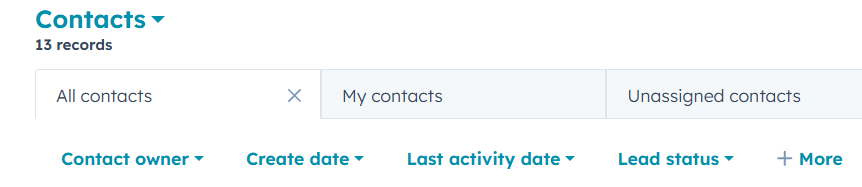
Source – Hubspot
In total, 13 qualified inbound leads were generated purely from content. These included patent attorneys, IP professionals, and innovation teams who discovered the platform through educational and compliance-focused blogs.
This is the kind of win we love: niche content turning into qualified pipeline.
The case study demonstrates that even in highly technical markets, content rooted in real user intent can drive serious traction.
Key Wins
- Ranked on Google AI Mode for 10 out of 13 jurisdiction-focused blogs, including GCC, Singapore, Russia, and the UK.
- Achieved first-page rankings for 11 out of 13 compliance blogs, all written from scratch, optimized for search, and grounded in official patent office rules.
- Drove 13 qualified inbound leads through organic content alone, attracting patent attorneys and innovation teams without a single paid campaign.
In a recent conversation, the client’s team shared their excitement about the early wins and the long-term value of the SEO strategy. Here’s how they put it:
“We’re seeing real traction from this content. It’s bringing in the right traffic and the right leads. We are super happy with the results we have seen.”
Takeaways
This case study is a living example that programmatic SEO isn’t reserved for big consumer niches. It works just as powerfully in highly technical, and unique niches like IP tech.
Here are the lessons any SaaS or B2B brand can apply from this Programmatic SEO strategy:
- Start with high-intent, pain-point keywords. Quickest wins come when you target what buyers are actively searching for, even in competitive industries.
- Pair tool-focused content with programmatic scale. Solve immediate buyer needs while also building depth across long-tail, structured topics. That balance creates defensible authority.
- Ground every piece in credible sources. In specialized domains, accuracy builds trust. Content anchored in official references carries more weight with both readers and AI surfaces.
- Make discovery easy for your audience. Complex topics become approachable when you centralize answers in one place, instead of forcing buyers to piece them together across multiple sources.
For SaaS startups and B2B teams, the takeaway is clear: structured, intent-driven content can punch above its weight, even against entrenched competitors.
Execution is where the real difference shows up. And that’s where we come in.
Ready to Unlock Growth With Programmatic SEO
At Concurate, we don’t just write content. We build engines for growth.
This programmatic SEO strategy case study shows what’s possible when search intent, structured execution, and content precision come together.
From zero SEO presence to top rankings and real leads, we turned content into a compounding growth channel.
And we can do the same for you.
Whether you’re a SaaS startup, IP tech platform, or service brand, we can help you create content that ranks, resonates, and converts.
Think: high-performance blogs, ghostwritten thought leadership content, LinkedIn posts, and SEO strategies designed to win long-term.
If you’re ready to turn content into your biggest advantage, let’s talk. Book your free strategy call today.
FAQs About Programmatic SEO Strategy
1. What kind of team setup is needed to execute a programmatic SEO strategy like this?
A successful programmatic SEO strategy needs tight collaboration across content, SEO, and tech. At minimum, you need:
- A strategist who understands search intent and keyword frameworks.
- A writer who can turn official sources into credible, digestible content.
- An SEO expert to map clusters, optimize for AI Mode, and track performance.
- A dev or Webflow/WordPress expert to create and maintain scalable landing page templates.
If you’re a lean team, an agency like Concurate can cover all these roles and speed up execution. Contact our team to know more.
2. Is AI Mode visibility really valuable if most clicks still go to classic search results?
Yes. AI Mode visibility puts your brand at the top of the discovery funnel. It influences trust, click intent, and even gets quoted downstream in AI answers. In this case, showing up in AI Mode helped position the brand as credible before the user even clicked. It’s not about chasing vanity spots at the end of the day. It’s about compounding visibility across surfaces that matter now and in the future.
3. Can you use blogs in a programmatic SEO strategy, or does it only work with landing pages?
Absolutely, blogs are a great fit, especially for knowledge-driven niches like patent tech, compliance, or insurtech. In fact, this strategy used blogs as the primary format to target jurisdictional queries. When structured right, blog clusters can rank for hundreds of long-tail variations, surfacing in AI Overviews, and even earning backlinks. So yes, blogs can power programmatic SEO, it’s all about structure and intent.