

| TL, DR: A closer look at the B2B campaigns that shaped 2025 by making complex ideas feel simple, human and memorable. |
Have you ever watched a B2B campaign and thought, Wait, this actually feels good? I had that moment a few times while going through the work brands put out in 2025. I wasn’t even looking for anything big. I just wanted to see which campaigns actually understood people, not just buyer profiles.
As I kept digging, I noticed something small. These campaigns were coming from everywhere, like tech, security, food, and various other domains. But a few of them still hit the same way. They were clear, they were human, and they just worked.
It was nice to come across ideas that didn’t feel forced or overly polished. Just simple, honest storytelling that landed where it mattered.
So I pulled those campaigns together here. Not the loudest ones, just the ones that stayed with me after I saw them.
Top10 B2B Marketing Campaigns of 2025
When I finally pulled everything together, a clear lineup started forming on its own. Some campaigns made me smile, some made me pause, and a few made me think, Okay, this is how B2B should feel more often. They each did something that stayed with me, even if it was small.
So here’s the list I ended up with.
- Archives – Big Brands Hijack
- Multiverse – Turning FS Giants Into AI Trailblazers
- McAfee – Keep It Real
- Zendesk – Relationships Are Complicated
- Kraft Heinz x Uber Eats – Heinz Verified
- GoDaddy – Act Like You Know
- PwC – So You Can
- AWS – AWS Is How
- IBM – Every Second Counts
- FedEx – The New Power Move
Let’s see what is inside each campaign.
1. Archive’s “Big Brands Hijack”
Archive is a creative analytics platform that helps brands understand how their ads perform across channels, in near real time. That’s a hard thing to explain. Especially in B2B, where most analytics tools look impressive only once you’re inside the dashboard.
So instead of explaining the product, Archive decided to show it working. They placed LED screens directly in front of existing OOH ads from brands like Nike, Spotify, and Coca-Cola. Those screens displayed live performance metrics for the exact ads running behind them, generated on the spot by Archive’s platform.
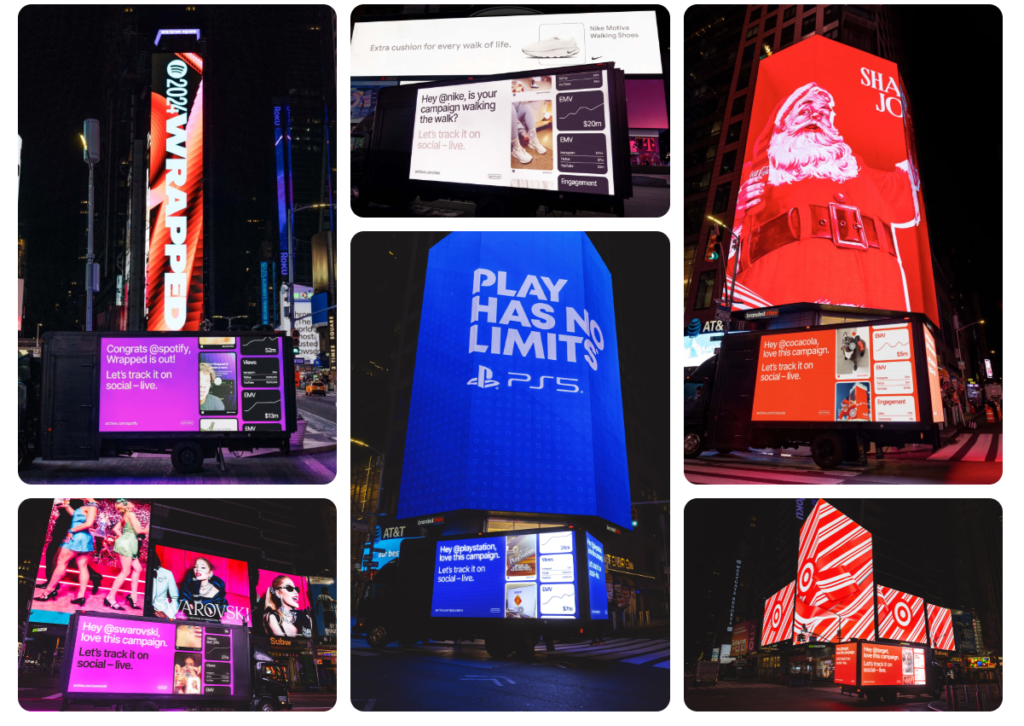
If the system were slow, inaccurate, or fragile, it would fail immediately. And everyone would see it. That was the point. Most B2B demos answer buyer questions one at a time.
First, you’re told the data is accurate. Then you’re shown how fast it updates. Then you’re reassured it works outside a test environment.
Archive skipped all of that. By running the product live, in public, against someone else’s media, they collapsed those questions into a single moment. The data is updated in real time. The environment wasn’t controlled, and the ads weren’t theirs.
In 2025, that matters. Buyers are surrounded by AI claims. Dashboards are easy to curate. Screenshots are easy to cherry-pick. Seeing a product work without filters carries more weight than any feature explanation.
By taking the demo out of owned channels and letting global brands act as the credibility anchor, Archive changed how it was perceived. It no longer felt like another analytics tool. It felt like live creative intelligence that works wherever media lives.
For Archive, this move did more than grab attention. It showed B2B buyers like marketers, media teams, creative leads, that the product isn’t just another dashboard tool. It’s fast, it’s reliable, and it can analyse creative wherever it lives.
2. Multiverse’s “Turning FS Giants Into AI Trailblazers’
This campaign clicked for me once I realised how intentionally it was built. Financial services companies all want to use AI, but most of their teams don’t know where to begin.
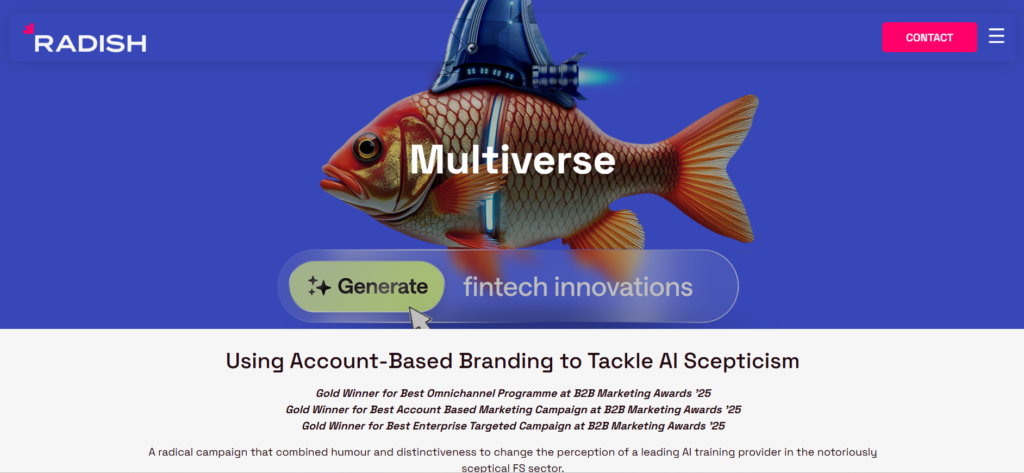
Multiverse didn’t try to push a complex message. Instead, they created an account-based marketing campaign that spoke directly to the companies they wanted to reach.
Source – Multiverse
It ran across multiple channels with highly targeted messaging, all built around one simple idea: your existing teams can learn AI, and they can learn it faster than you think.
The campaign showed real people inside FS firms learning how to build small AI tools, automate everyday work, and solve problems that usually get buried under process.
This multi-channel ABM approach dramatically increased Multiverse’s brand awareness inside key FS accounts. Direct site traffic jumped by 80% month over month, and 88% of the accounts they targeted moved into consideration or even decision stages.
The campaign won Gold for Best Account-Based Marketing Campaign at the B2B Marketing Awards 2025, and another Gold for Best Omnichannel Program.
3. McAfee’s “Keep It Real”
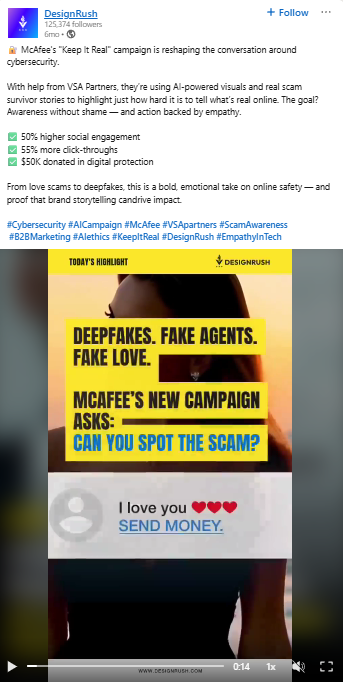
While running this campaign McAfee didn’t take the usual cybersecurity route. They didn’t list threats, features, or warnings. Instead, they focused on something people rarely talk about openly: how easy it is to fall for scams now that AI can make anything look convincing.
The ads themselves were intentionally surreal and AI-generated, almost like the kind of content you’d second-guess online. It made the point immediately: if an ad can fool you, imagine what a scammer can do.
Source – LinkedIn
This approach actually made a lot of sense for McAfee. Most cybersecurity messaging talks at people, but this one connected with them. By reducing the stigma around being scammed, they positioned themselves as a brand that understands human behaviour, not just technical threats.
So, for B2B, that’s valuable. Companies want security partners who can communicate risk clearly to employees, not just to IT teams. McAfee showed they could bridge that gap.
The results backed it up. Social engagement rose to nearly 50 percent above their usual benchmark and click-through rates climbed about 55 percent above benchmark too, which is rare in a category where ads often get ignored.
4. Zendesk’s “Relationships Are Complicated”
This campaign took a very different route from what most B2B software brands usually do. Instead of talking about metrics or system features, Zendesk leaned into something everyone recognises from everyday life, i.e., relationships do not always go smoothly.
They used simple, relatable moments like a dinner gone awkward to mirror the misunderstandings that happen between companies and their customers.
This approach made their product feel grounded in real experiences. Customer service teams deal with emotions, confusion, and expectations every single day. Zendesk showed that they understand the world better than most.
By humanising these situations, they built brand awareness in a way that felt honest instead of technical. It reminded businesses that behind every support ticket or chat window, there is a relationship that needs patience and clarity.
5. Kraft Heinz x Uber Eats “Heinz Verified”
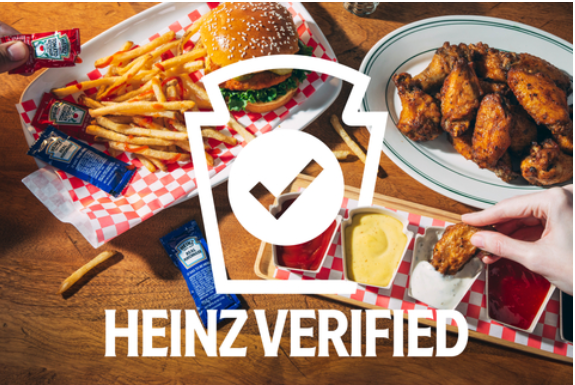
This campaign worked because it turned a simple idea into something genuinely useful for both restaurants and customers. Heinz partnered with Uber Eats to introduce a small but powerful signal inside the app.
Restaurants that use real Heinz condiments received a Verified badge, which helped them stand out instantly. When someone opened Uber Eats, they could immediately see which places were serving the products they already trusted.
Source – Kraft heinz
It was a clever way to make Heinz visible in a moment where people are actually making food decisions. Instead of running ads that talk about taste or heritage, they showed up inside the ordering experience.
For restaurants, the badge acted like a credibility boost and drew more attention to their listings. For Heinz, it created a direct link between the brand and real buying behaviour, not just awareness.
They supported the launch with limited-time offers, including savings on orders like $5 off on Uber Eats orders of $30 or more , which helped pull even more customers toward participating restaurants.
6. GoDaddy’s “Act Like You Know”
If you talk to small business owners long enough, a pattern appears. They know their craft inside out, but the moment the conversation shifts to domains or branding, things get a little tense. This campaign spoke to that feeling.
GoDaddy leaned into that truth and reminded entrepreneurs that it is completely fine not to know everything. The idea was built around reassuring them that they have a partner who can guide them through the parts that feel complicated.
The storytelling was built on simple, everyday moments where people try to navigate things they do not fully understand. Instead of making them feel behind, the campaign showed how GoDaddy can take those confusing moments and turn them into something manageable with the right tools and support.
The results made the message even stronger. Businesses using GoDaddy Airo saw up to 43 percent more sales. AI-generated social posts delivered up to 4.7 times more engagement. Booking features brought in up to 29 percent more revenue. Websites using an Airo-generated logo saw up to 21 percent more traffic.
7. PwC’s “So You Can”
This campaign felt like PwC trying to get back to something very simple. We all know that businesses today are pulled in every direction. New technology arrives before teams are ready and markets shift overnight. Leaders make decisions without having the full picture.
PwC used this moment to remind clients of why they turn to the firm in the first place. Not for big promises, but for someone who can steady things and help them move forward with a bit more confidence.
The line So You Can made that message feel personal. Each ad showed a different kind of pressure companies deal with, then quietly pointed to the role PwC plays behind the scenes.
Not taking over the story, but helping clients build the momentum they are struggling to create on their own. It was a softer way of saying that transformation does not need to feel like a constant uphill climb.
8. AWS’s “AWS Is How”
AWS took a very grounded approach to something that is usually hard to communicate. Cloud computing is complex, and most people tune out the moment the technical terms begin.So, AWS avoided all of that by doing something much simpler. They let their customers tell the story.
The campaign followed companies like BMW, Epic Games and others, showing the real problems they were solving with AWS and the impact it had on their work.
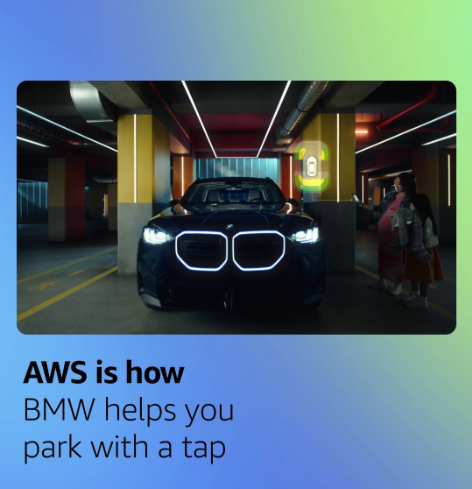
Seeing those examples made the idea of cloud feel more practical and less abstract. Instead of saying AWS accelerates innovation, the campaign showed how these firms were already using it to build, scale, and rethink what is possible in their own industries.
It helped people understand the platform not by explanation but by watching it in action through brands they already recognise.
9. IBM’s “Every Second Counts”
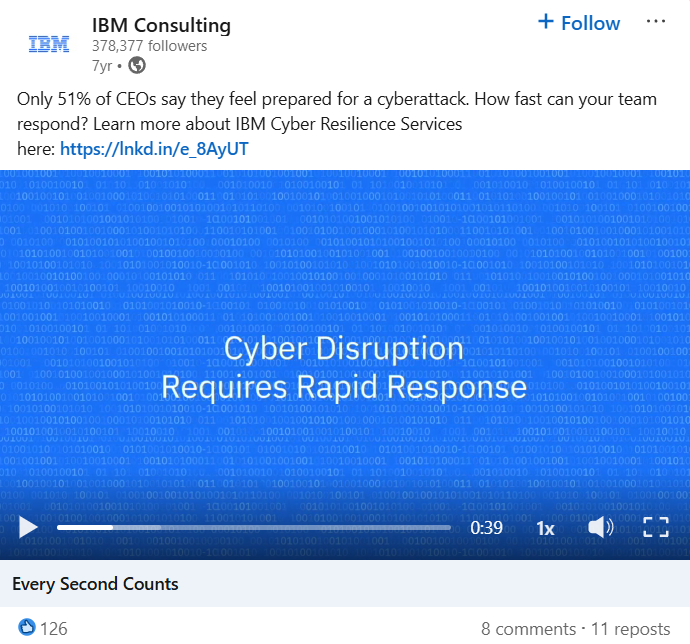
This campaign felt more like a series of short films than a traditional B2B message. IBM focused on something that keeps senior IT leaders awake at night, but is rarely spoken about in a relatable way.
When a cyber attack hits, every second becomes a decision point. Systems freeze, teams scramble, and leaders wonder how quickly they can get back online. Instead of explaining this with diagrams or threat reports, IBM showed what those moments actually look like through short, story-driven scenes based on real disruptions companies have faced.
Source – LinkedIn
Watching those scenarios play out made the idea of cyber resilience feel very real. You could sense the pressure in the room, the rush, the uncertainty, and the relief when recovery finally begins.
It quietly reminded businesses that cyber attacks are not abstract possibilities. They are real events with real consequences, and the speed of recovery can determine whether a company bounces back or breaks down.
The response to the campaign showed that the message resonated. On LinkedIn alone, it drove around 682,000 impressions and 238,000 engagements. Paid promotion on Facebook expanded the reach to nearly 4.78 million impressions with 500,000 engagements. Even the organic activity across Facebook, Twitter and LinkedIn added close to 195,800 impressions and almost 2,900 clicks to the site. The landing page tied to the campaign held attention well, with an engagement rate of about 17 percent.
10. FedEx’s “The New Power Move”
FedEx played with a fun idea that most of us recognise. In business, people often think power shows up in loud ways like, walking into a meeting late, wearing something expensive, or speaking a little too confidently.
FedEx flipped that idea around. They reminded companies that real power is not the performance. It is the ability to see what is happening in your supply chain, move quickly when something changes and make smarter decisions because you have the right data at the right time.
The campaign used that contrast to pull FedEx into a much bigger conversation. Instead of being seen only as a shipping company, they showed how much of their value sits in technology, visibility and logistics intelligence.
It was their way of saying that moving products is only the surface. The real strength is in the systems that keep everything running behind it.
What These Campaigns Tell Us About B2B Marketing in 2025
Going through all these campaigns, I kept noticing a pattern I didn’t expect. None of them relied on complicated language or long product explanations. Instead, each one found a simple, human storytelling way to make its point.
Like Archive taking their demo out onto the street or Multiverse showing everyday employees learning how to use AI in a way that felt real and achievable.
Those small choices created something bigger. They made complex ideas easier to understand and removed the distance that usually sits between a business and its audience. That is the shift these campaigns share.
In 2025, the B2B work that stands out is the work that helps people feel something first and understand the product second.
Final Thoughts
Going through these campaigns felt a bit like stepping into different conversations brands were having with their audiences. Some chose humour, some chose honesty, some chose pure clarity. But all of them proved one thing.
When you stop trying to sound perfect and start sounding real, people lean in. That’s what made putting this list together so enjoyable. Each campaign had its own heartbeat, its own way of showing that B2B doesn’t have to be cold or complicated.
If you’re working on a campaign or shaping a story for your brand, I hope something here sparks a small push in the right direction. At Concurate, this is the space we love working in. We help teams find the message that feels true, build content that actually connects, and turn ideas into work that moves the business forward without losing the human side.
If you want to explore something like this for your own brand, feel free to book our calendar.
Always happy to chat and help you shape your next big moment.