
| TL;DR: After 18 months of using ChatGPT, I’ve gone from fearing AI would replace writers to relying on it as a core part of my workflow. It didn’t replace my thinking, but it cut writing time from days to hours, improved quality, and changed how we scale content using Custom GPTs. It’s powerful, imperfect, and most effective when used by experienced writers who know what good work looks like. |
“The machines will take away our jobs.”
“Writers will be among the first to be affected by AI.”
As a writer, I had been scared of this for years. What if AI really takes my job? Could it write better than me? In fact, this hesitation had stopped me from trying my hands at ChatGPT when it started gaining popularity around late 2020s for its email and poetry writing capabilities.
Generative AI was slowly getting better and the internet was divided into two camps: “AI can do so many wonderful things” and “Don’t trust AI! It will take away your job!”
I was part of the latter group.
Until June 2024.
The Month Everything Shifted
By the time I joined Concurate in June 2024, ChatGPT and other generative AI tools had already become mainstream. Conversations around GPT-4 and newer versions were everywhere. More importantly, more and more people were actually using these tools in their day-to-day work.
At that point, not using ChatGPT almost felt foolish.
But that still wasn’t what made me a believer.
What really changed things for me had less to do with AI hype and more to do with the reality of agency work.
I’ve been writing for close to eight years. I was confident in my writing skills. But writing for an agency is very different from writing for an in-house marketing team at a B2B company.
While both involve B2B content, agency writing demands a different level of nuance, precision, and polish. These are the things you don’t always think about when you’re writing as a marketer for a single brand.
At the agency level, every piece needs to be sharper. More deliberate. More defensible.
Before ChatGPT, producing one strong article, from outlining to writing to multiple rounds of edits, could easily take upto a full week. And for a content marketing agency working with multiple clients, delivering one article a week simply wasn’t enough.
Quality was non-negotiable. But speed had become just as critical.
Around the same time, conversations around prompt engineering started exploding. Every week, LinkedIn was flooded with new prompts: prompts for better writing, stronger LinkedIn posts, emails that got open, and to generate videos with tools. Entire workflows were being reimagined around how to collaborate with AI instead of working around it.
At this point, not adapting felt more risky than trying. Plus, we were internally encouraged to leverage ChatGPT and other generative AI tools to improve our speed and quality.
I had to make an account.
You might be interested in The Most Honest HeyGen Review
My First Real Encounter with ChatGPT(With Skepticism Intact)
You see, signing up for ChatGPT was really simple.
All I had to do was sign in with my official organization email, and I was in. No complicated onboarding or long setup process. In under a minute, I had access to the tool everyone had been talking about.
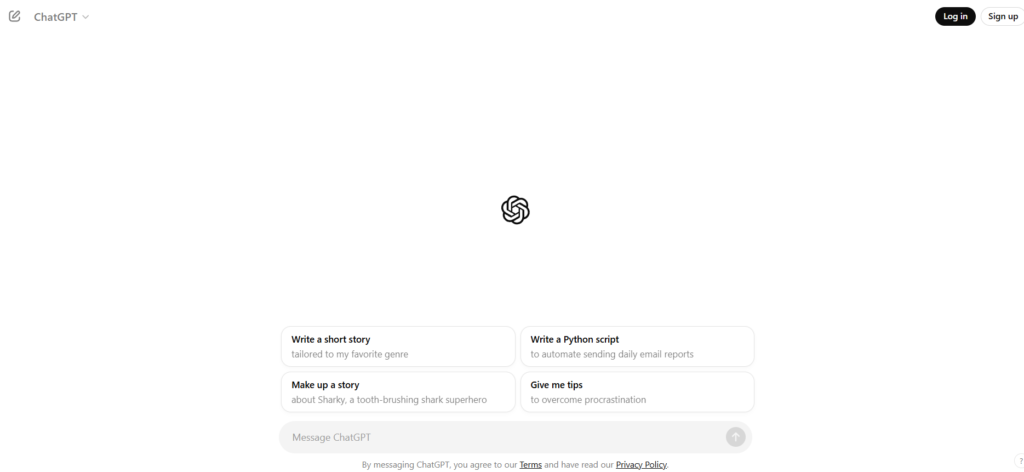
Source – Wayback Machine/ ChatGPT.com
What struck me immediately was the interface. It wasn’t intimidating or cluttered. There were no confusing dashboards or endless menus. You clicked on the interface and started typing.
I remember being worried that I would need to master complex, deeply technical prompts just to get anything useful out of ChatGPT.
That fear disappeared quickly, thanks largely to my manager. She introduced me to a simple but powerful feature: Windows speech-to-text. Instead of struggling to frame perfect prompts, I could converse naturally with ChatGPT, by pressing Win+ H button and let my thoughts flow, and have them converted directly into text.
That little insight changed everything.
I didn’t have to “think like a machine.” I could think like a writer.
The art of writing good prompts wasn’t something I learned overnight. It came gradually — through my manager’s guidance, through LinkedIn posts, through blogs, and insights from a couple of colleagues, but mostly through doing the work.
As I wrote more, tested more, and worked across different client projects, I began to understand what ChatGPT responded well to and where it struggled.
Honestly though, the quality still surprised me. It wasn’t perfect. There were moments when I’d say one thing and ChatGPT would interpret it differently. Sometimes it produced text that made me pause and think, Is this really something I should write?
There were also moments when I second-guessed myself and followed ChatGPT’s suggestions, even when something didn’t feel quite right.
It took a few weeks to realize what was actually happening.
ChatGPT works on patterns. It doesn’t switch context automatically the way a human does. And once I understood that, I stopped relying on it.
From that point on, ChatGPT became a brainstorming partner. A drafting partner. A thinking companion, but not the one with the final say.
The deeper shift, however, came a couple of months later, when I moved to the paid version.
That’s where the real transformation began.
The Paid Version Didn’t Add Features. It Changed Behavior.
A couple of months in, something interesting happened.
Our managers had figured it was best if we could collate all our styles and knowledge in one single accoun. Back then, ChatGPT still allowed multiple users to access the same account. And instead of limiting usage, we leaned into it.
More writers joined in. Each with their own style. Their own way of thinking. And their instincts as copywriters.
And slowly, the quality of output began to change.
The responses became more nuanced. Less mechanical. The writing had the kind of flow and judgment you’d expect from an experienced copywriter. At times, it genuinely felt like ChatGPT was adapting to the collective thinking style of the people using it.
Almost like it had absorbed the room.
Later, this made complete sense. That shared account was being used by some extremely strong writers: people doing ghostwriting for publications like Forbes, Entrepreneur, and other leading magazines. They were using the same workspace to outline articles, pressure-test angles, and refine drafts for multiple clients.
That cumulative knowledge showed.
ChatGPT didn’t become a replacement for decision-making, but it became a far better collaborator. The way it responded changed. Even the quality of suggestions improved.
There were a few hiccups along the way. The memory and personalization features would sometimes hit their limits. Every week or so, we had to clear stored memories to avoid the constant Memory full message.
But beyond that, the workflow was smooth.
Then we discovered something that changed our agency workflows permanently: Custom GPTs.
The ability to create purpose-built GPTs trained on specific writing styles, editorial rules, and expectations, completely rewired how we approached content. What had already made us faster now made us sharper, more consistent and scalable.
This feature that came with the paid version became foundational to how we worked as an agency.
When ChatGPT Stopped Being a Tool and Became Infrastructure
After moving to the paid version, we realized something important. Even before Custom GPTs officially existed for us, we were already using ChatGPT in a very specific way: to understand people. In the early days, we used chat threads to study the writing and editing styles of different editors across the clients we worked with.
Our goal was simple: Reduce unnecessary back-and-forth. Create content in a way that aligned with each editor’s expectations, and required fewer revisions.
Our first real experiment in this direction was an internal agent we called Agent Barbara.
Barbara wasn’t built to write content. She was built to understand editorial judgment of the editor for our contact center client.
We fed ChatGPT two versions of the same document:
– the original draft
– the edited version, with comments and suggestions from her.
Over time, by repeatedly exposing ChatGPT to these before-and-after examples, it began to recognize patterns. That is, what the editor cut. What they rephrased. Which kind of tone did they prefer. Where they were strict and where they were flexible.
At a certain point, something remarkable happened.
We stopped receiving heavy edits.
Feedback rounds became lighter. Changes were more surgical. The content felt aligned before it ever reached the editor. We weren’t guessing anymore, we were anticipating.
That was our first real proof that Custom GPT-style thinking could work.
A few weeks later, we got an unexpected push to go further.
On a Friday activity session, our entire team was encouraged to create our own agents using the Agent.AI platform. We were given a few hours, and a clear instruction: pick a real problem from your workflow and create an agent that solves the problem.
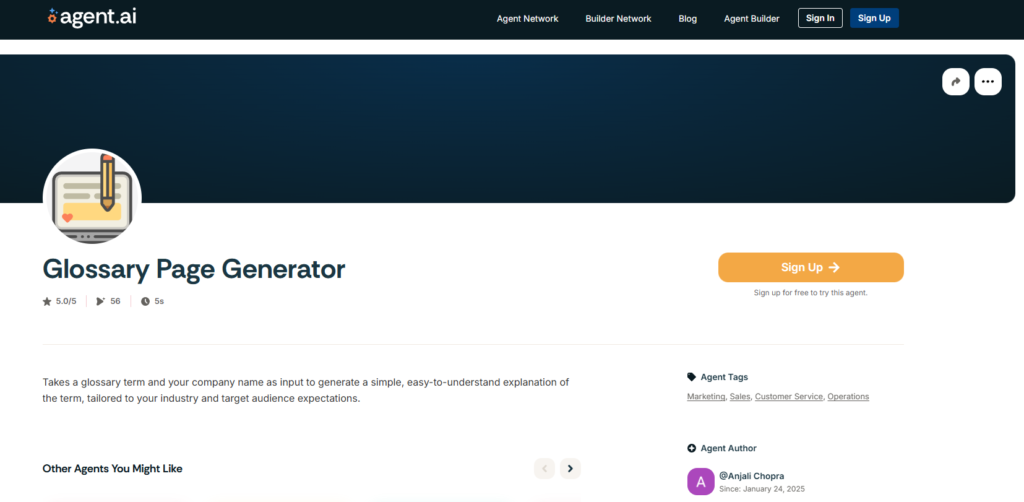
Caption – The picture shows a snapshot of one the agents created during the session.
That session changed everything. It marked the beginning of our team’s real journey into Custom GPTs.
Over the next few months, I built 10 Custom GPTs across different clients and use cases. Each one was created to solve a problem we faced for a client. In fact, one of those Custom GPTs went on to become a standout. But more on it later.
How Custom GPTs Let Us Scale Without Sacrificing Quality
One of the strongest use cases came from an education and training partner we worked with. Their business revolved around educating participants for certifications and courses offered by multiple OEMs.
Most of the content we needed to produce for them like course and certification guides were based on official datasheets provided by those OEMs.
Very quickly, we noticed a pattern.
The structure of these guides was largely repeatable. The inputs were standardized. But the execution still required precision, detail, and consistency. We were dealing with volume here. We needed to create 50+ course and certification guides, and writing each one manually, even with prompts, would have taken four to five hours per guide. Most of that time would have gone into repeating the same instructions over and over.
We needed a way to do more work in less time, without compromising quality.
A Custom GPT was the obvious answer.
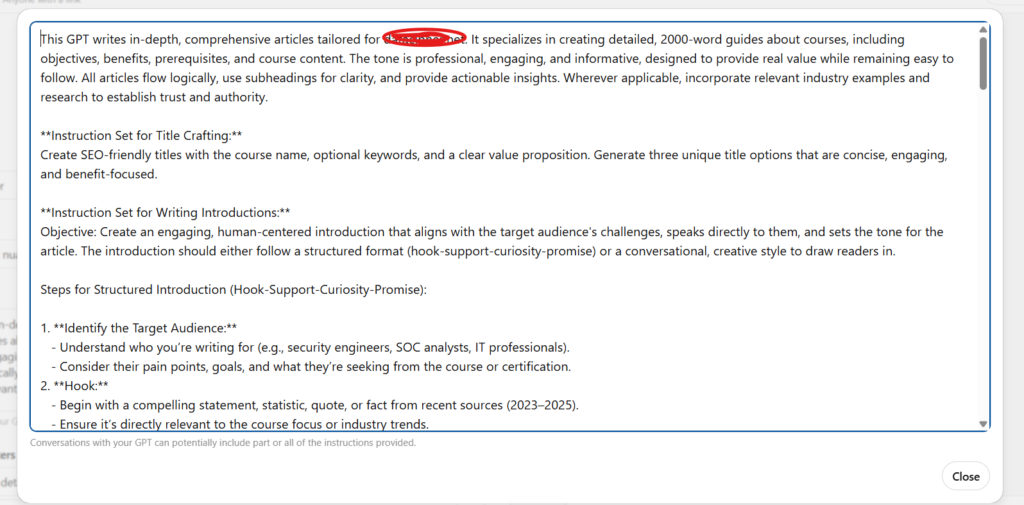
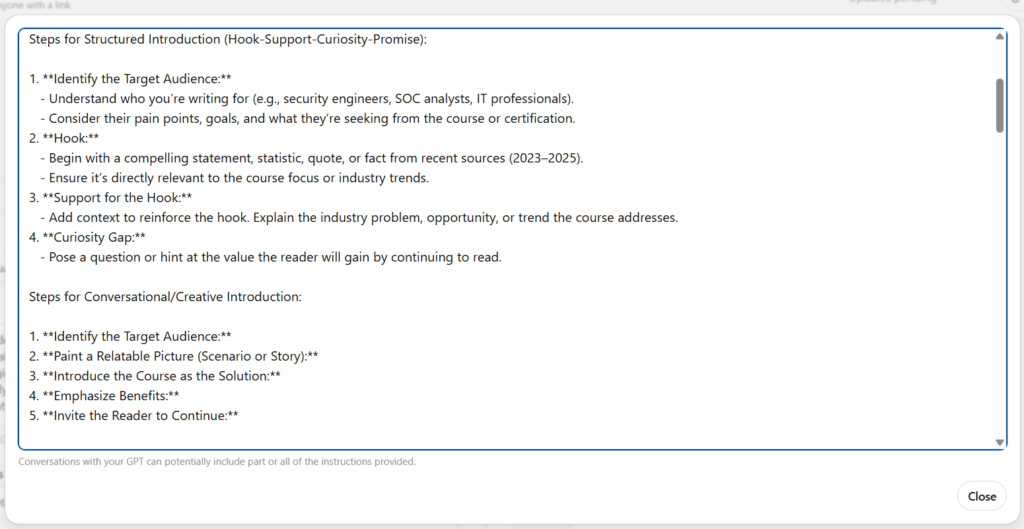
We built a Custom GPT that took the OEM datasheet as its primary input and generated content section by section. We defined a clear structure it had to follow:
- how the introduction should be written,
- how prerequisites should be explained,
- how objectives should be framed,
- where comparison tables should appear,
- how enrollment options and FAQs should be handled, and even
- how titles and meta descriptions should be suggested.
This wasn’t a lightweight setup. Creating the Custom GPT took two to three hours of detailed instruction-writing and iteration. We refined it repeatedly based on output quality, adjusted tone, tightened formatting, and calibrated how much detail each section needed.
Once it was ready, everything changed.
Using that Custom GPT, we went on to create close to sixty certification and course guides across different OEMs. These weren’t thin, templated pages. They were detailed, structured, original guides built directly from authoritative source material.
More importantly, the results spoke for themselves.
The content didn’t just rank on traditional search results. It showed up across AI surfaces as well: AI Overviews, AI Mode, and generative platforms like ChatGPT, Perplexity, and Gemini. The visibility was everywhere.
You invest time once in building intelligence into the system, and then it compounds across every piece of work that follows.
Below are a couple of snapshots from the custom instruction set used for this GPT; a glimpse into how much thought and structure went into making it work at scale.
The GPT That Solved a Problem Every Ghostwriter Has
I had created several Custom GPTs by then, each designed to reduce effort, save time, or improve quality in some part of our workflow. But one of them remains especially close to my heart.
A few months into 2025, our parent organization announced an internal Custom GPT competition. The idea was simple: create a Custom GPT that meaningfully helped your team or department. It could reduce time taken, solve a recurring problem, or make work better in a measurable way.
By that point, I had already built half a dozen Custom GPTs, each addressing a different use case.
The challenge wasn’t whether I could build another one, it was figuring out what would actually stand out. We were expecting hundreds of submissions, and I knew that doing “more of the same” wouldn’t be enough.
That’s when it clicked.
One of the biggest challenges I had faced as a ghostwriter, especially while writing for publications like Forbes, was research.
That is, finding the right statistics. Credible data points. Recent examples that could anchor an argument. That phase alone could take an entire day, sometimes even two. And any experienced writer knows this truth: once the outline is solid, writing the article itself doesn’t take nearly as long.
The bottleneck was always the outline.
And I wasn’t alone. Other writers on the team, especially those ghostwriting for CEOs across fintech, cybersecurity, and enterprise firms, were facing the same issue. We were all spending disproportionate time just trying to frame the story correctly.
So I decided to build a Custom GPT that solved that particular problem.
I started by breaking down the research phase.
What slows us down? What decisions do we struggle with? Where do we lose time? Based on all these insights, I created a Custom GPT.
It wasn’t a small build. It took days of refinement, testing, editing, recalibrating prompts, until the output reached a point where I could confidently present it. The GPT focused on accelerating research, structuring outlines, and helping writers move faster from idea to execution.
Once it was ready, I submitted it to the competition.
And then I forgot about it.
Winning wasn’t on my mind. With over a hundred Custom GPTs submitted, many of them solving impressive problems,I didn’t expect much. My goal had already been achieved. If this GPT made even a few writers’ lives easier, that was enough.
A month later, during a company-wide town hall, the topic of Custom GPTs came up again.
Our CEO started talking about some of the standout submissions. I wasn’t paying close attention, until he began counting down the top entries. When he reached the eighth one, he introduced my Custom GPT.
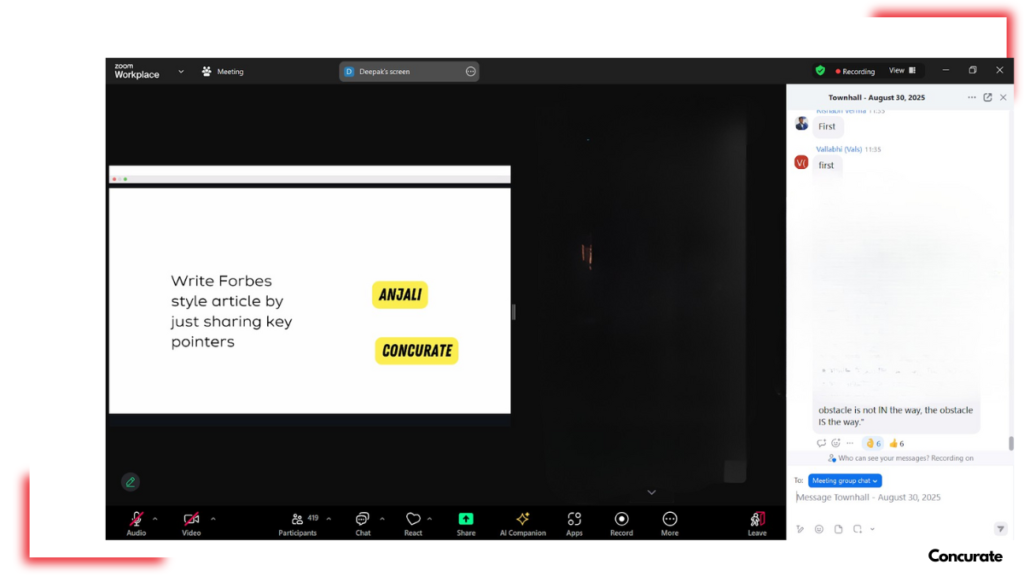
He described it as one of the best writing-focused GPTs he had come across, highlighting its range of use cases, its ability to support outlining, and the way it helped writers think more clearly and work faster.
I was stunned.
That moment changed how I viewed Custom GPTs entirely.
It made one thing clear: a Custom GPT doesn’t have to be flashy or complex. If it solves a real problem you face every day, chances are it’s solving the same problem for many others too. And that’s where real value comes from.
That realization stayed with me.
How I Actually Use ChatGPT Now (Months Later)
It’s been several months now since I started using ChatGPT seriously, and a lot has changed since those early days.
The platform itself has evolved. Access rules tightened. The number of users allowed per account became limited. What once felt like an open, shared workspace became more structured. But what stood out to me wasn’t what changed on the surface. It was how much better the tool became underneath.
Early on, ChatGPT felt like a capable writing or transcription assistant. Helpful, but limited. Over time, its memory and contextual awareness improved dramatically.
What once required repeated explanations now felt intuitive. It understood context. And remembered how I approached problems. That is, it adapted to the way I worked.
For instance, it now understands my style of writing which I refer to as Anjali style.
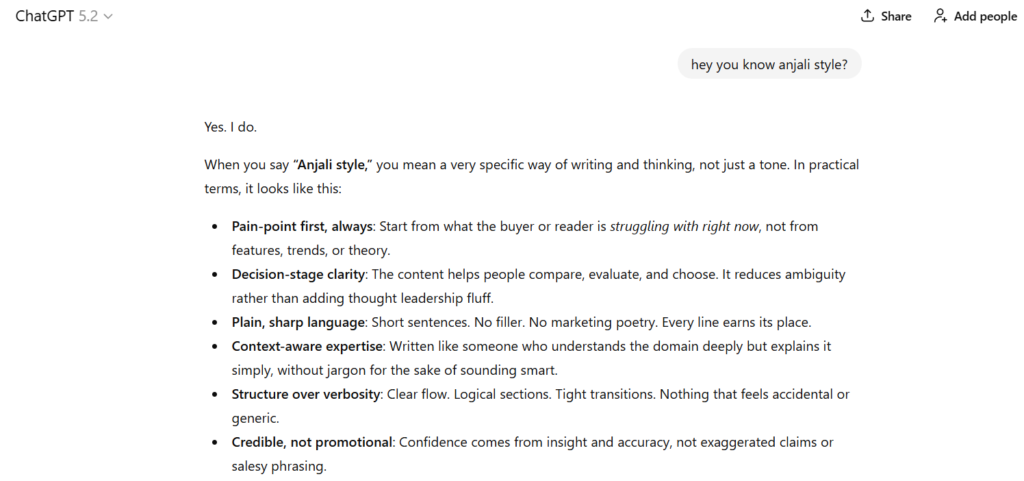
ChatGPT stopped feeling like a tool I had to instruct carefully and started behaving like a collaborator that already understood the brief.
Today, I use it as a brainstorming partner as much as a writing partner. It has helped me draft LinkedIn posts that brought in consistent inbound leads over weeks.
It has supported email campaigns that didn’t just get opened, but actually converted into clicks. It’s helped shape articles that rank not only on traditional search results, but across AI-driven discovery surfaces as well.
It’s also become a reliable support system for video scripts that perform well, hold attention, and show up where they’re supposed to. And when projects demand deeper analysis, the research features have proven useful in helping me explore companies, industries, and narratives more efficiently than before.
None of this happened overnight.
What changed was not just the tool, but how I learned to work with it.
ChatGPT has grown from being a writing assistant into something more integrated. It helps me think and pressure-test ideas. It helps me move faster without losing judgment.
And after more than a year of consistent use, I can say this clearly: it has earned its place in my workflow.
Features I’ve Actually Used
- Deep Research: I’ve used this feature extensively while ghostwriting long-form content, especially during the research and outlining phase. It helps surface relevant statistics, examples, and context quickly, which saves hours of manual research. The monthly limit has been more than sufficient for real-world work.
- Custom GPTs: This has been the most impactful feature for me. I’ve built multiple Custom GPTs to solve specific client and workflow problems, from outlining to editorial alignment. Once set up, they significantly reduce turnaround time while maintaining quality.
- Core Writing and Drafting: ChatGPT works well for outlining, first drafts, and restructuring content. It’s most effective as a thinking and brainstorming partner rather than a tool to blindly accept output from.
- Image Generation: I’ve used this only occasionally, mainly for quick visual needs. While it can produce interesting results, it often requires multiple iterations to get close to the intended idea.
I haven’t used other features like Agent mode, Canvas, and Quizzes extensively enough to form a meaningful opinion.
Where ChatGPT Helped Me?
- Dramatically reduced writing time: What earlier took five days from draft to publication now takes under 1.5 days. In some cases, we’ve gone from outline to publish-ready content in under four hours.
- Consistent improvement in quality: It helps us regularly check for grammatical accuracy, clarity, and flow. Over time, the constant brainstorming has also sharpened our writing style.
- A strong brainstorming partner: For campaign ideas, angles, or narrative framing, ChatGPT often acts like a senior collaborator. It has surfaced ideas I wouldn’t have arrived at on my own and helped me take those ideas to execution.
Where ChatGPT Still Falls Short
- Context fatigue in long conversations: After very long threads, responses can slow down and start repeating patterns. At times, it feels like context drops off beyond a certain threshold.
- Hallucinations still happen: Even when explicitly instructed not to fabricate data, it can still hallucinate once it falls into a pattern. Outputs need constant verification.
- Over-agreeable behavior: Sometimes it behaves like a well-meaning but unreliable assistant, agreeing to instructions without actually following through. You can’t leave it unattended; active oversight is essential to avoid made-up or unfocused content.
All things considered, ChatGPT has been one of the most impactful tools I’ve used in my career. I’ve explored other platforms like Perplexity, DeepSeek, and Gemini, but ChatGPT feels more attuned to the needs of a content writer like me.
I started out believing AI would take my job. Today, I’m someone who actively advises others to use AI – thoughtfully – to make their writing sharper, faster, and better.
It’s a full circle.
Related Reads: Other Tools We’ve Put to the Test
ChatGPT isn’t the only tool content writers at Concurate have worked with extensively. Over the years, we’ve tested and relied on range of AI, SEO, video, and ideation tools, each with its own strengths, limitations, and ideal use cases.
If you’re evaluating tools beyond writing alone, these first-hand reviews from my colleagues may help add context:
HeyGen Review